Mémoire d’Afrique — Ref. 21
Dan mask with Toma influence — Dan, Côte d’Ivoire — African tribal art — Ref. 21
Description
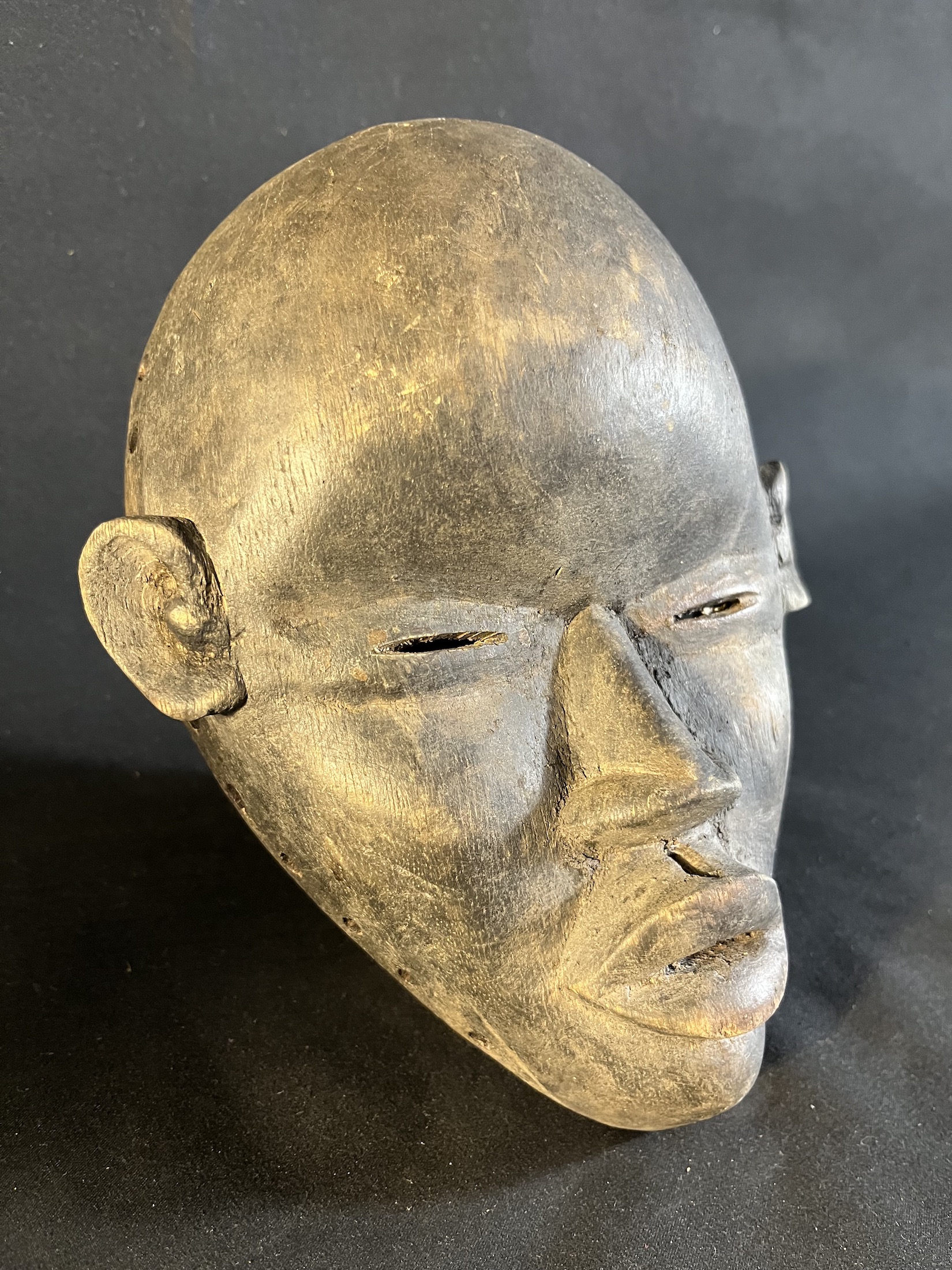
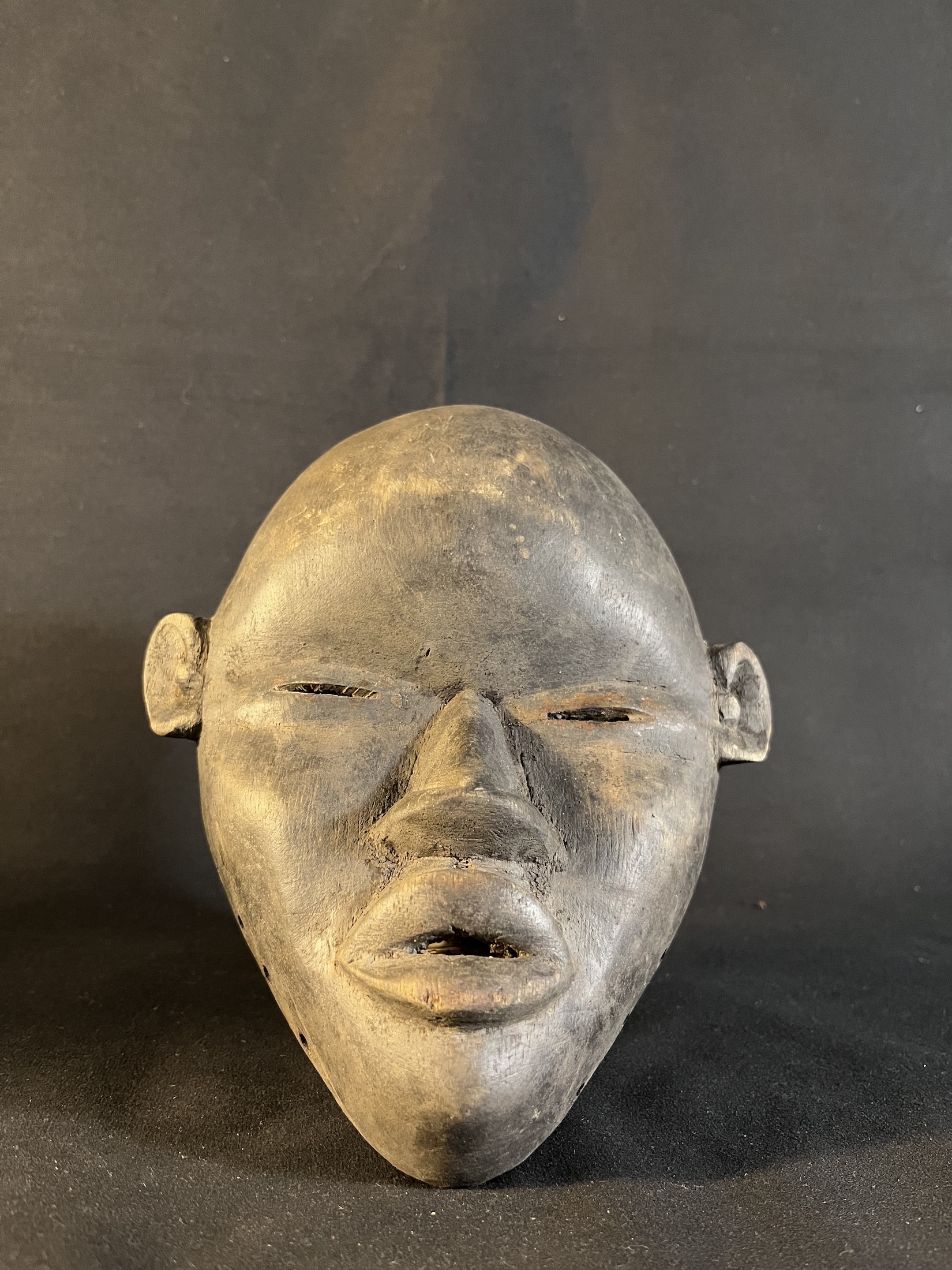
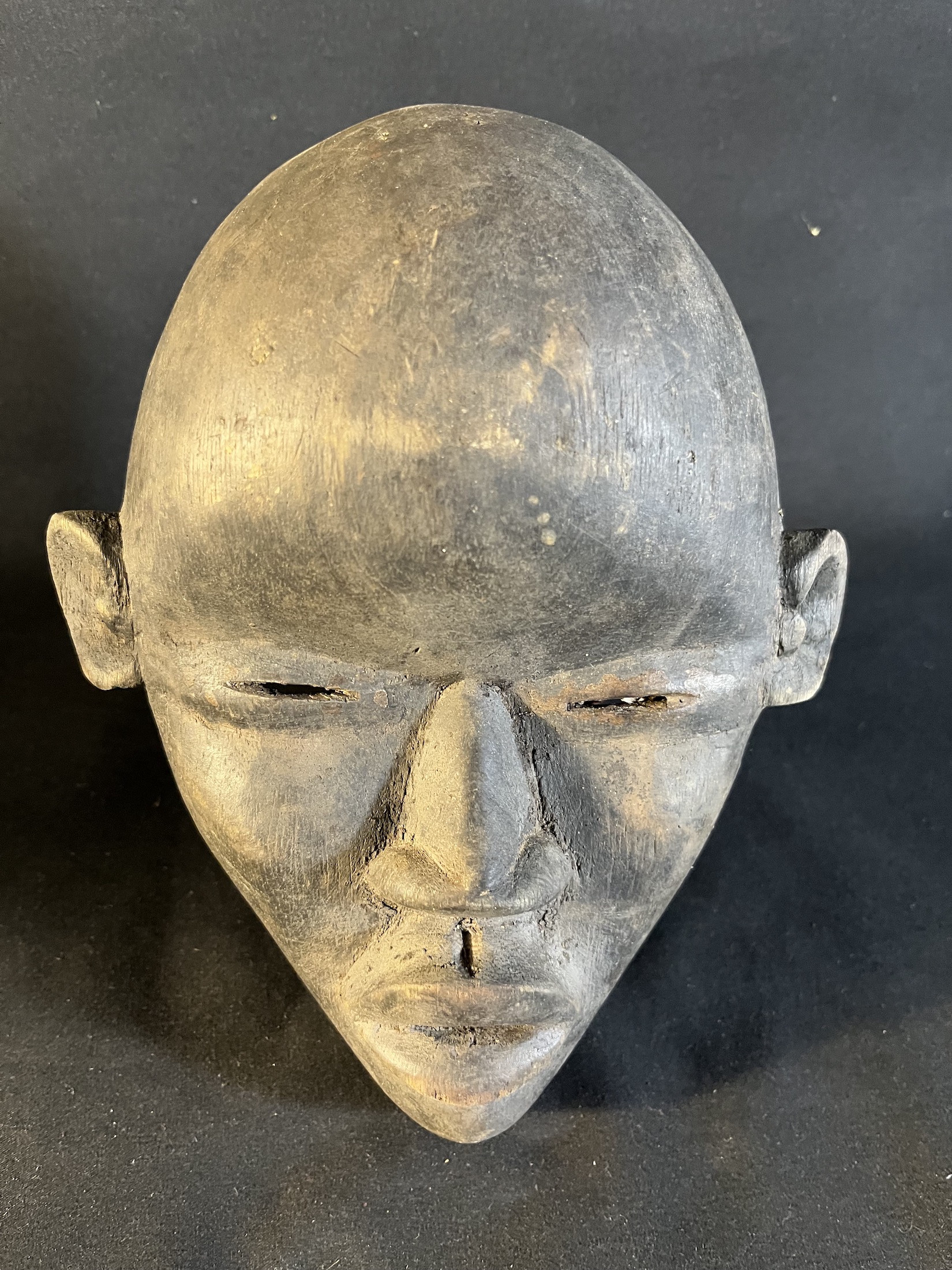
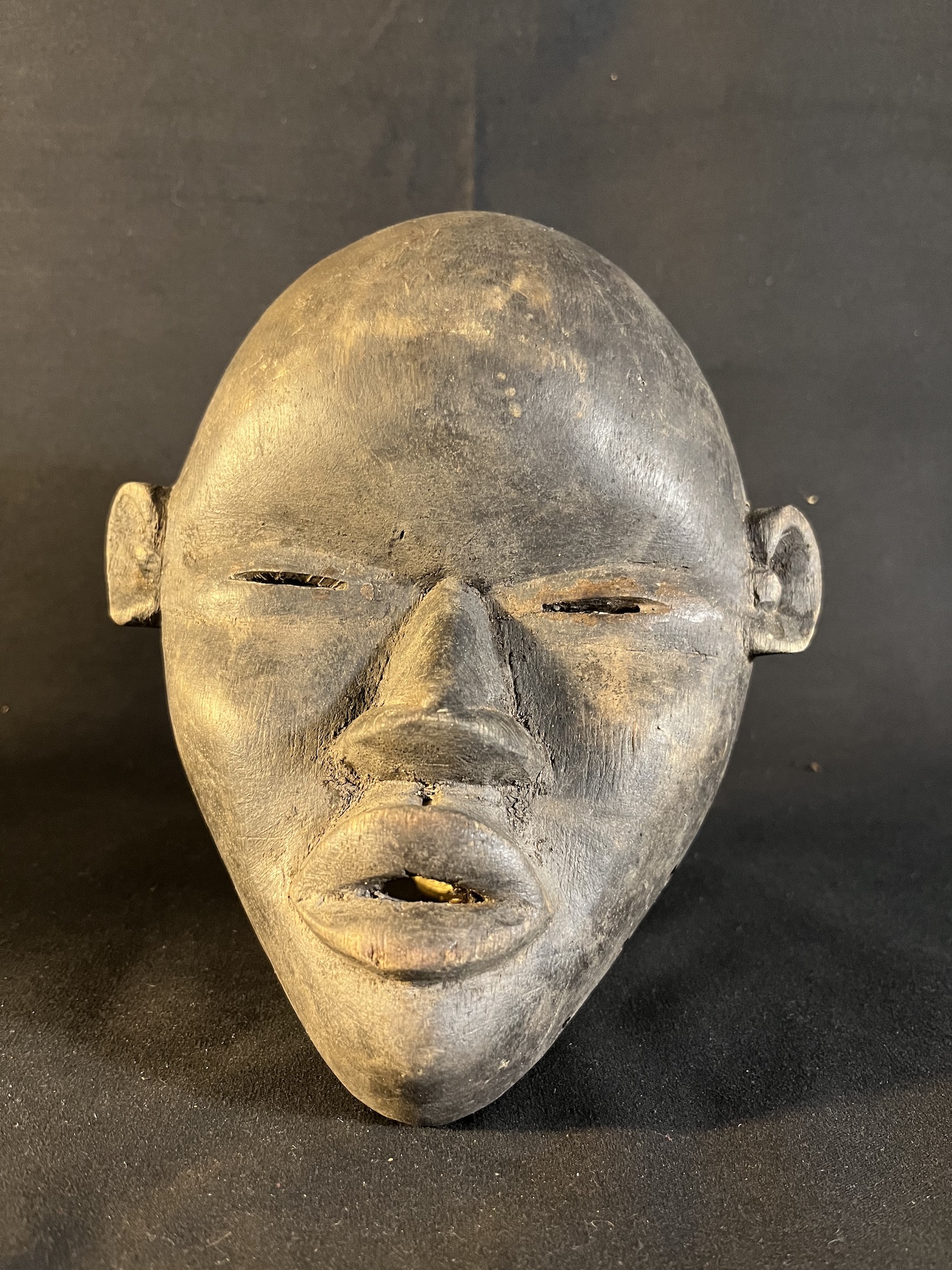
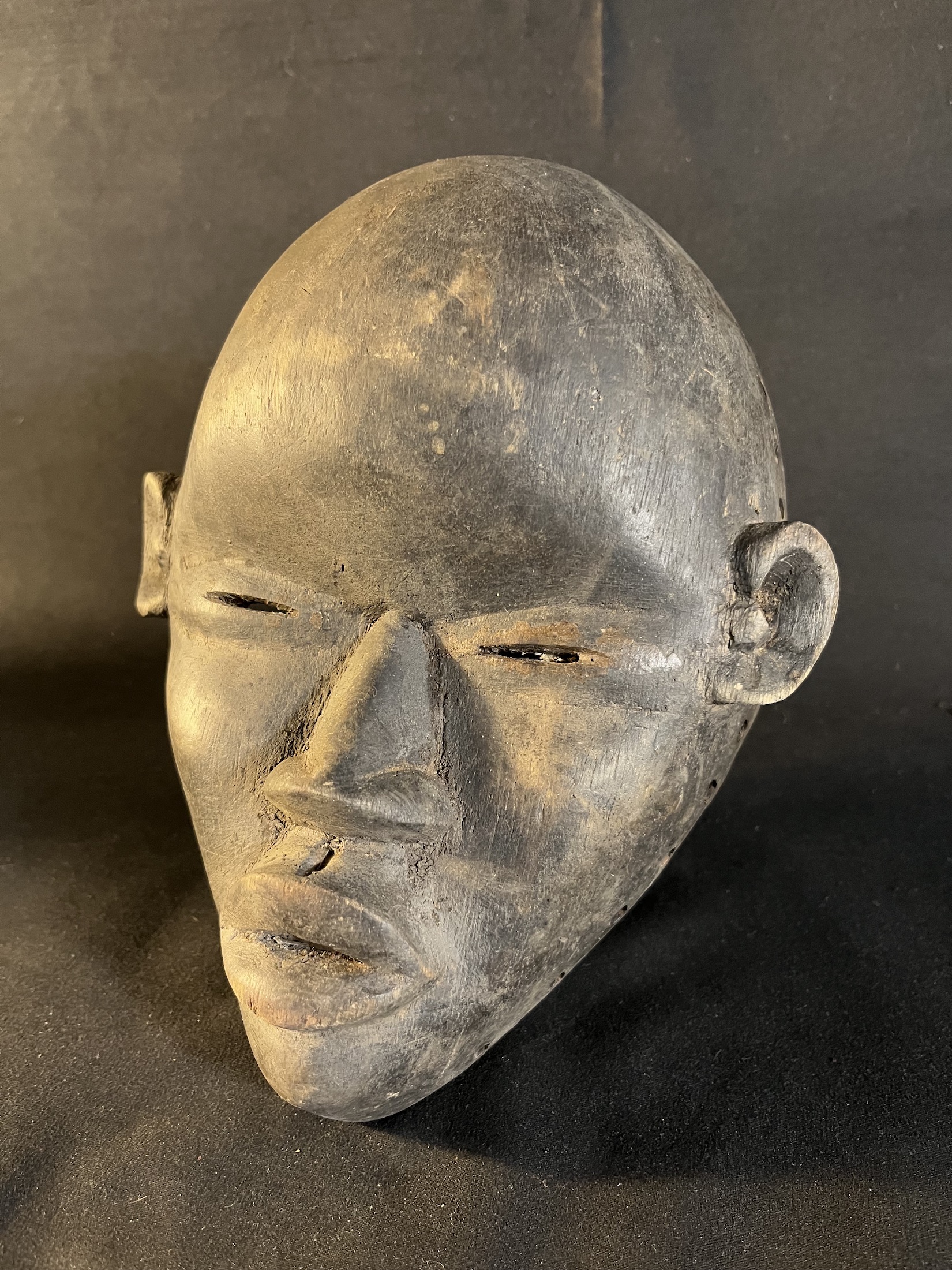
This mask is typically Dan, originating from the border region between Côte d’Ivoire and Guinea, but it has a notable particularity: the influence of Toma aesthetics, visible through the addition of ears carved in relief. In Dan tradition, masks are mainly used to embody forest spirits and generally do not include a detailed representation of ears. Here, this feature is enriched by Toma influence, introducing a new and rare dimension to the mask, probably due to cultural exchanges in this border region where the two groups coexist.
The mask, carved in old patinated wood, reflects the classic features of Dan masks: a heart-shaped face, narrow slit eyes and a prominent mouth with thick lips. However, the addition of ears carved in relief is an unusual detail in Dan masks, suggesting a stylistic adaptation inspired by the Toma, whose masks may include distinctive elements such as ears. These ears add an additional anthropomorphic touch, making the mask more expressive and helping to give it an appearance of vigilance and presence.
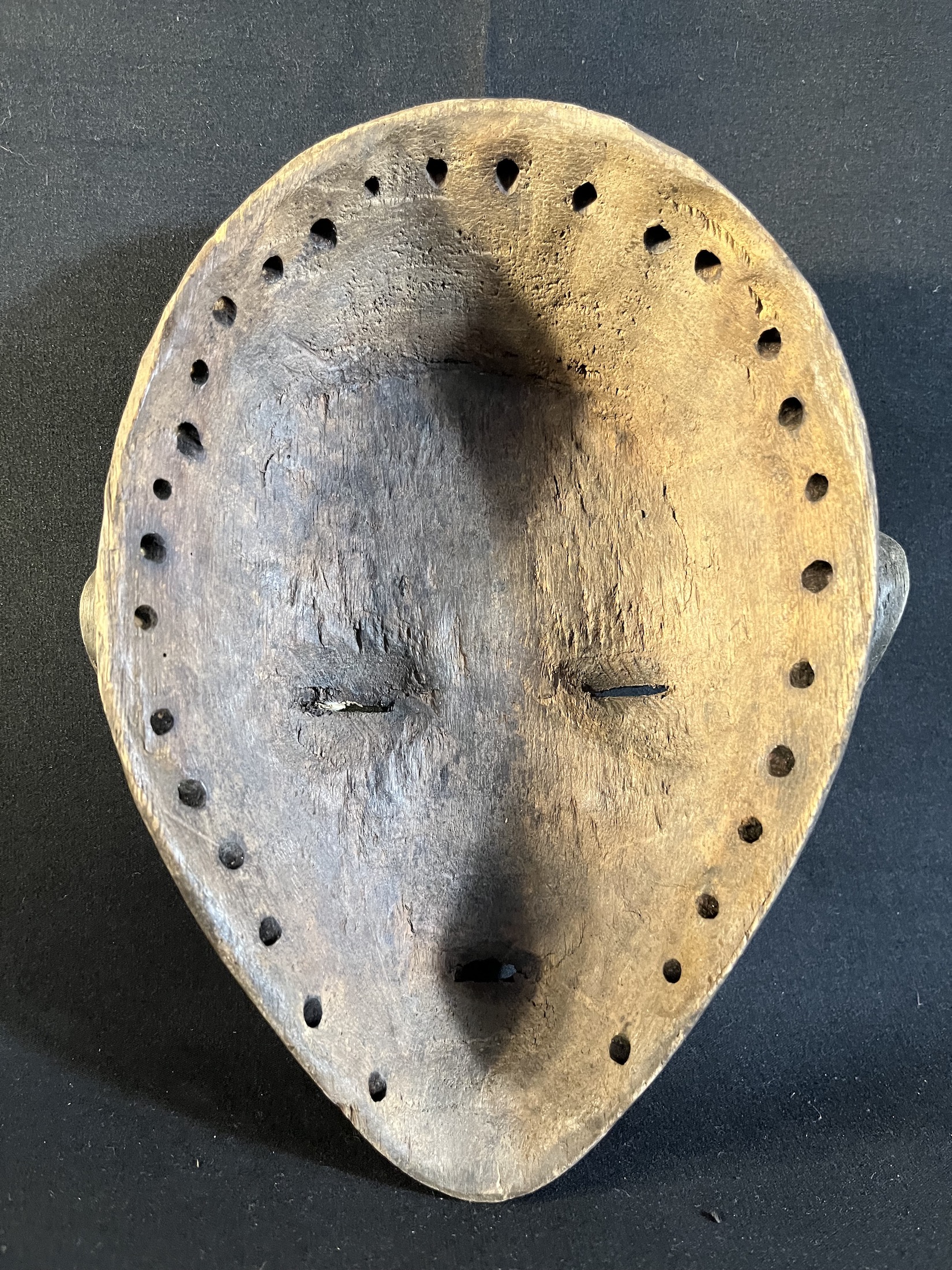
The contours are punctuated with drilled holes intended to receive fibres, fabrics or ornaments, thereby strengthening the visual impact of the mask when it was used during ceremonies. The dark patina and visible traces of wear testify to prolonged use, confirming its age and authenticity.
In Dan culture, masks are used in ritual, initiatory and festive ceremonies, embodying nature spirits and serving as mediators between the living and the spiritual world. This mask may have been used in rites of passage or during festivities celebrating protective spirits. The Toma influence, symbolised by the ears, may indicate a reinforced protective function, suggesting that the mask, in addition to embodying a forest spirit, possessed an increased capacity for “watchfulness” over the community.
The cultural duality of this mask, with a Dan base enriched by Toma influence, gives it complex symbolism. In Dan tradition, masks represent moral and spiritual qualities, often perceived as autonomous and linked to the forces of nature. The added ears, typical of the Toma, amplify this character by evoking vigilance and constant attention. The mask thus becomes not only an intermediary between the visible and the invisible, but also a “guardian” with sharpened senses.
By incorporating Toma elements, this Dan mask acquires a unique dimension, recalling that cultural exchanges can enrich the symbolic scope of ritual objects. The ears, in particular, reinforce the idea that the spirit represented by the mask listens to the needs of the community, offering a protective presence.
Technical details
- Type of piece
- Masque
- Category
- Masks
- Ethnic group
- Dan
- Country
- Côte d’Ivoire
- Materials
- wood
- Dimensions
- H 22,5 × W 10 × D 15 cm
- Weight
- 0,201 kg
- Estimated dating
- second half 20th c.
- Laboratory test
- Not tested
- Reference
- 21