Mémoire d’Afrique — Ref. 48
The queen on horseback — Toma, Guinea — African tribal art — Ref. 48
Description
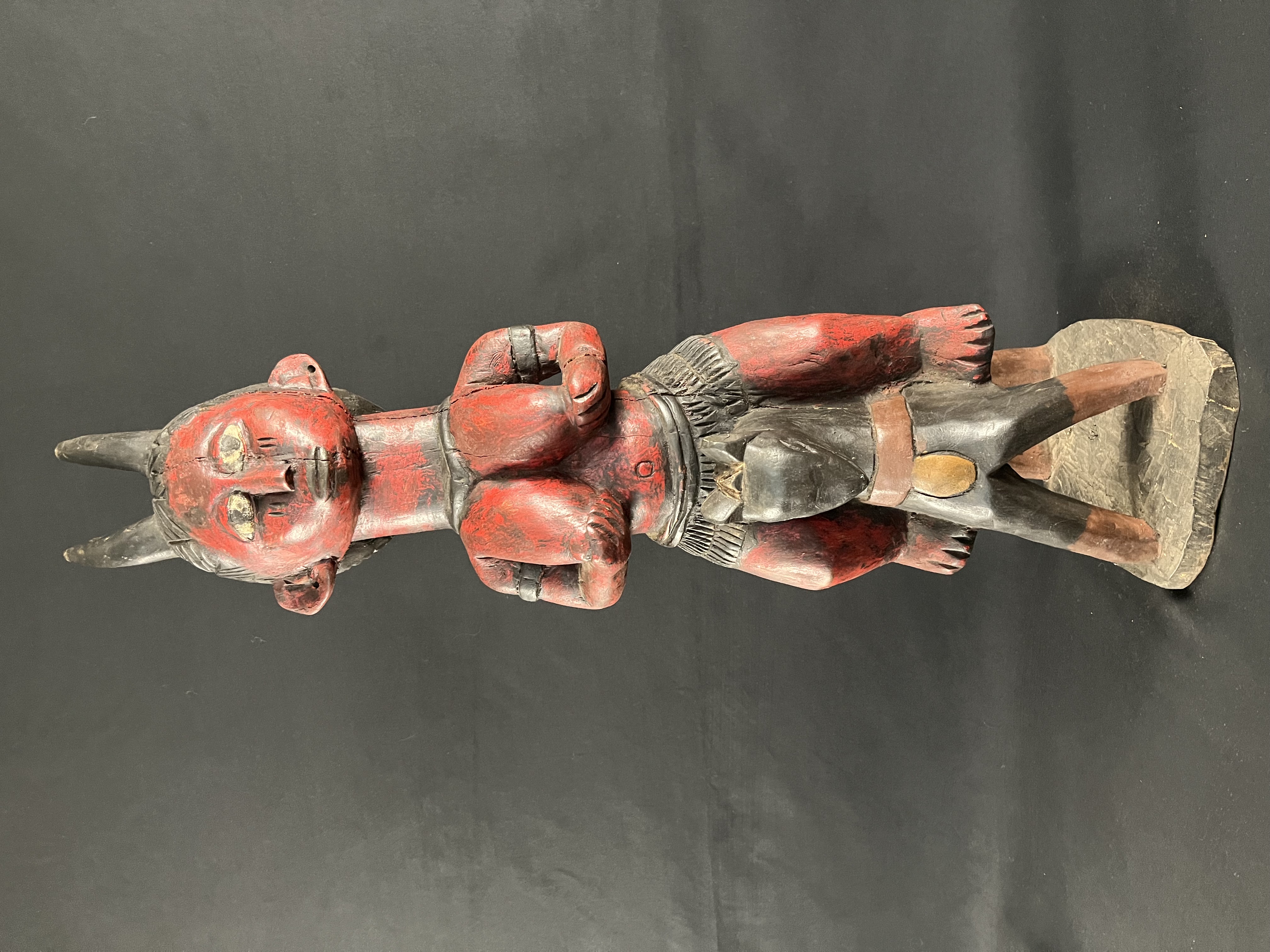
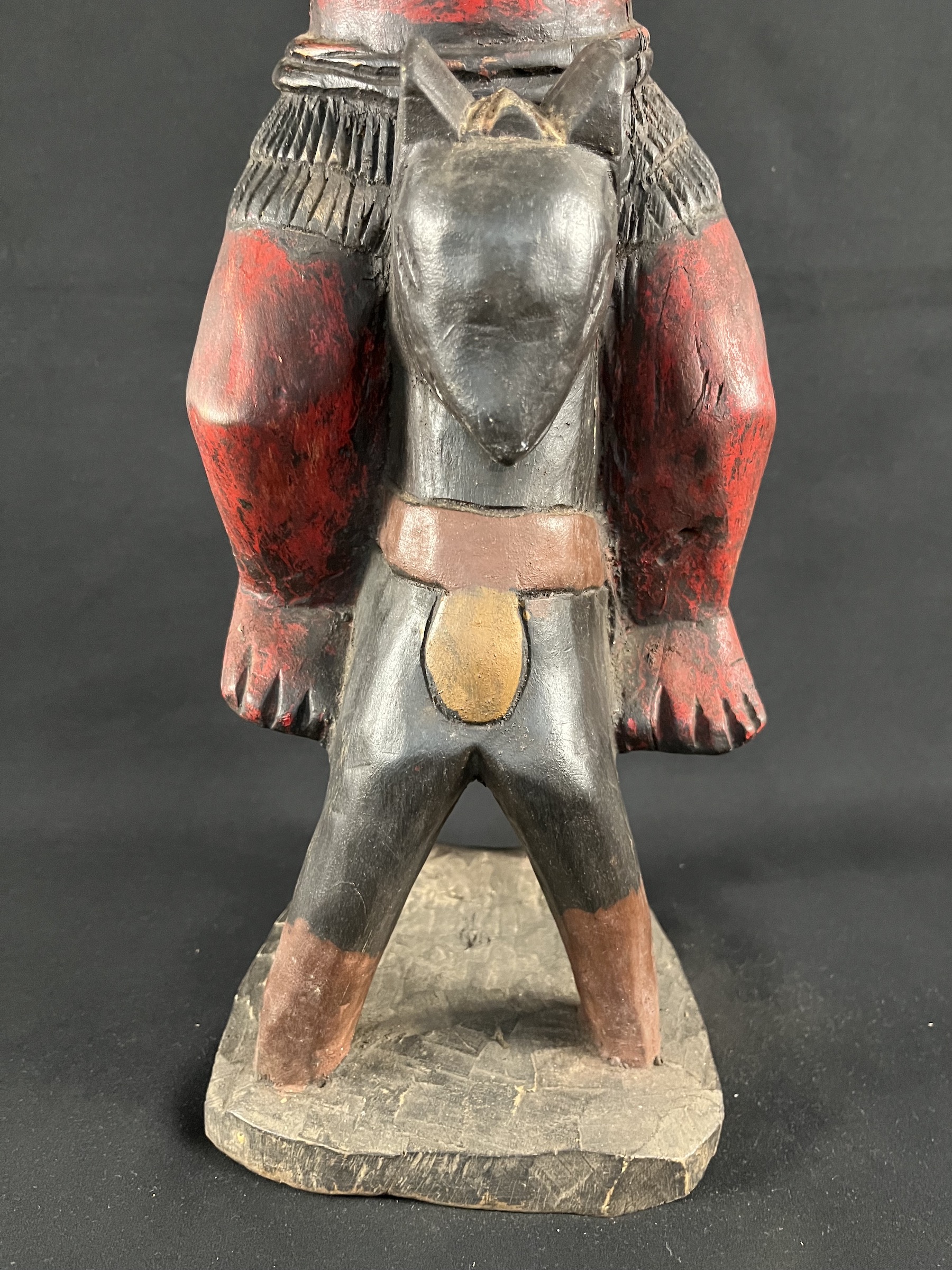
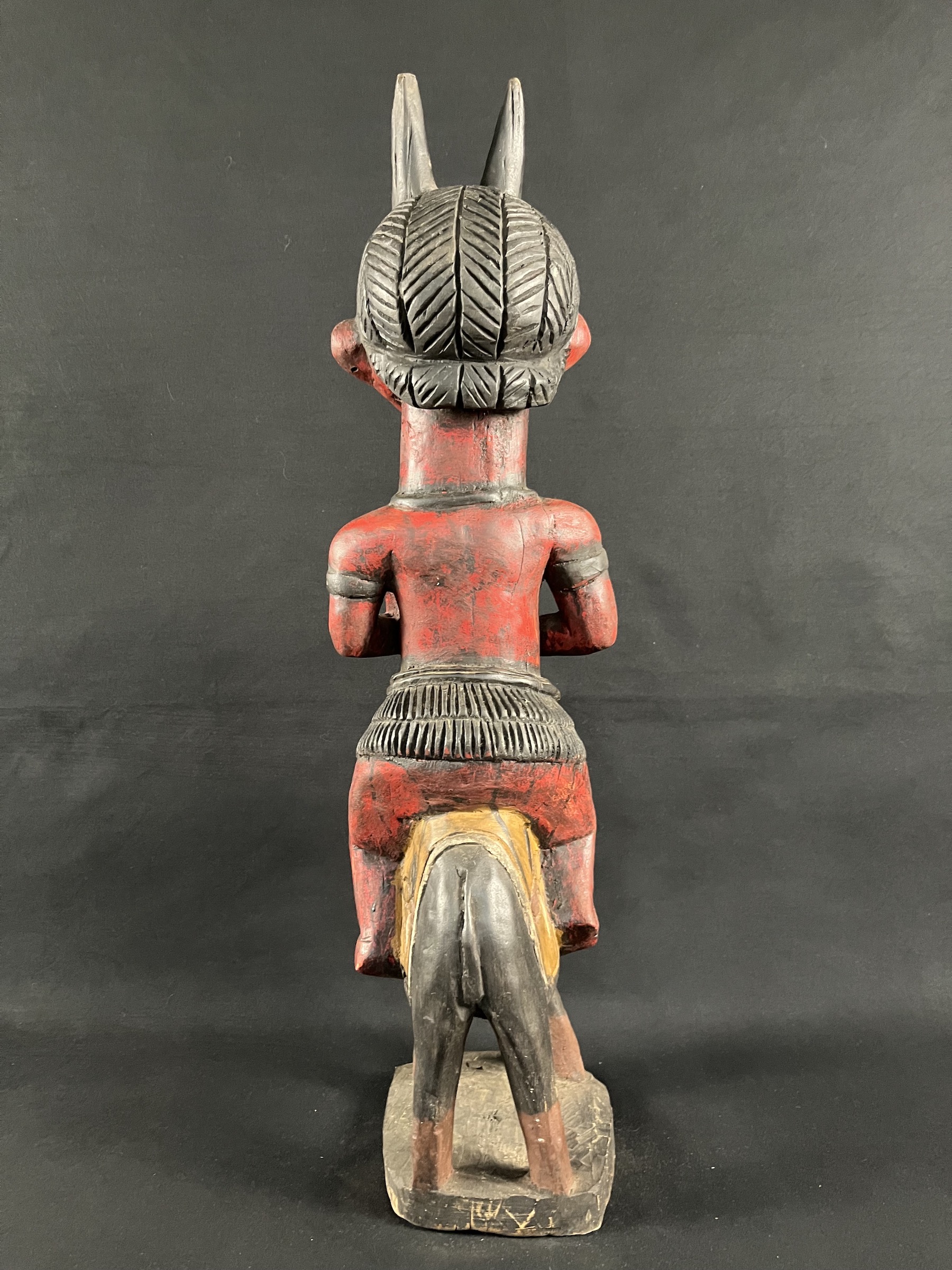
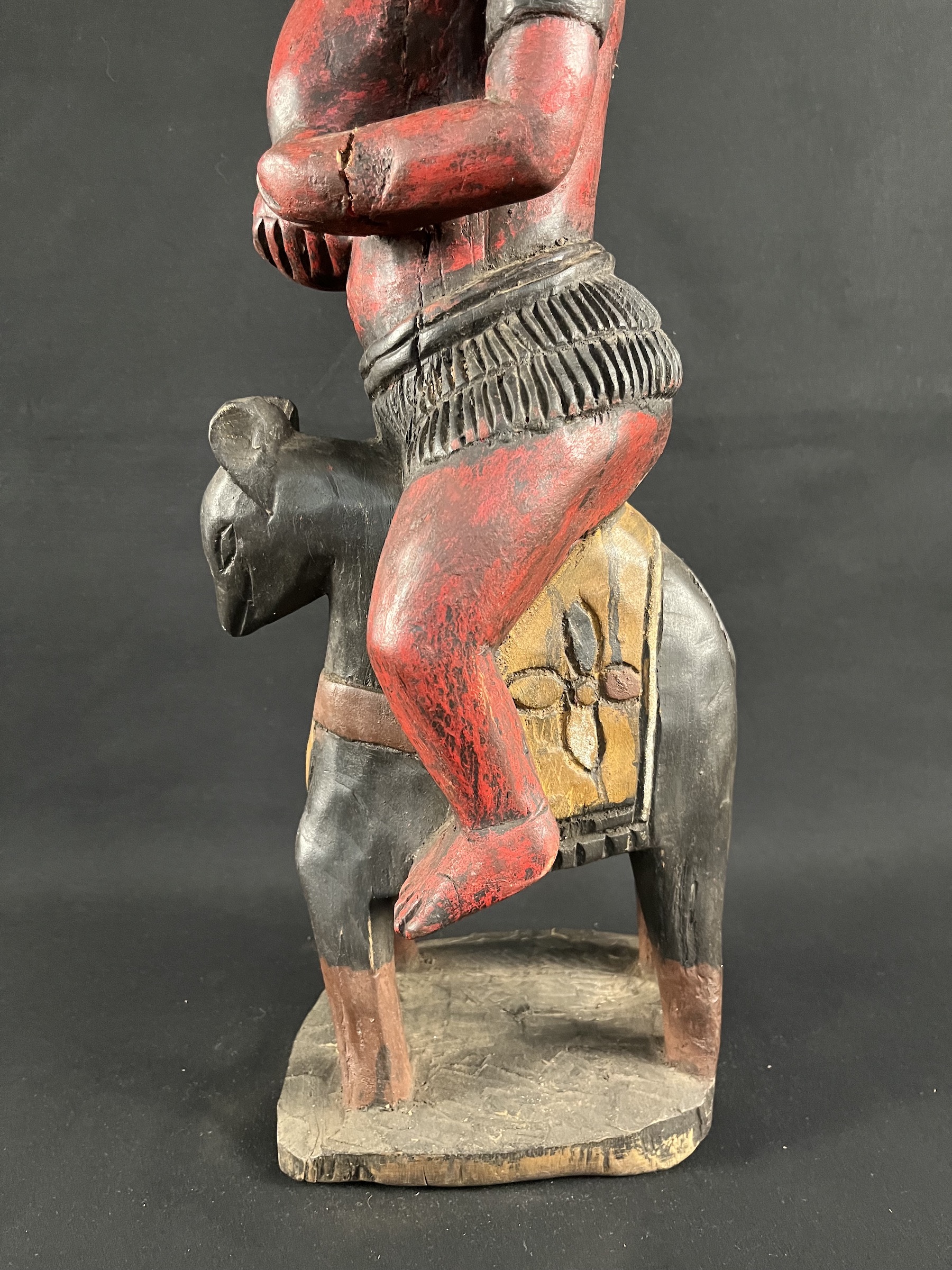
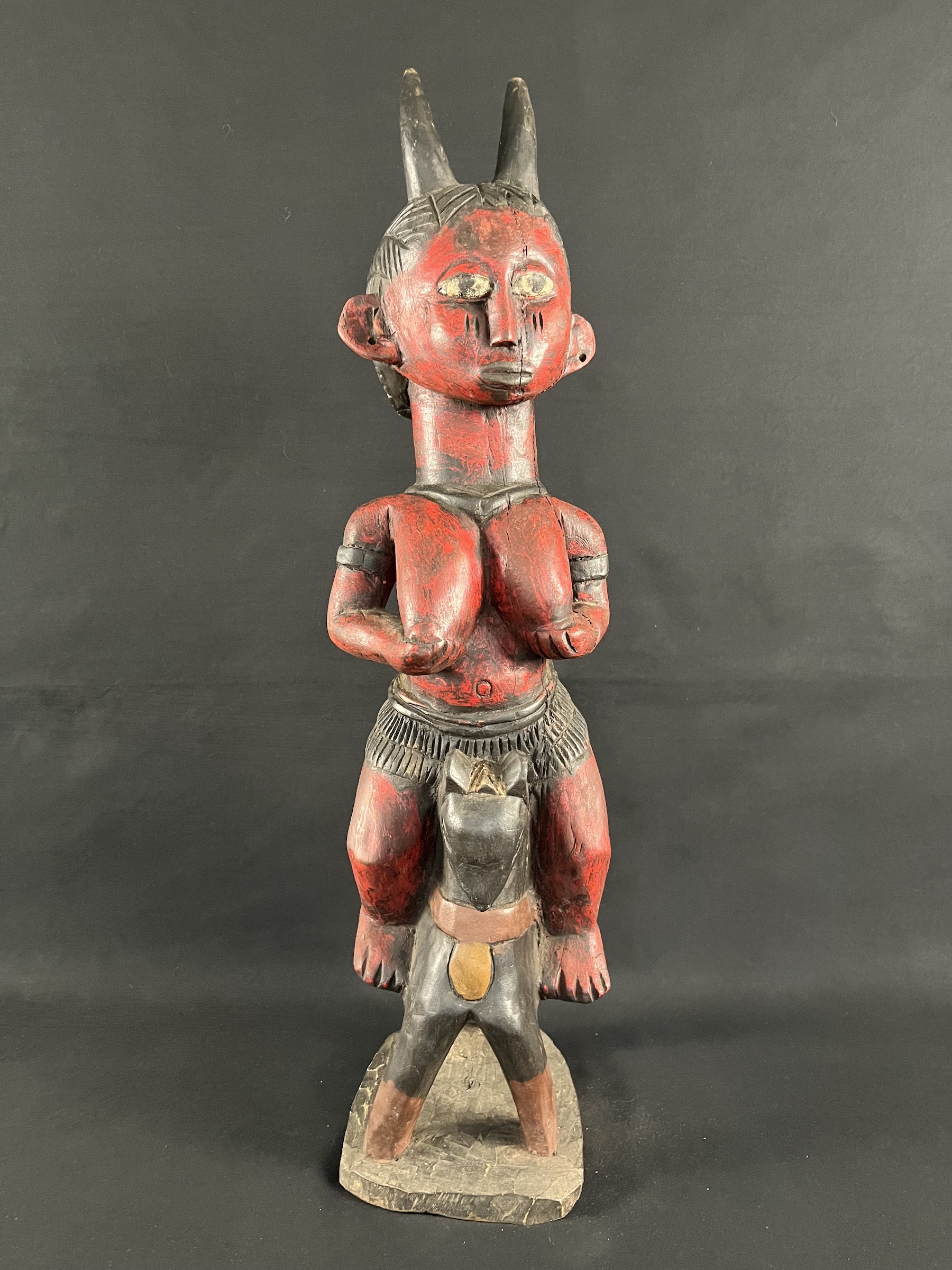
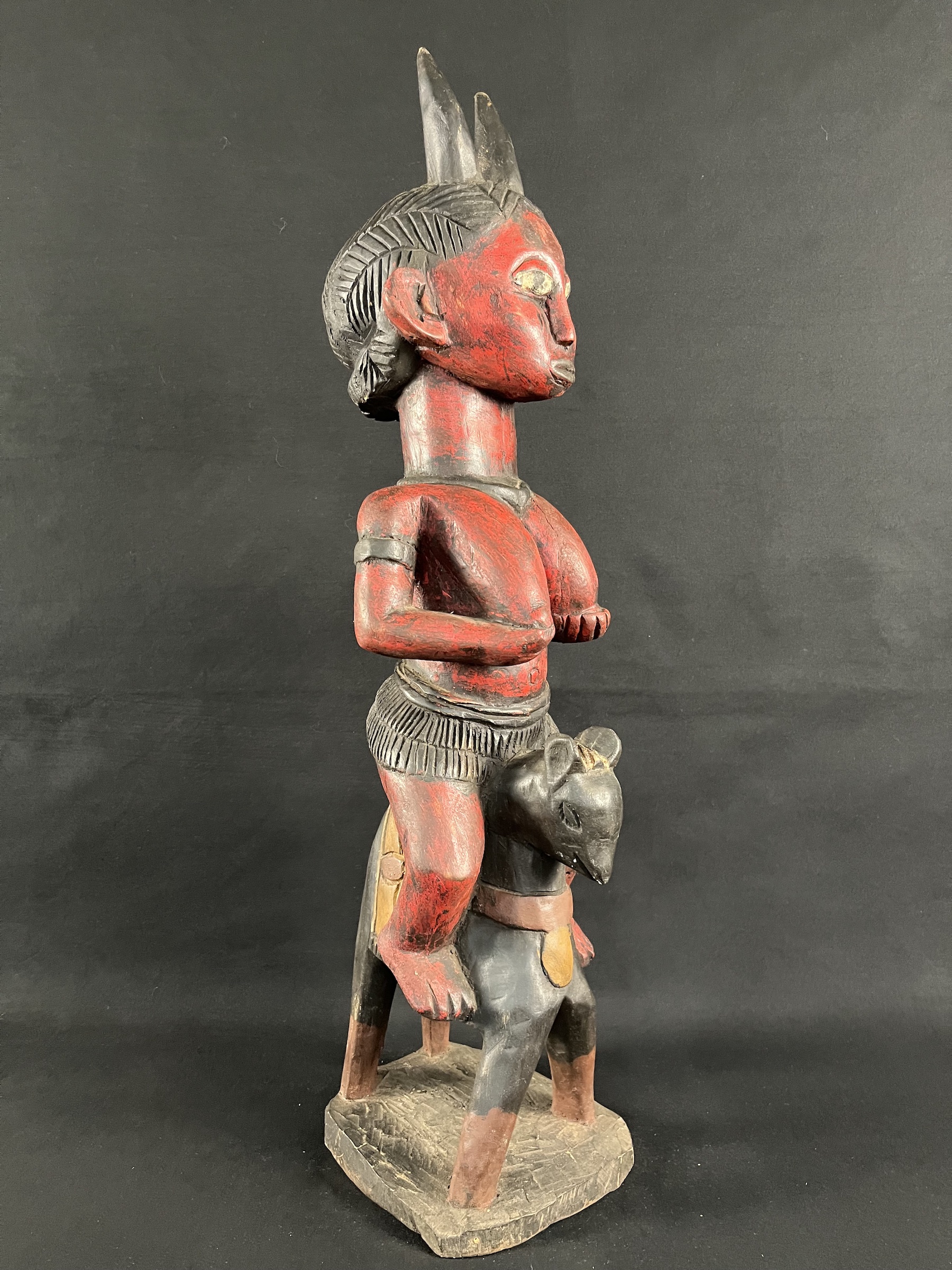
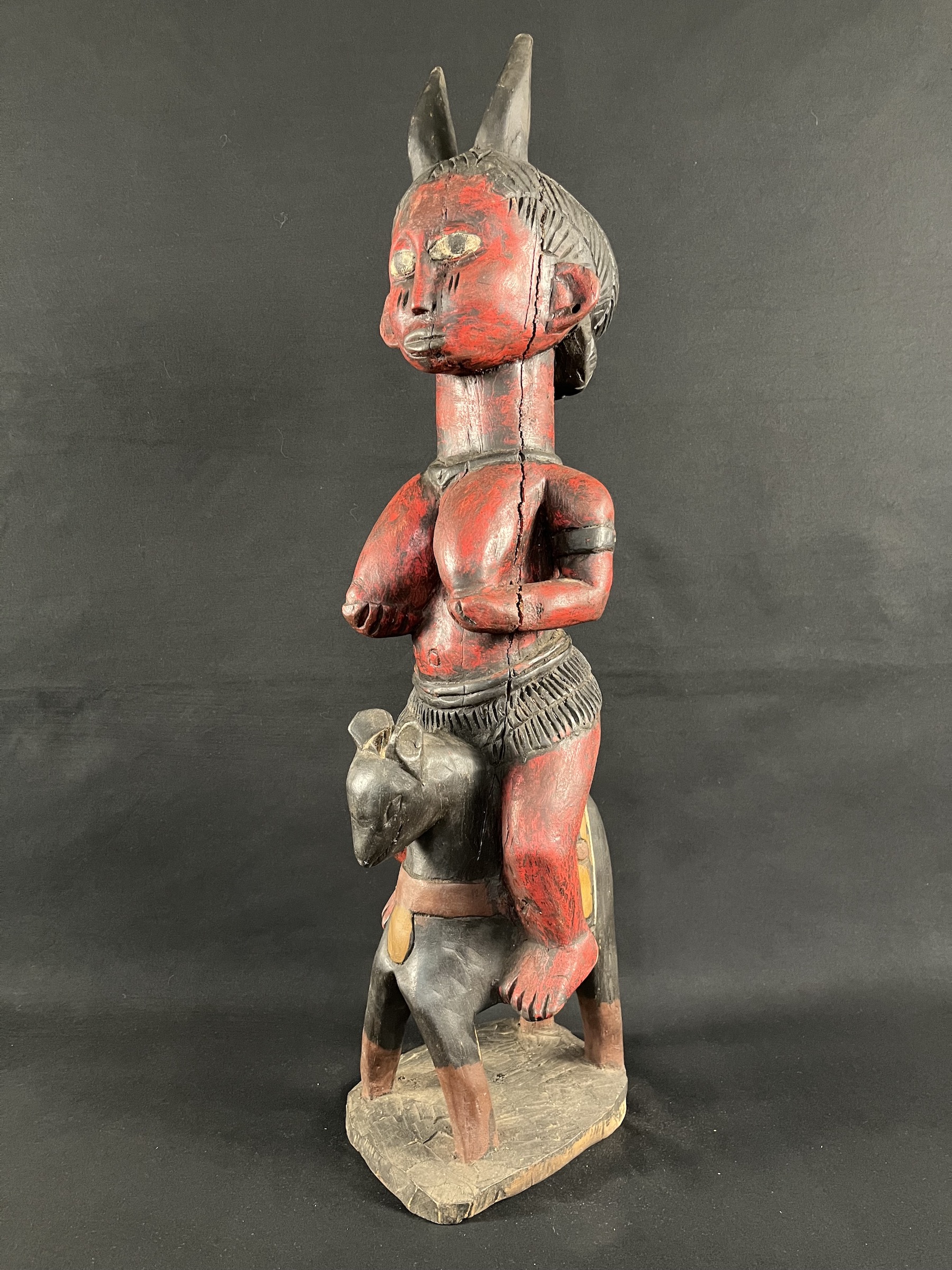
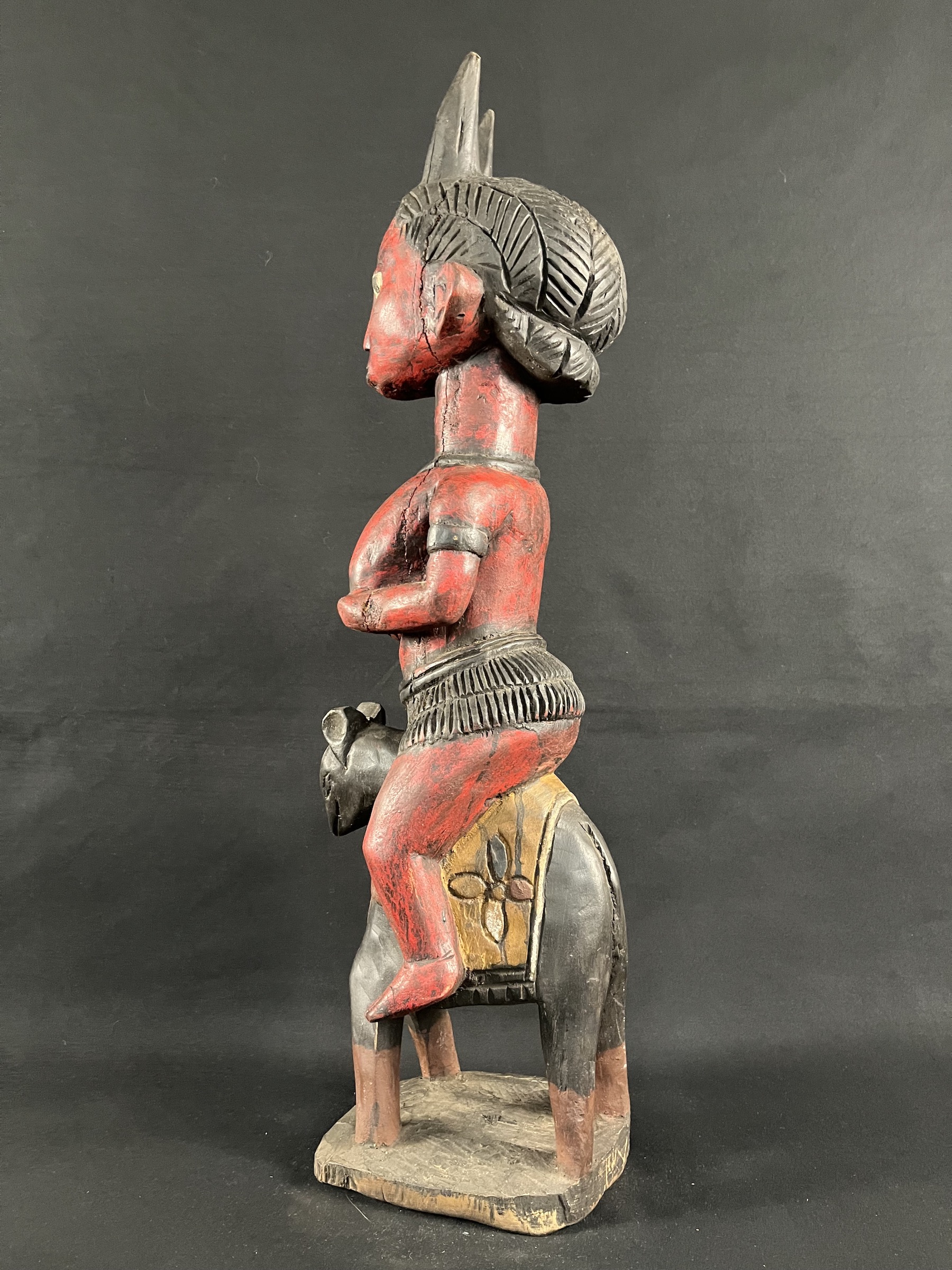
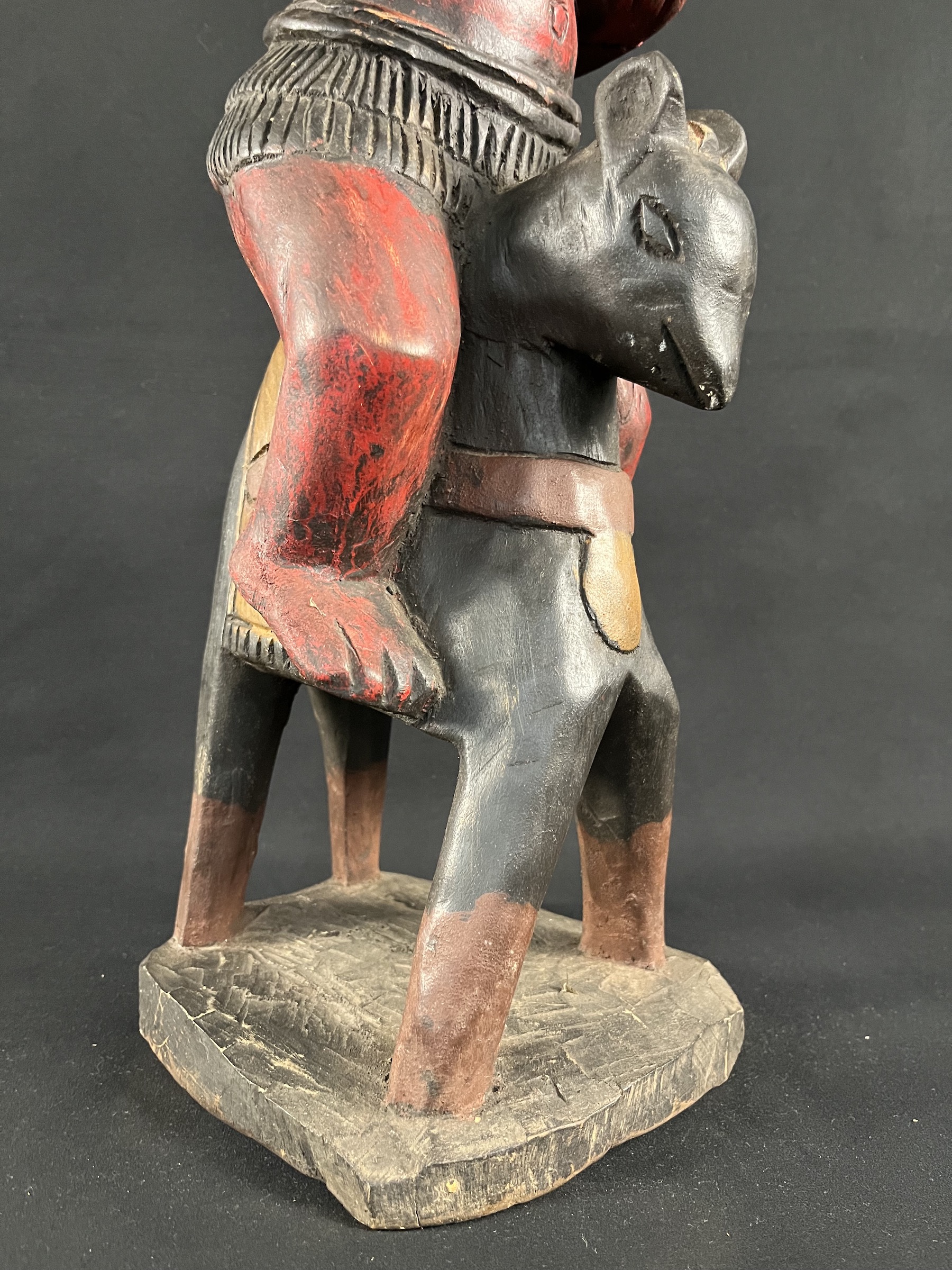
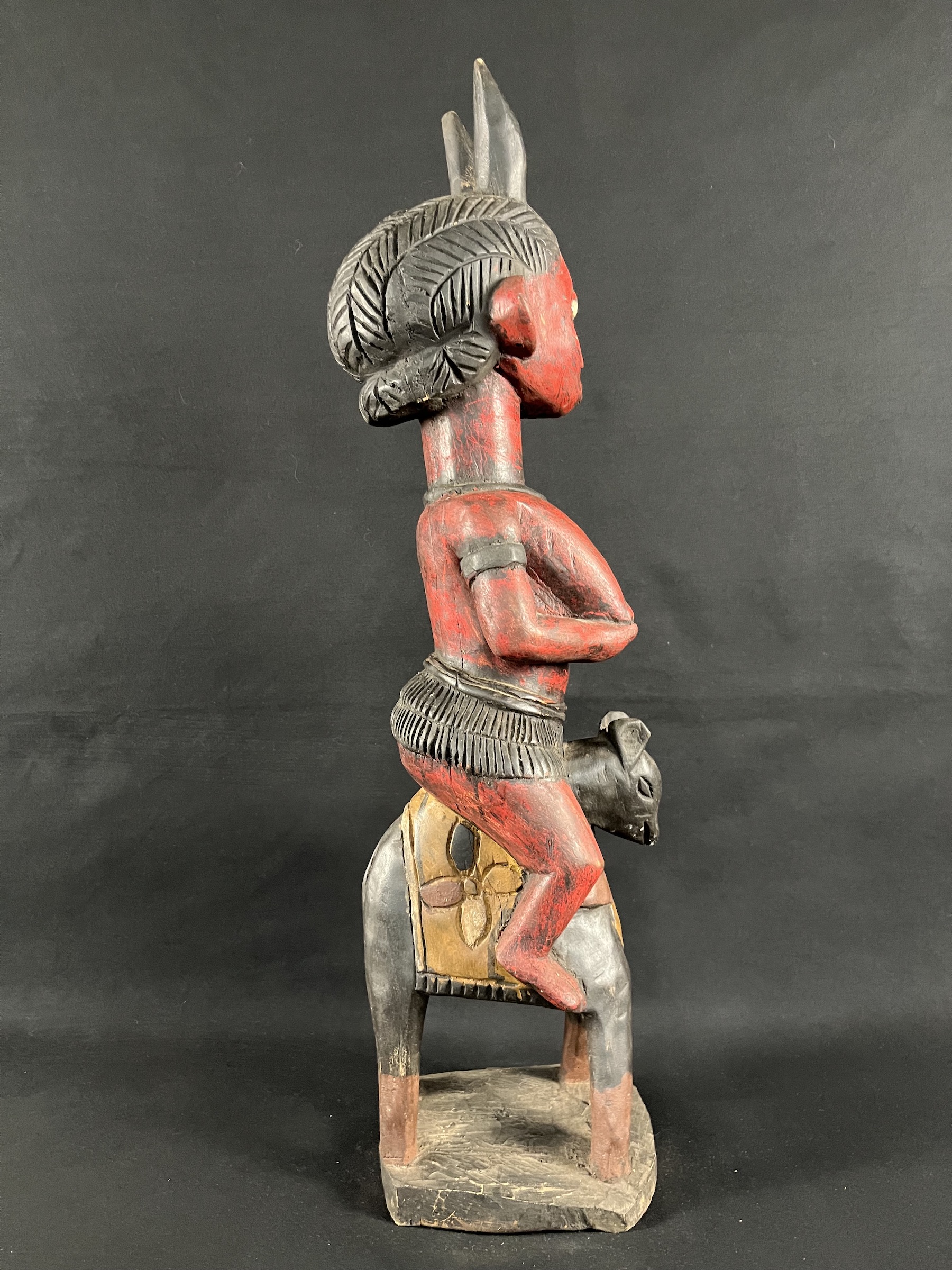
This sculpture, nicknamed “the queen on horseback”, is a traditional representation attributed to the Toma (or Loma) culture of Guinea. However, when observing the animal, it appears to be more of a stylised creature resembling a giant mouse or rodent rather than a horse, which sheds new light on its symbolism.
In African traditions, carved animals are not always naturalistic; they embody qualities or spiritual attributes. Here, the animal may symbolise cunning, agility or a protective function, values that are important in Toma cosmologies. This choice may reflect a mythological reference or a spiritual entity specific to this culture.
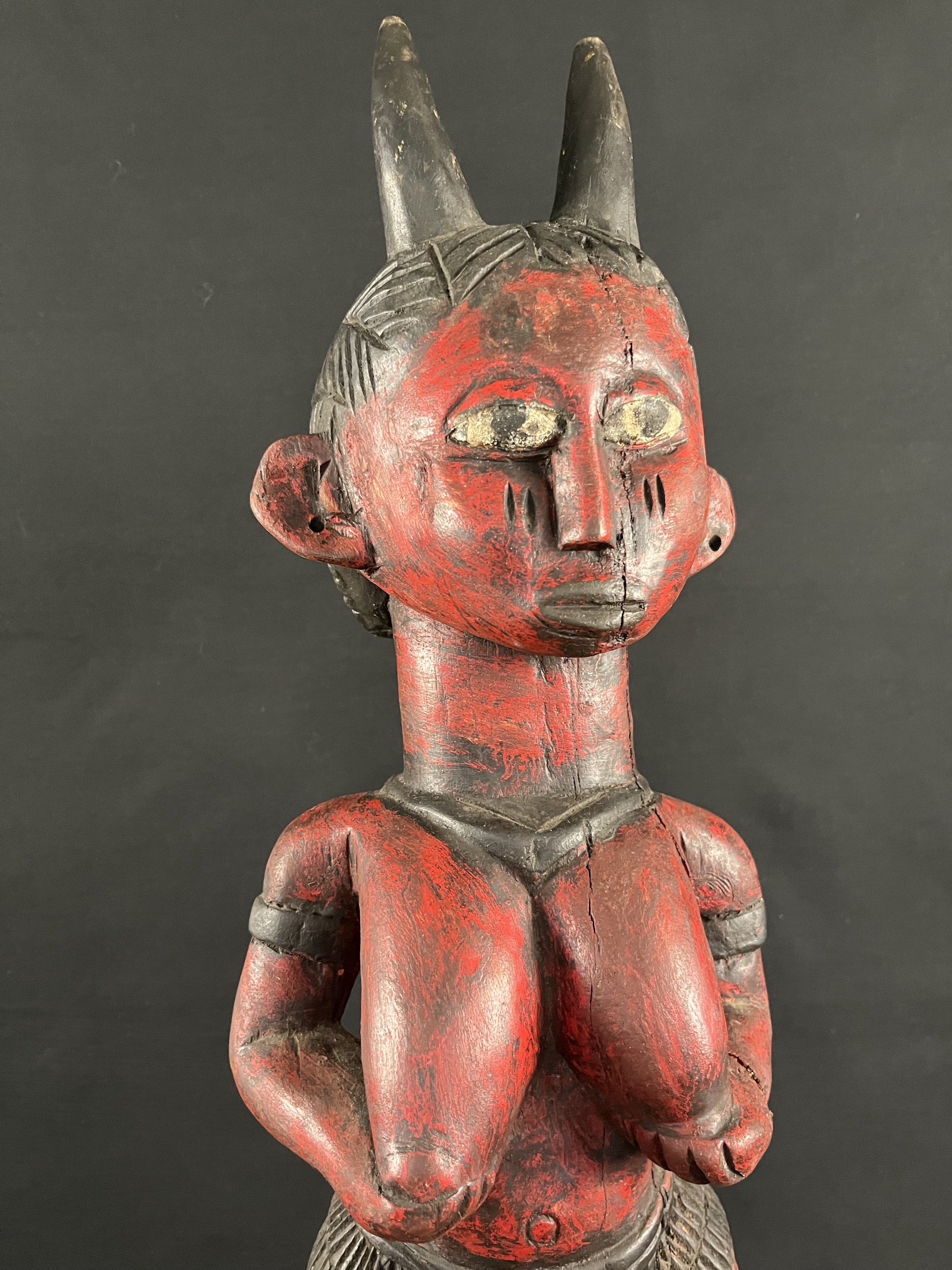
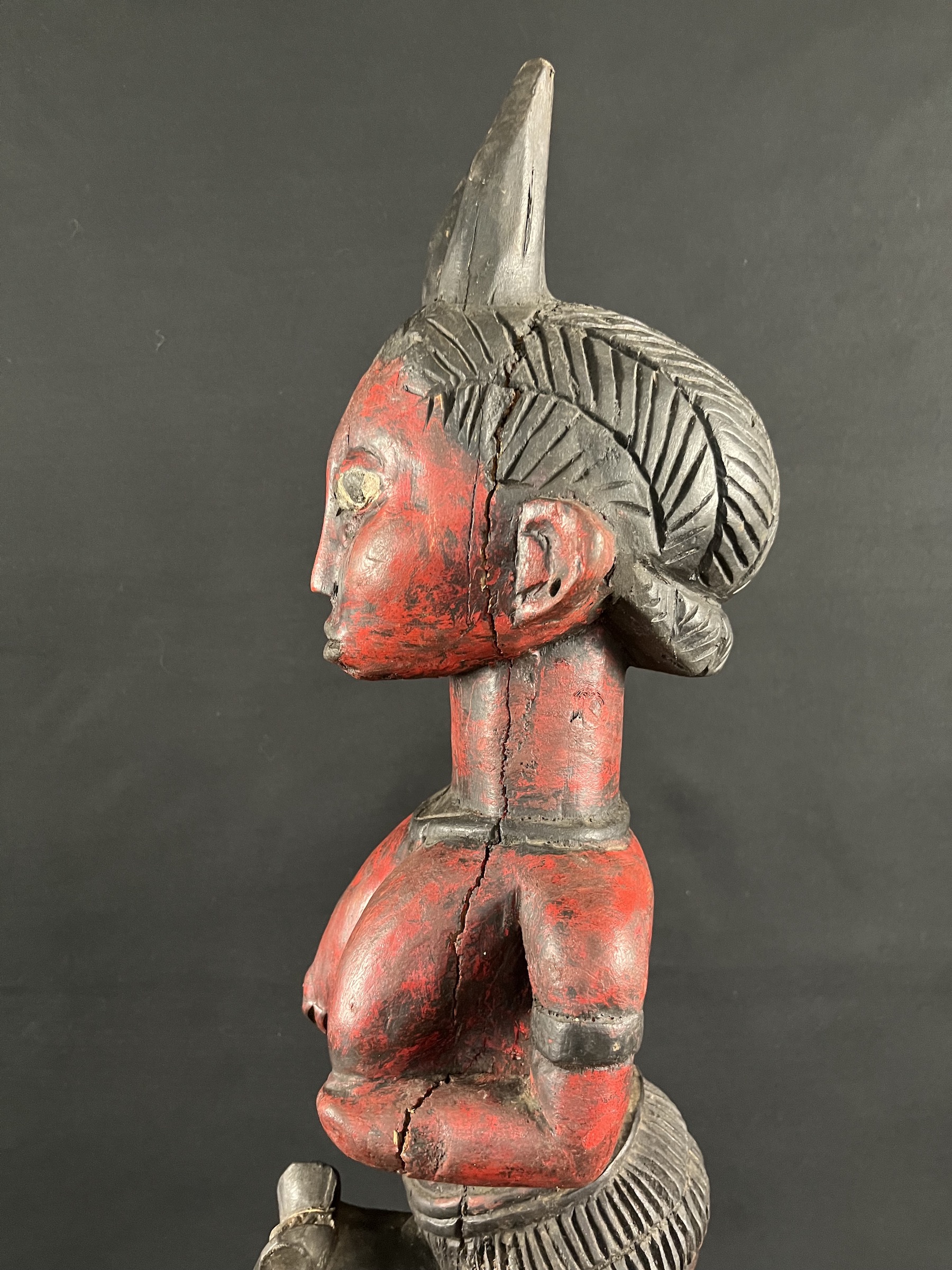
The female figure is probably a royal, spiritual or mythical figure, embodying power, maternity and protection. The horns carved on her head reinforce her association with mystical forces or protective spirits, evoking a deep link with the spiritual world.
In a ritual or ceremonial context, this statue may have served to invoke a protective entity, to ensure spiritual continuity between the ancestors and the living, or to affirm the status and power of chiefs or royal figures. The use of vivid colours such as red (energy, vitality) and black (connection to the spiritual realm) amplifies its ritual role and imposing presence.
This work, remarkable for its rarity and unique symbolism, celebrates power, the link with spirits and royalty within Toma society. The use of an unusual animal, such as this mouse-like creature, reflects the imaginative and spiritual richness of this artistic tradition.
Technical details
- Type of piece
- Statue
- Category
- Statues
- Ethnic group
- Toma
- Country
- Guinée
- Materials
- wood, Vif laquage moucheté
- Dimensions
- H 73 × W 18 × D 22 cm
- Weight
- 4,43 kg
- Estimated dating
- second half 20th c.
- Laboratory test
- Not tested
- Reference
- 48