Mémoire d’Afrique — Ref. 191
Bambara mother-and-child statue — Bambara, Mali — African tribal art — Ref. 191
Description
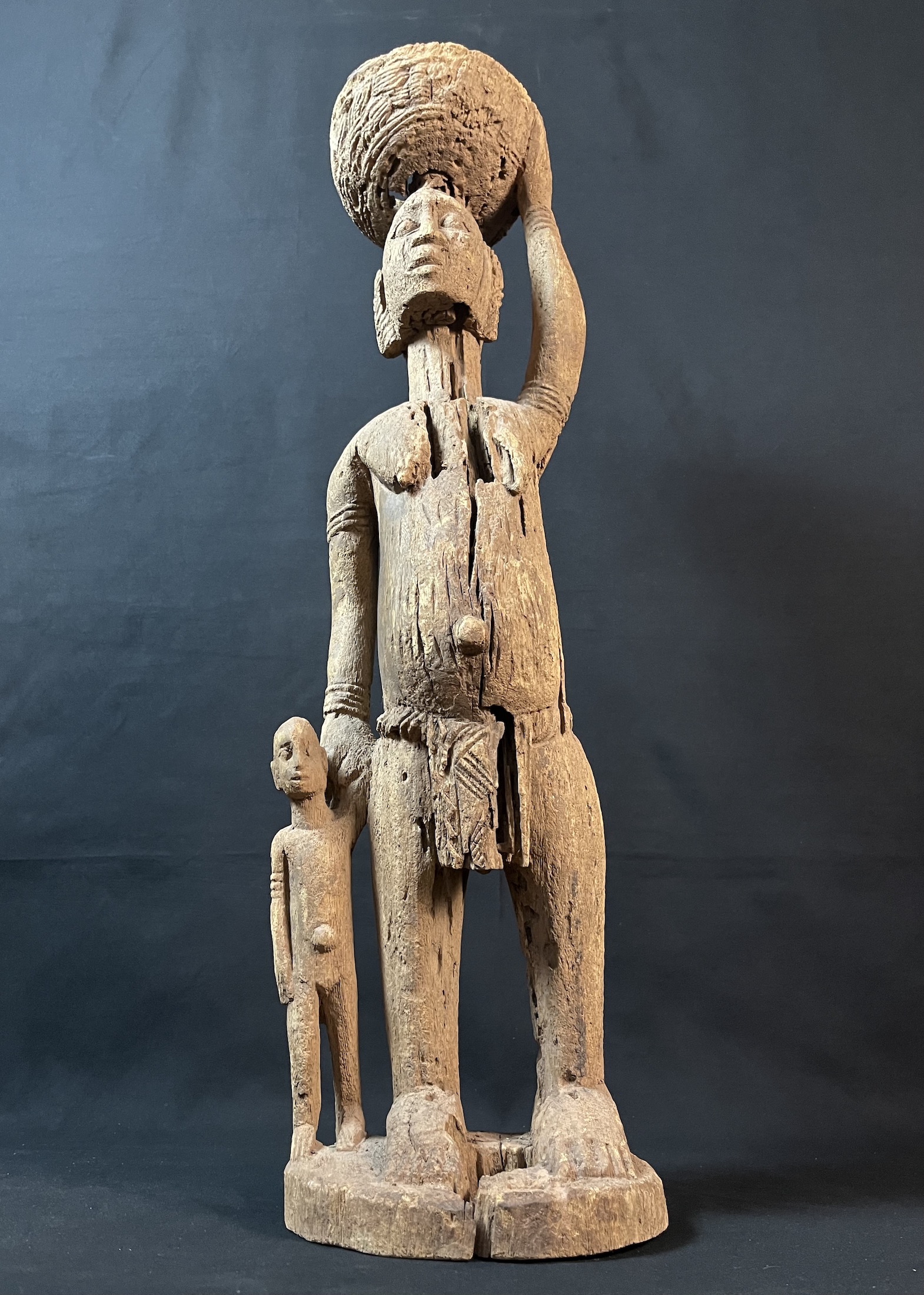
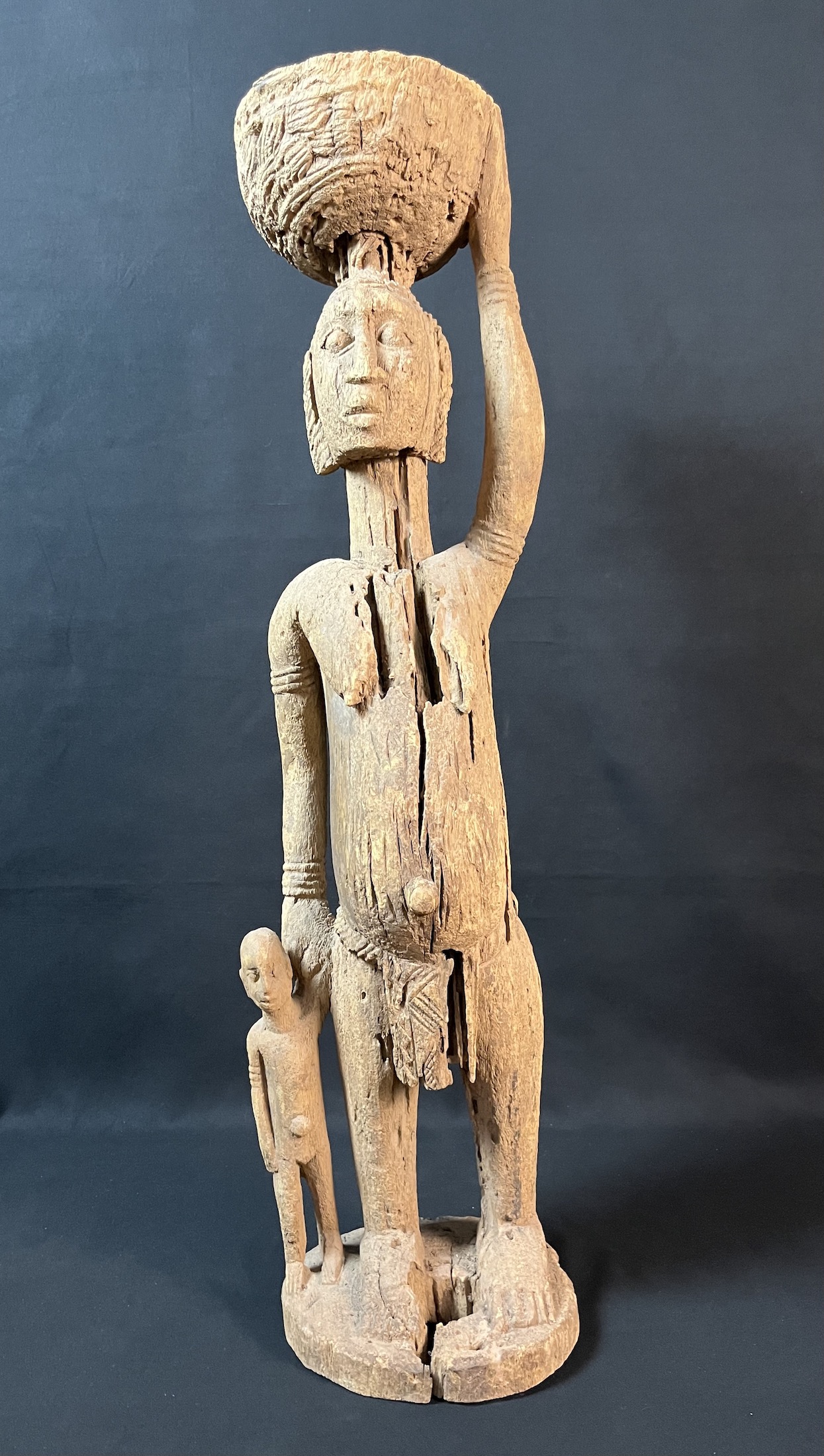
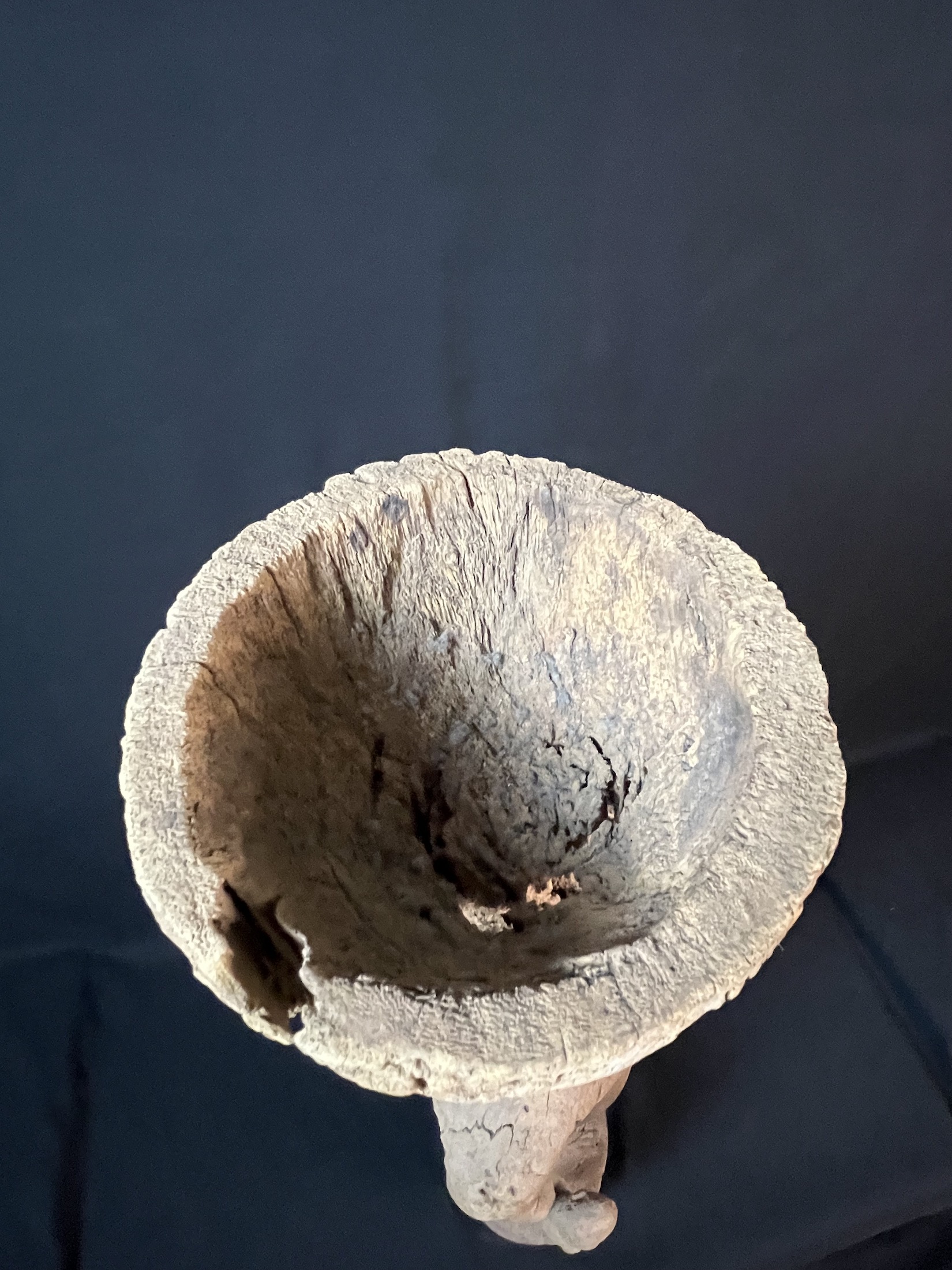
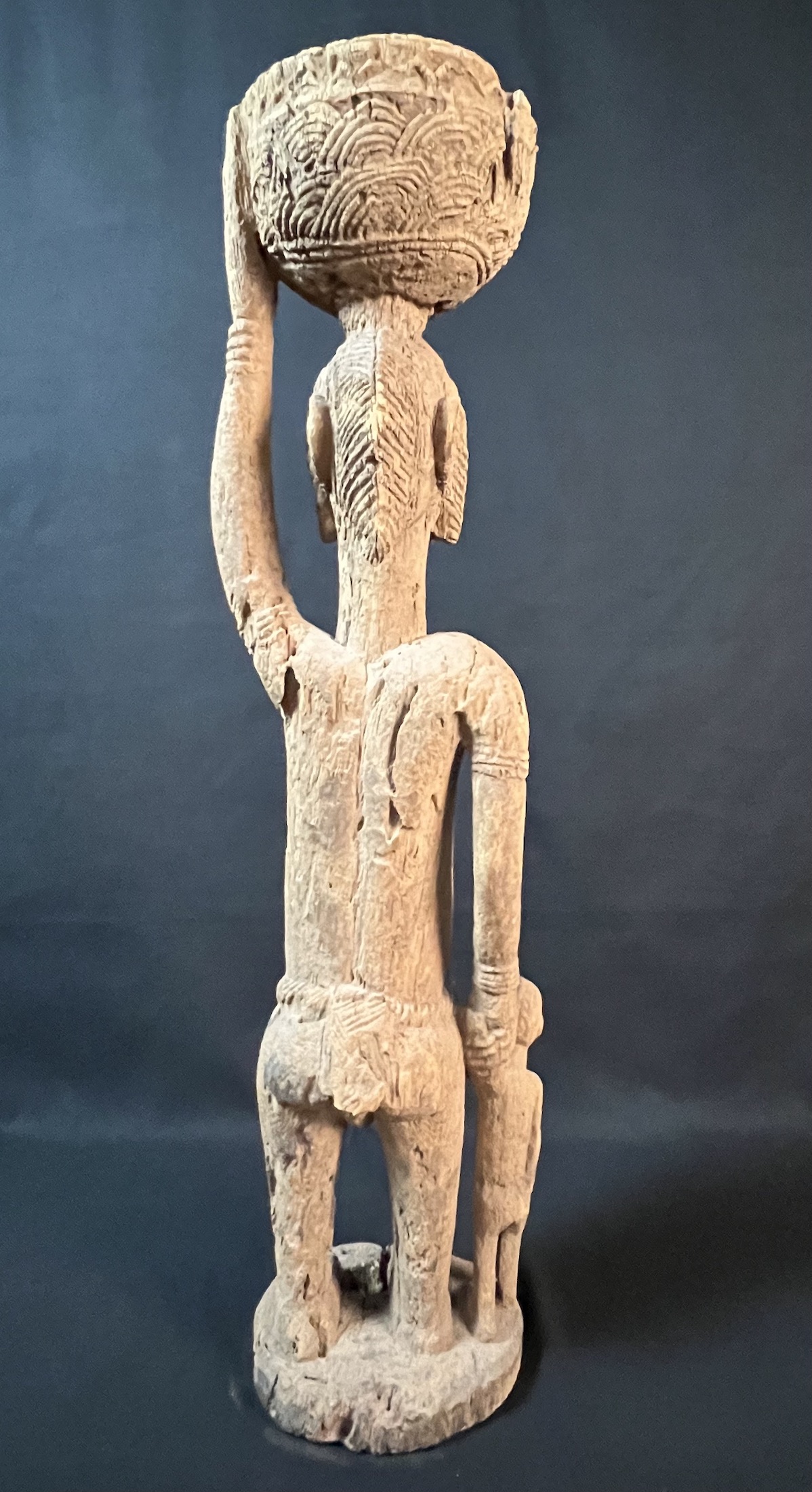
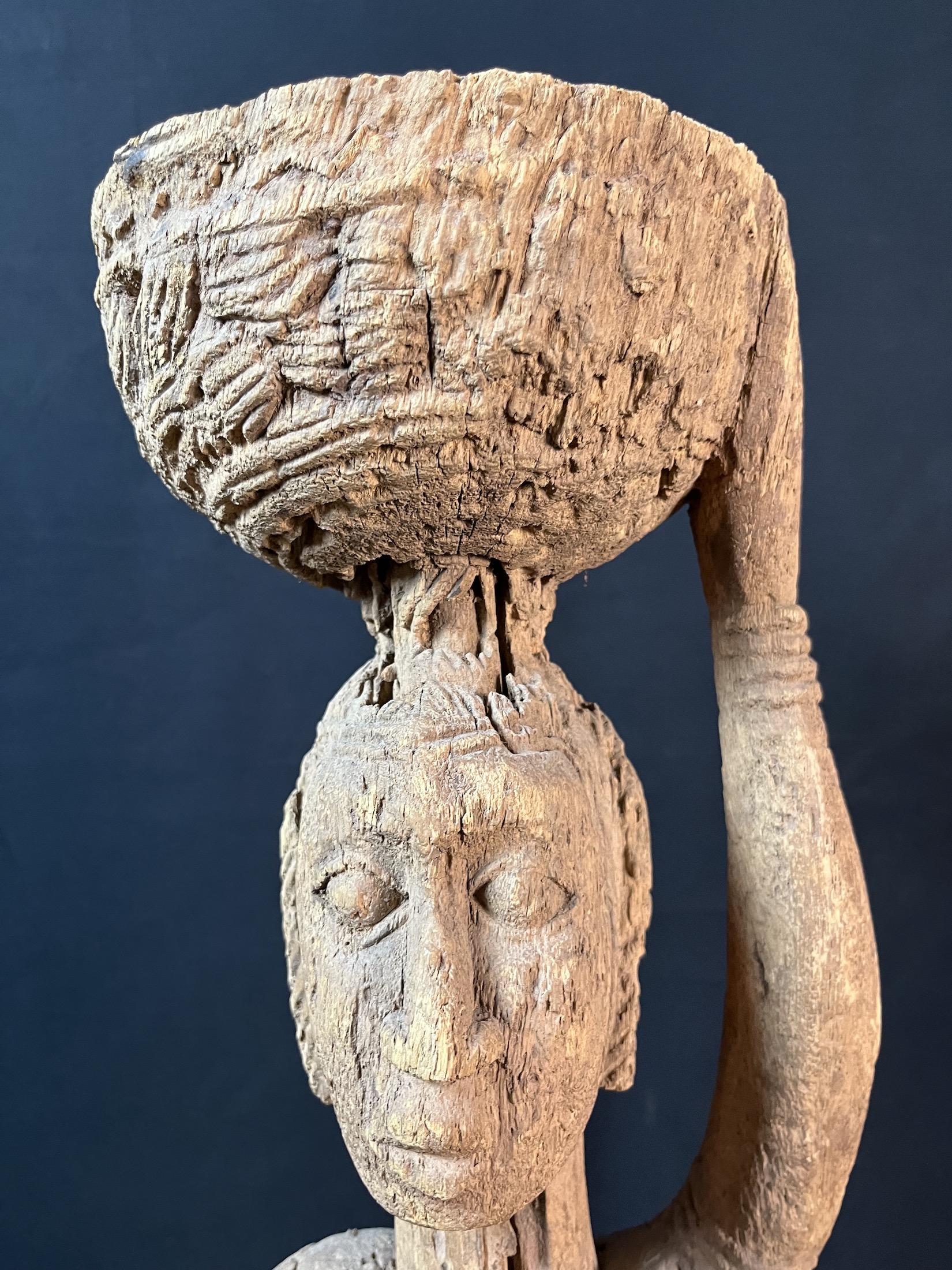
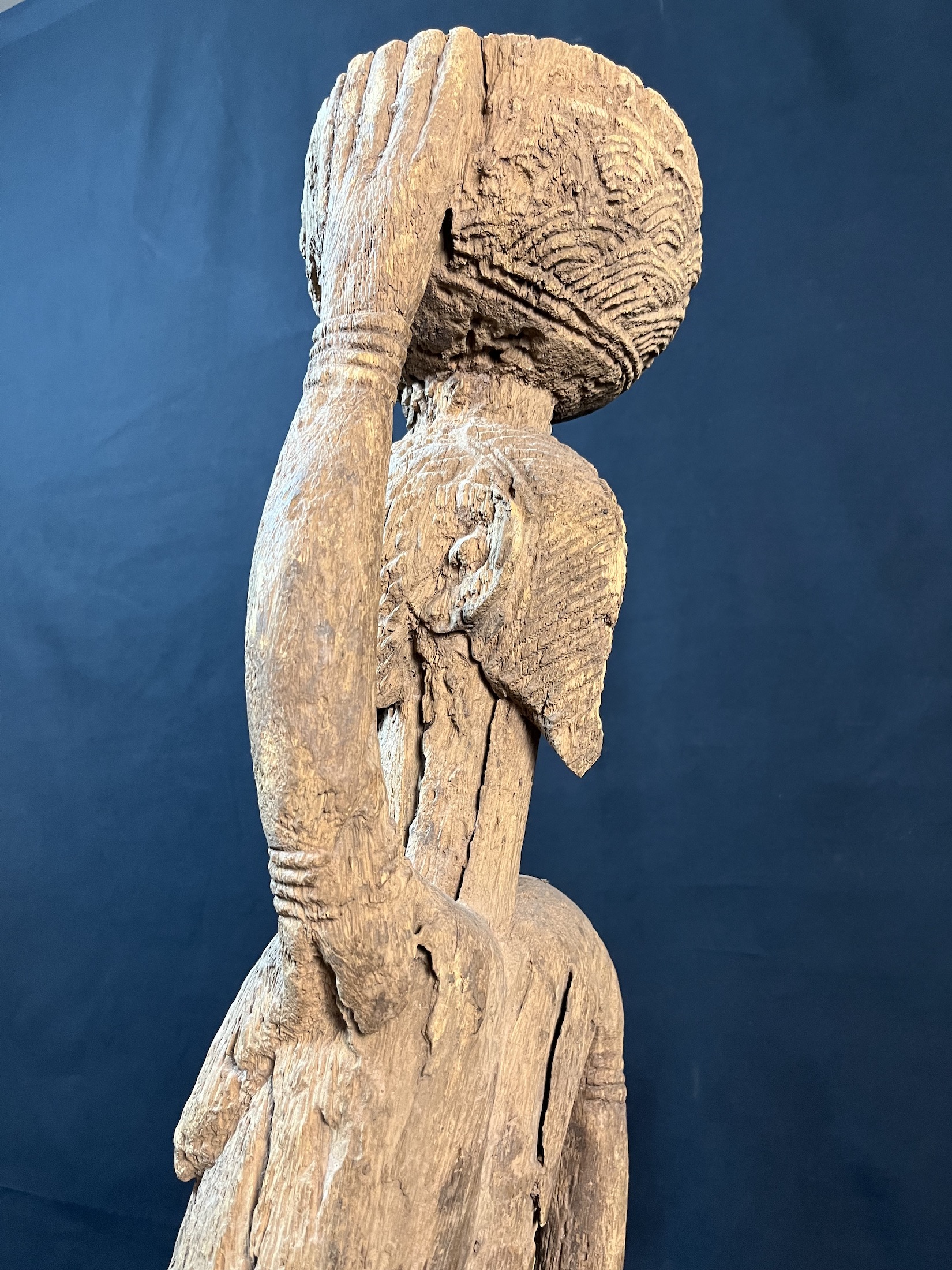
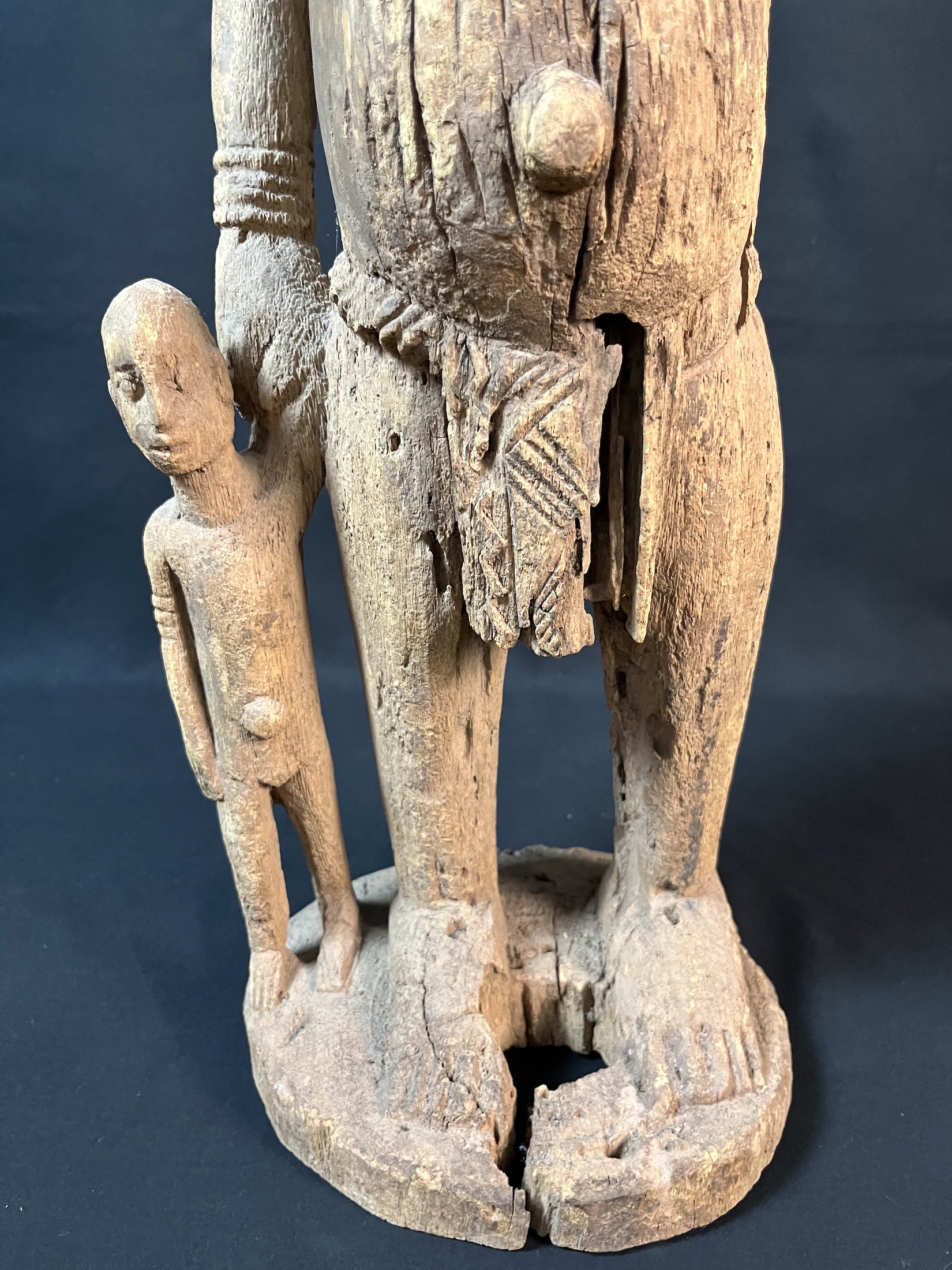
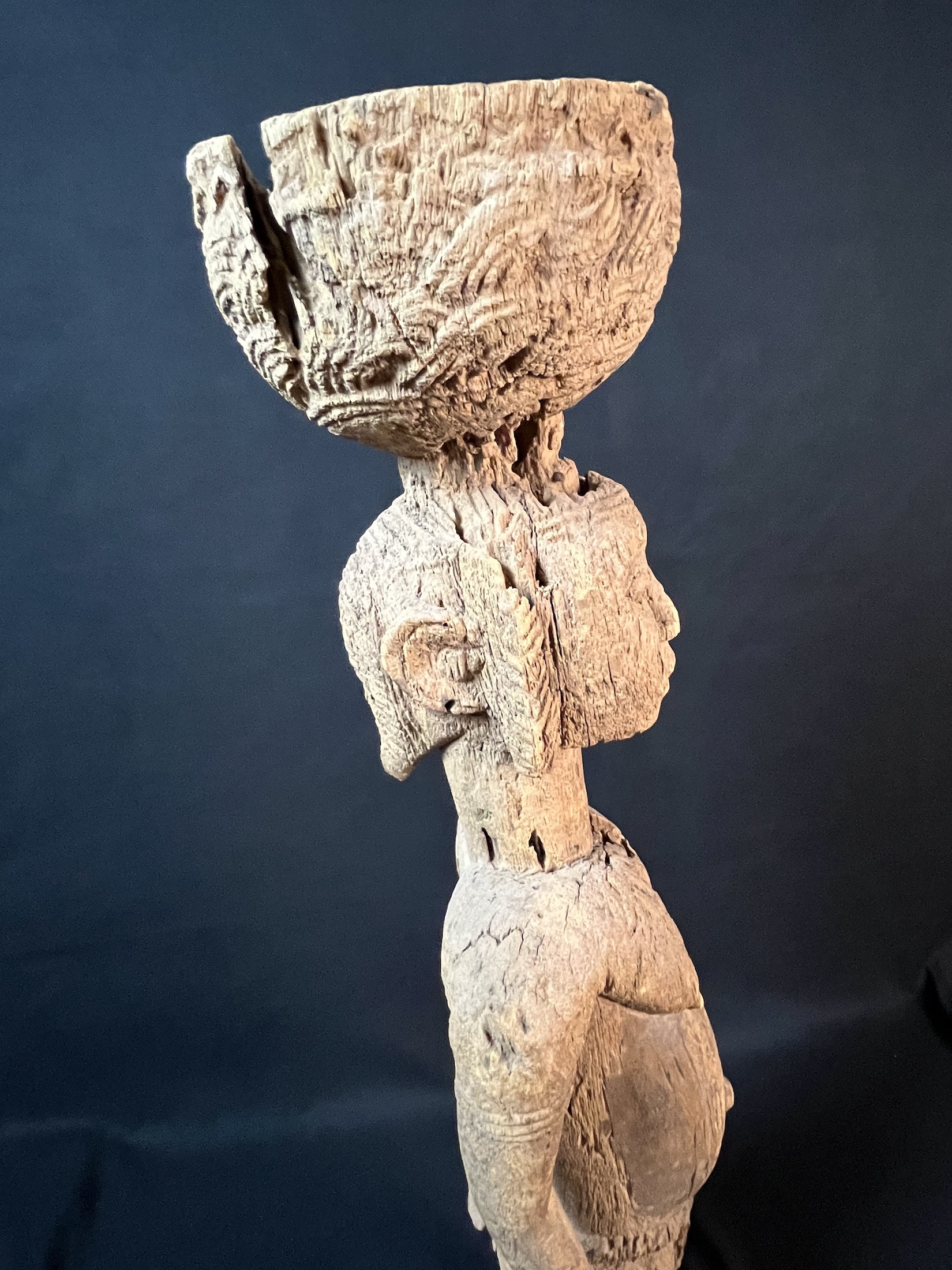
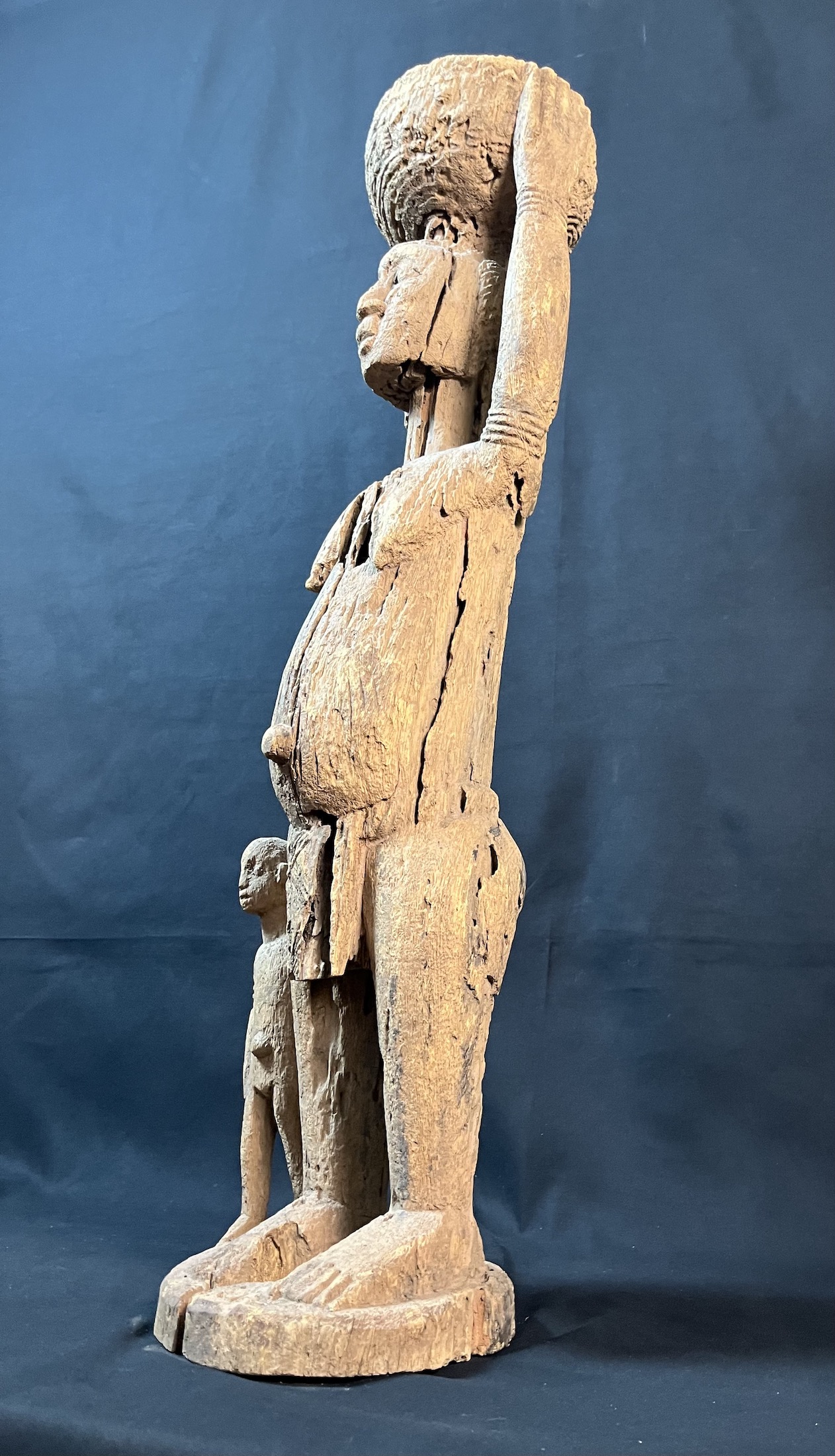
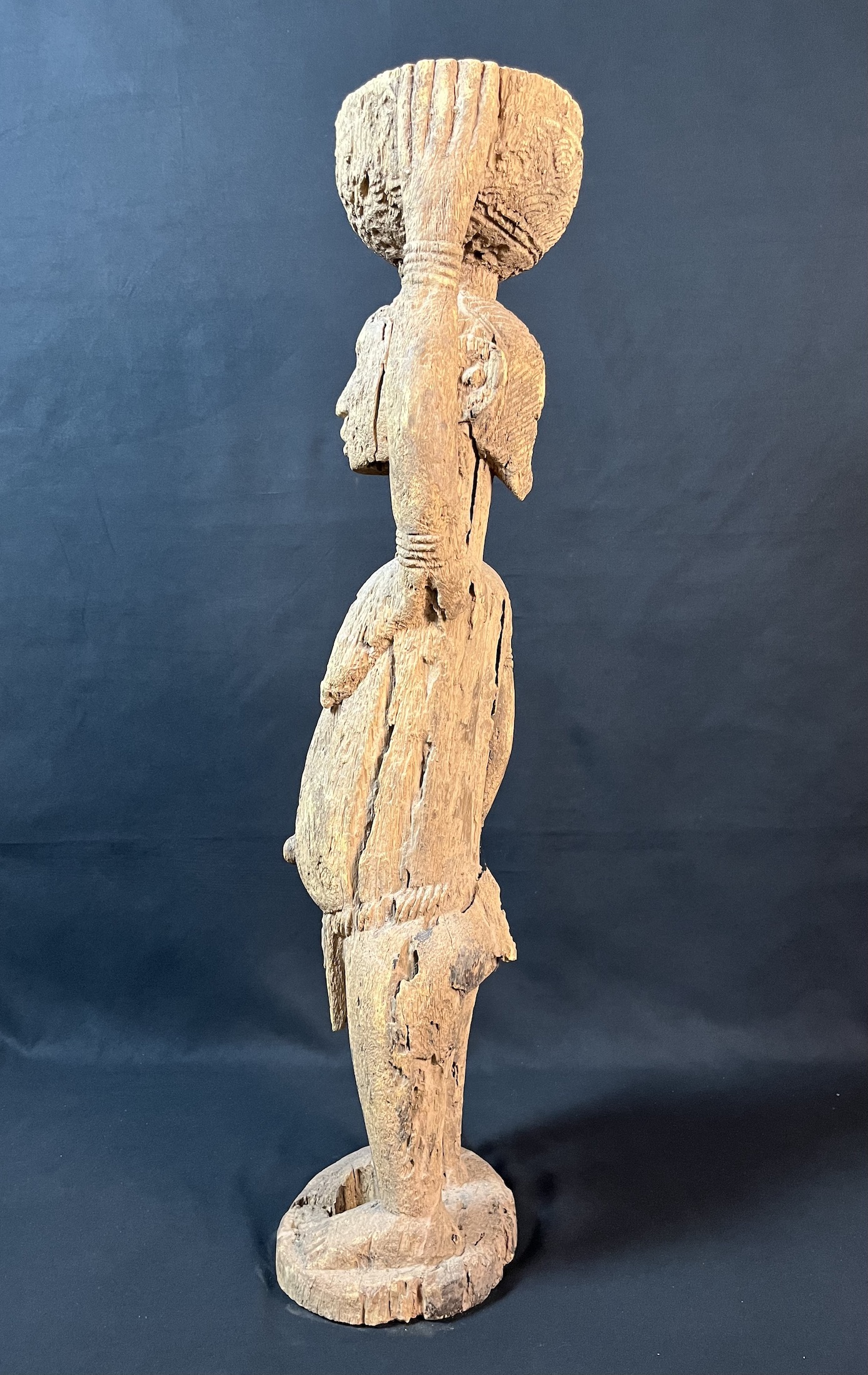
This Bambara statue from Mali presents a female figure carrying a vessel on her head, a recurring symbol of fertility and generosity in Bambara culture. The elaborate dome-shaped headdress with incised motifs is characteristic of Bambara sculptures, often associated with protective statues and female ancestors. These distinctive headdresses embody the link with spiritual forces and symbolise the authority and dignity of the woman represented.
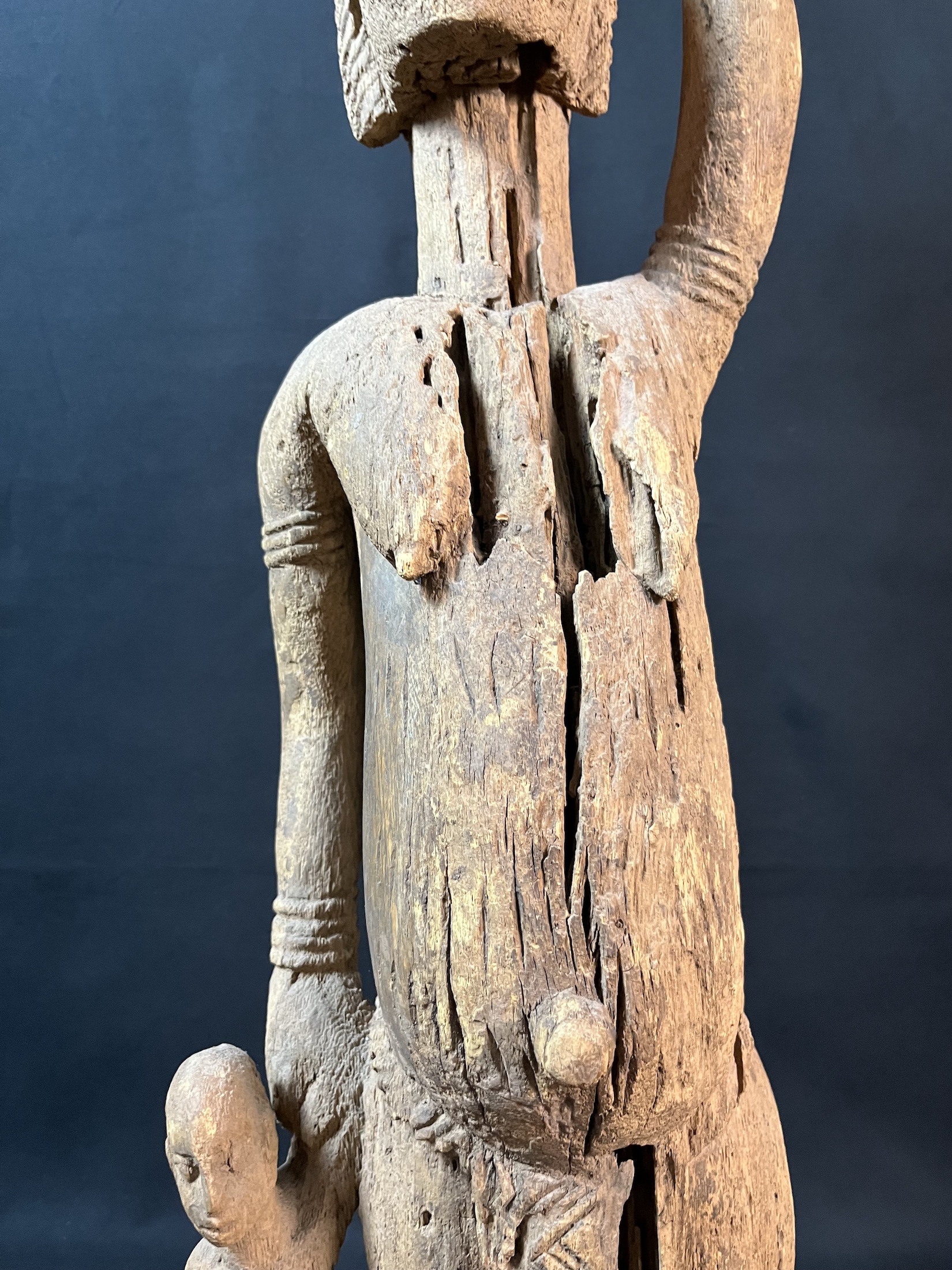
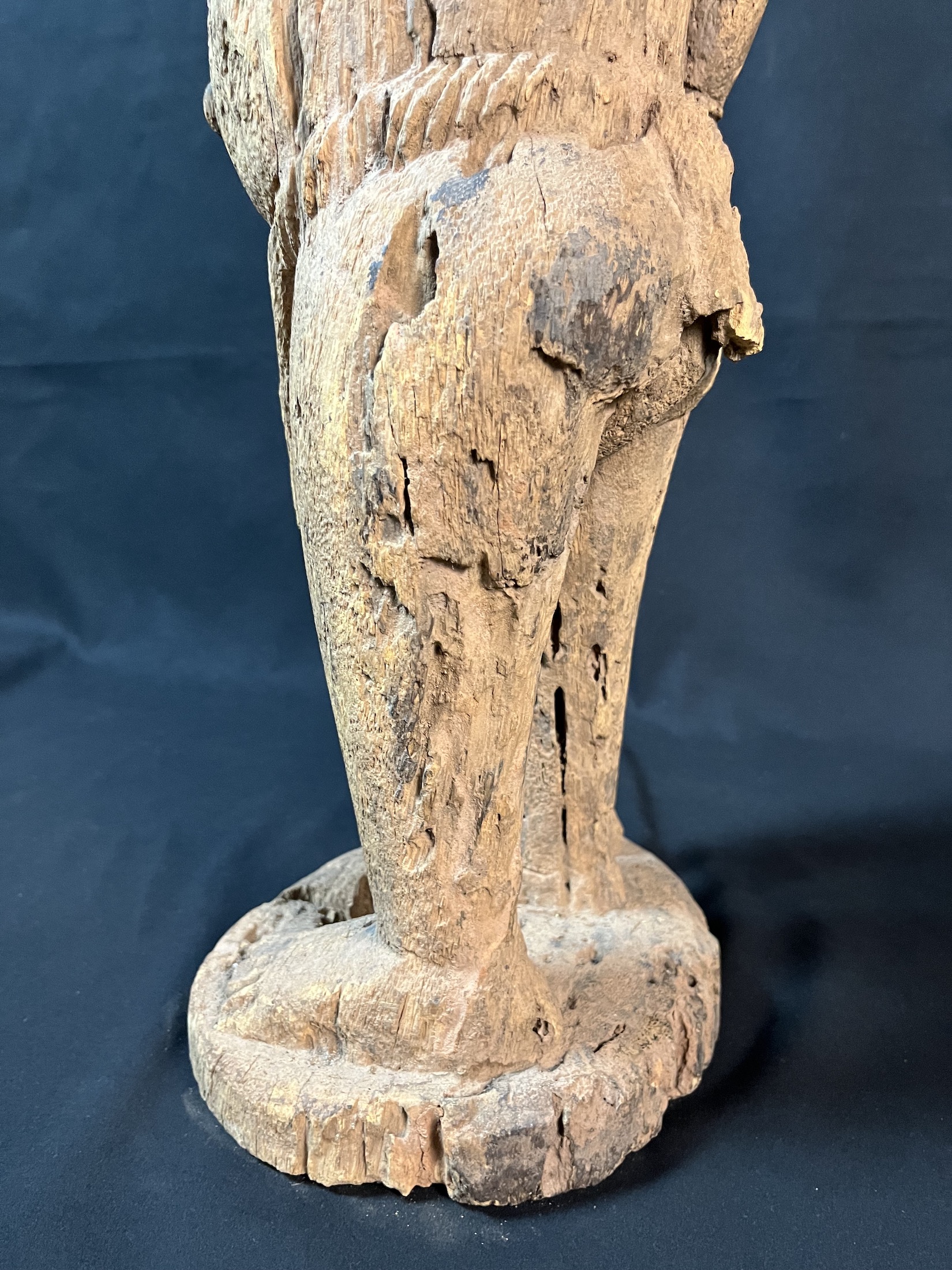
The loincloth, richly decorated with geometric motifs, is also typical of the Bambara style. These stylised motifs, often chevrons and interlacing lines, symbolise protection and ancestral belonging. Among the Bambara, such representations of women carrying vessels often indicate fertility, motherhood and support for the community. This maternal and protective role is reinforced by the presence of a child beside the main figure, emphasising the transmission of values and the link with future generations.
The surface of the statue, marked by wear, cracks and the raw texture of the wood, suggests that it may have been exposed to the elements, perhaps placed outdoors as a protective or funerary figure. This patinated condition attests to the age of the piece and reinforces its sacred character. Bambara statues of this type were often used in ritual contexts, particularly to invoke protection and fertility, or to honour ancestral spirits.
This statue embodies the essential symbols of Bambara culture: fertility, protection and continuity of ancestral traditions, while also being a stylised and deeply spiritual representation of woman in Bambara society.
Technical details
- Type of piece
- Statue
- Category
- Statues
- Ethnic group
- Bambara
- Country
- Mali
- Materials
- wood
- Dimensions
- H 90 × W 22 × D 18 cm
- Weight
- 4,8 kg
- Estimated dating
- second half 20th c.
- Laboratory test
- Not tested
- Reference
- 191