Mémoire d’Afrique — Ref. 194
Déblé statue — Senufo, Côte d’Ivoire — African tribal art — Ref. 194
Description
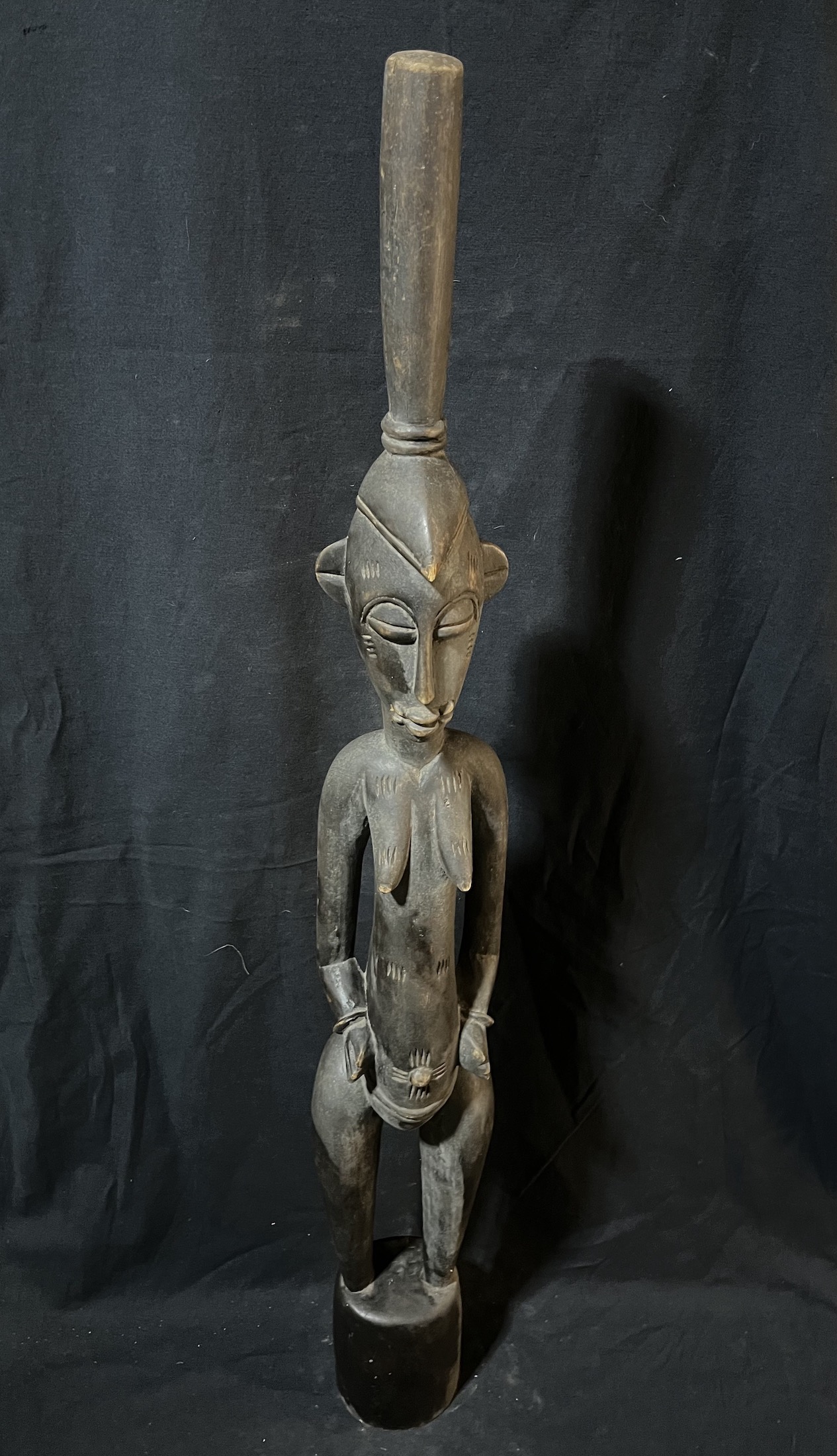
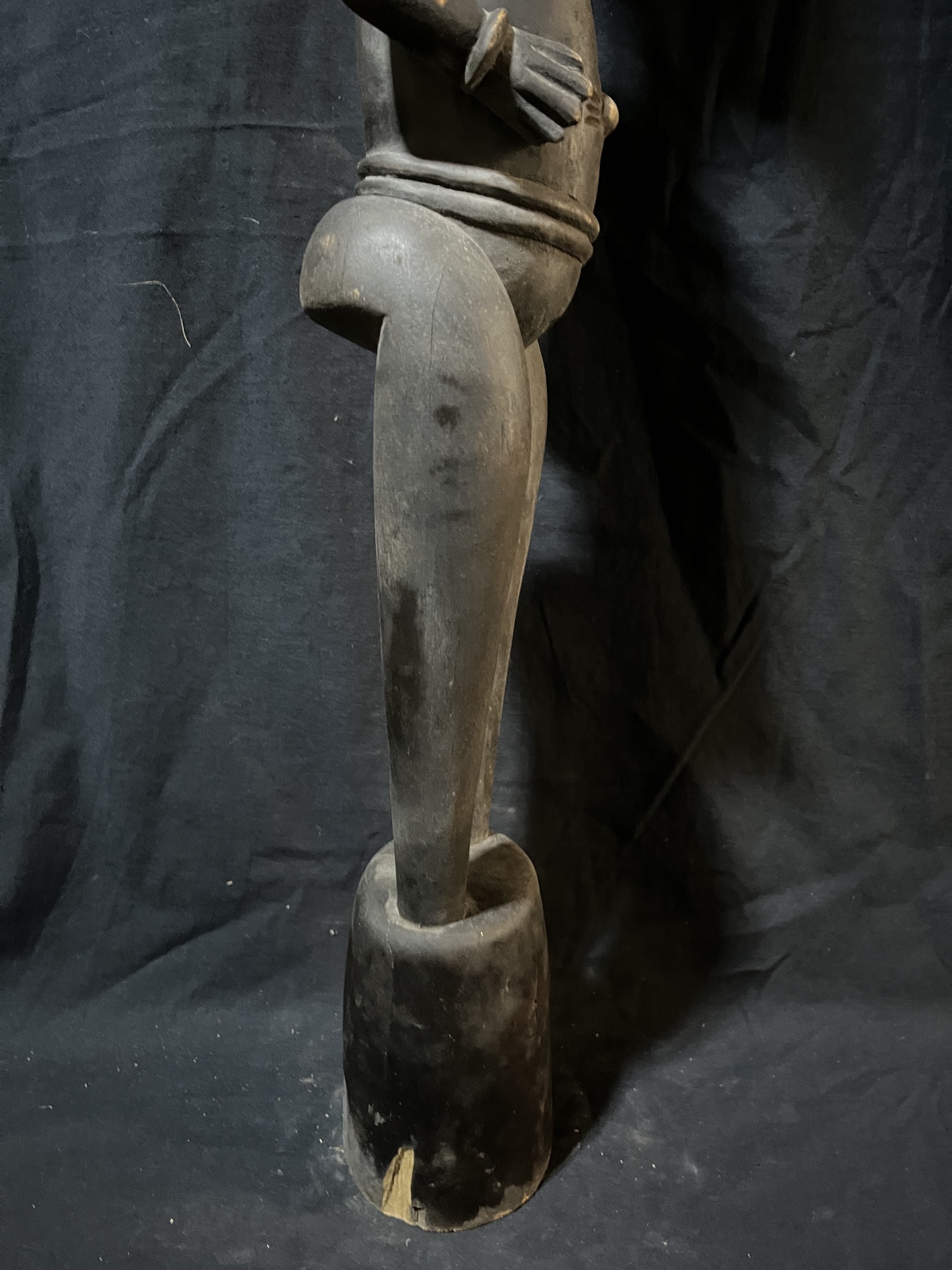
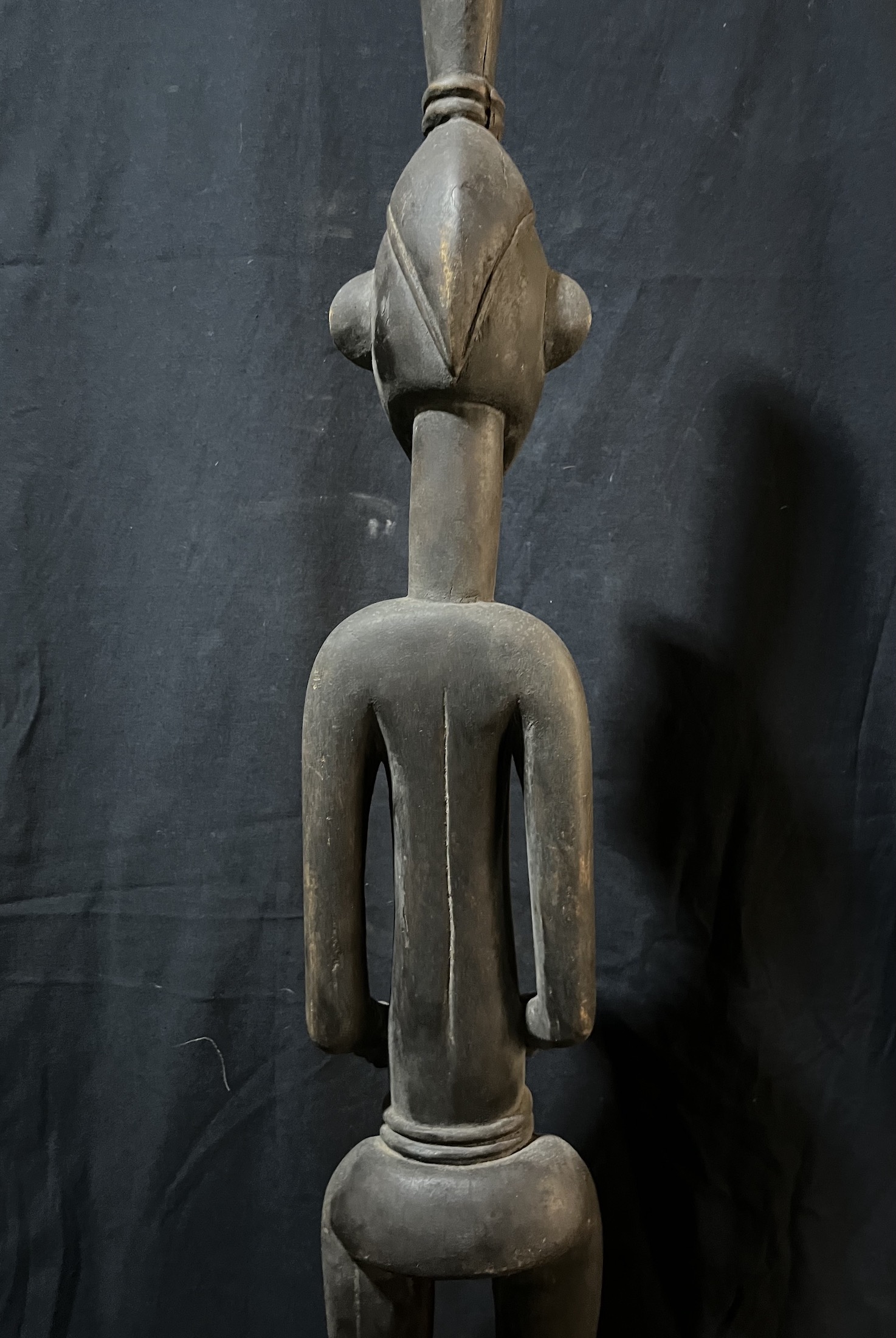
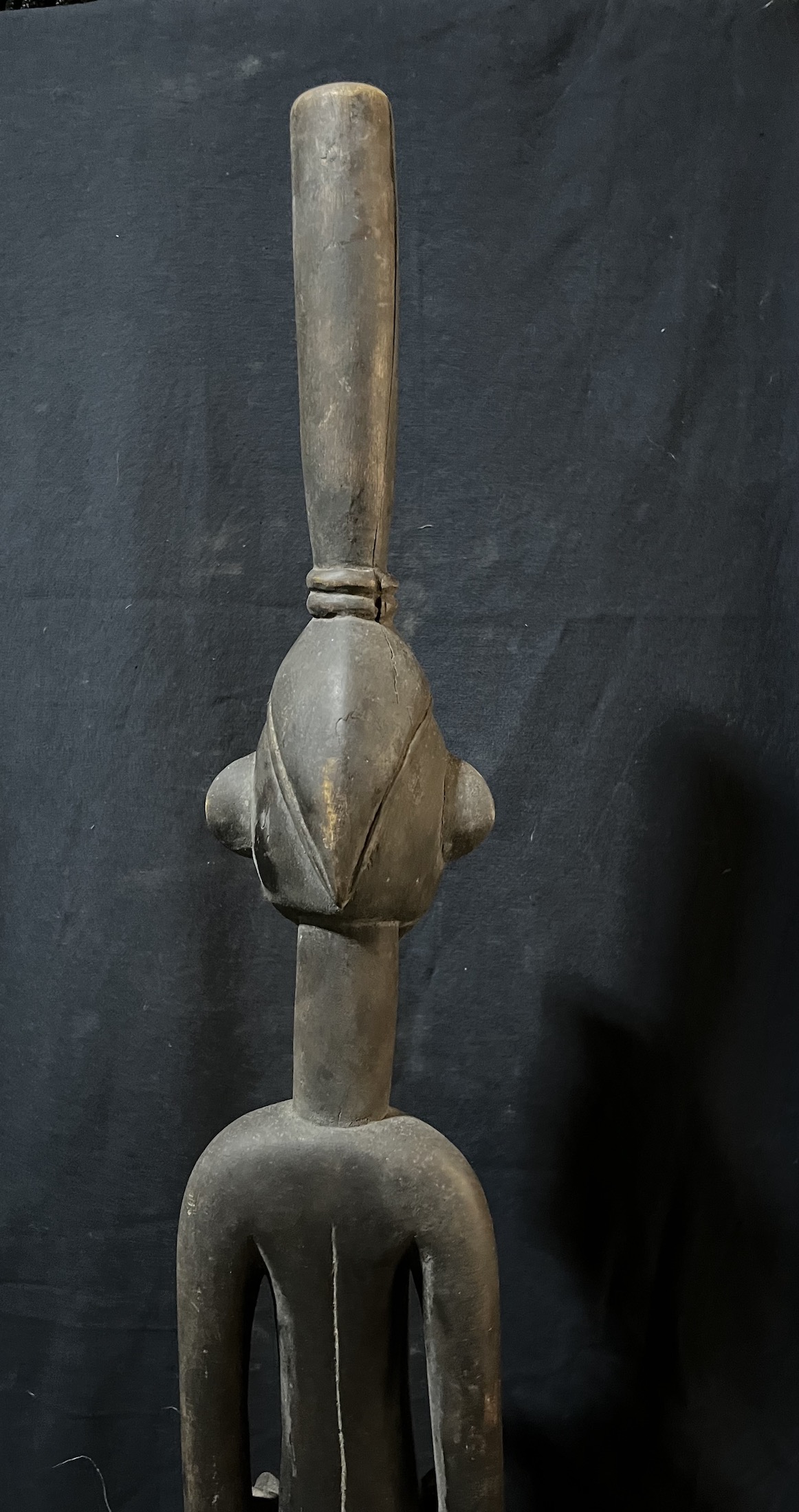
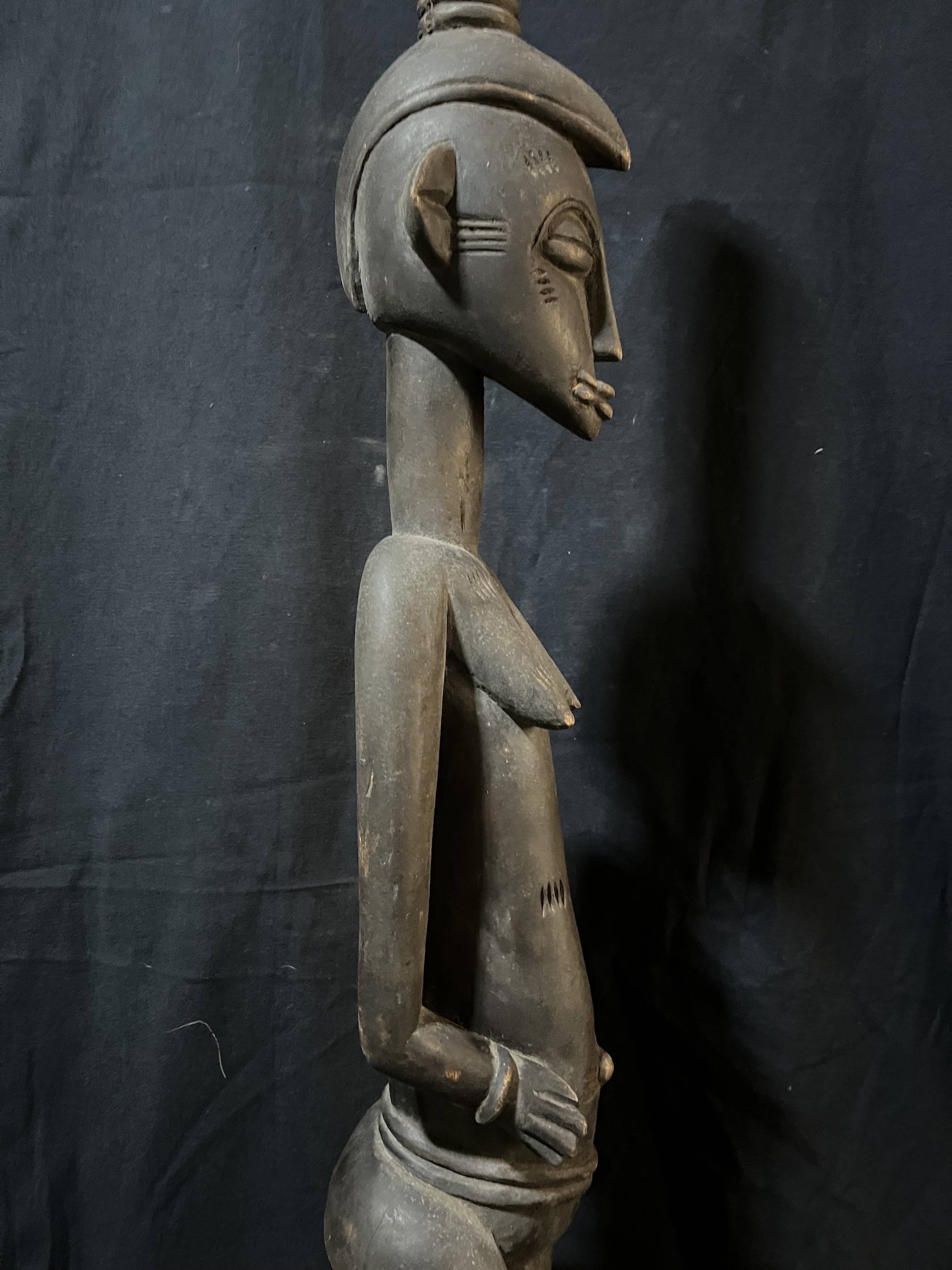
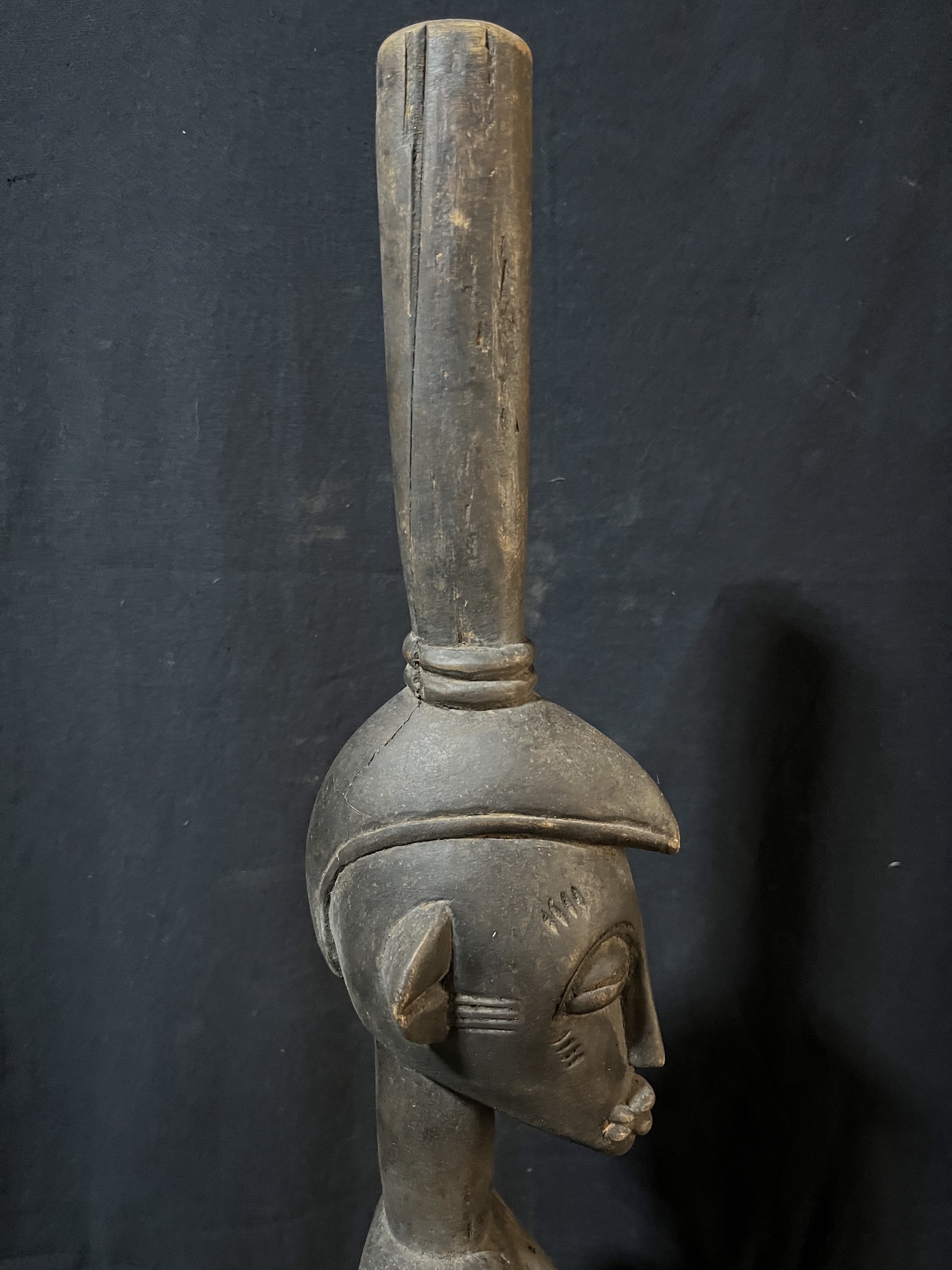
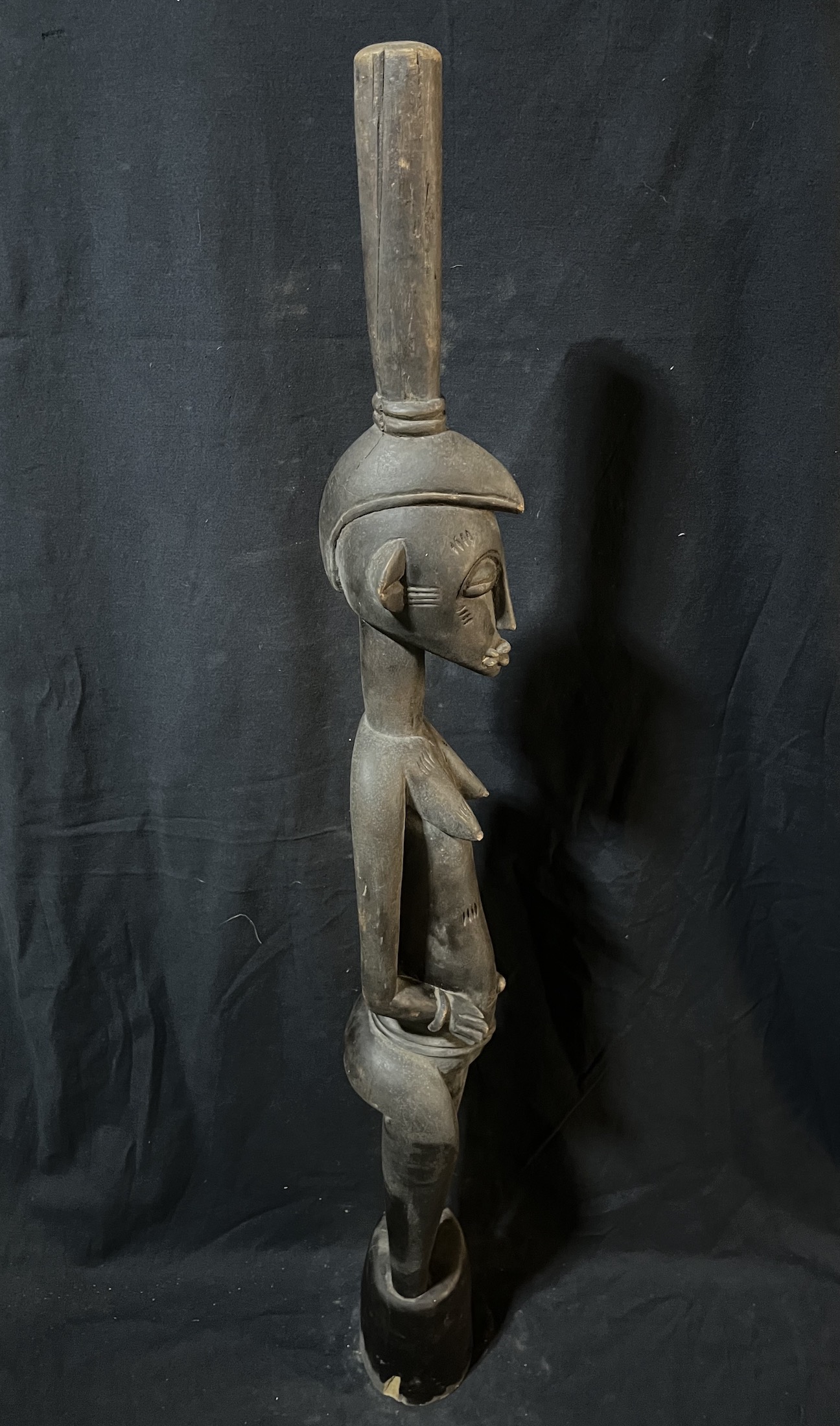
Originating from the Senufo people of Côte d’Ivoire, this Déblé statue is a female representation associated with the rituals of Poro, the male initiatory society. Déblé, also called dance pestles, were used during funerary ceremonies and propitiatory rites intended to promote fertility and prosperity.
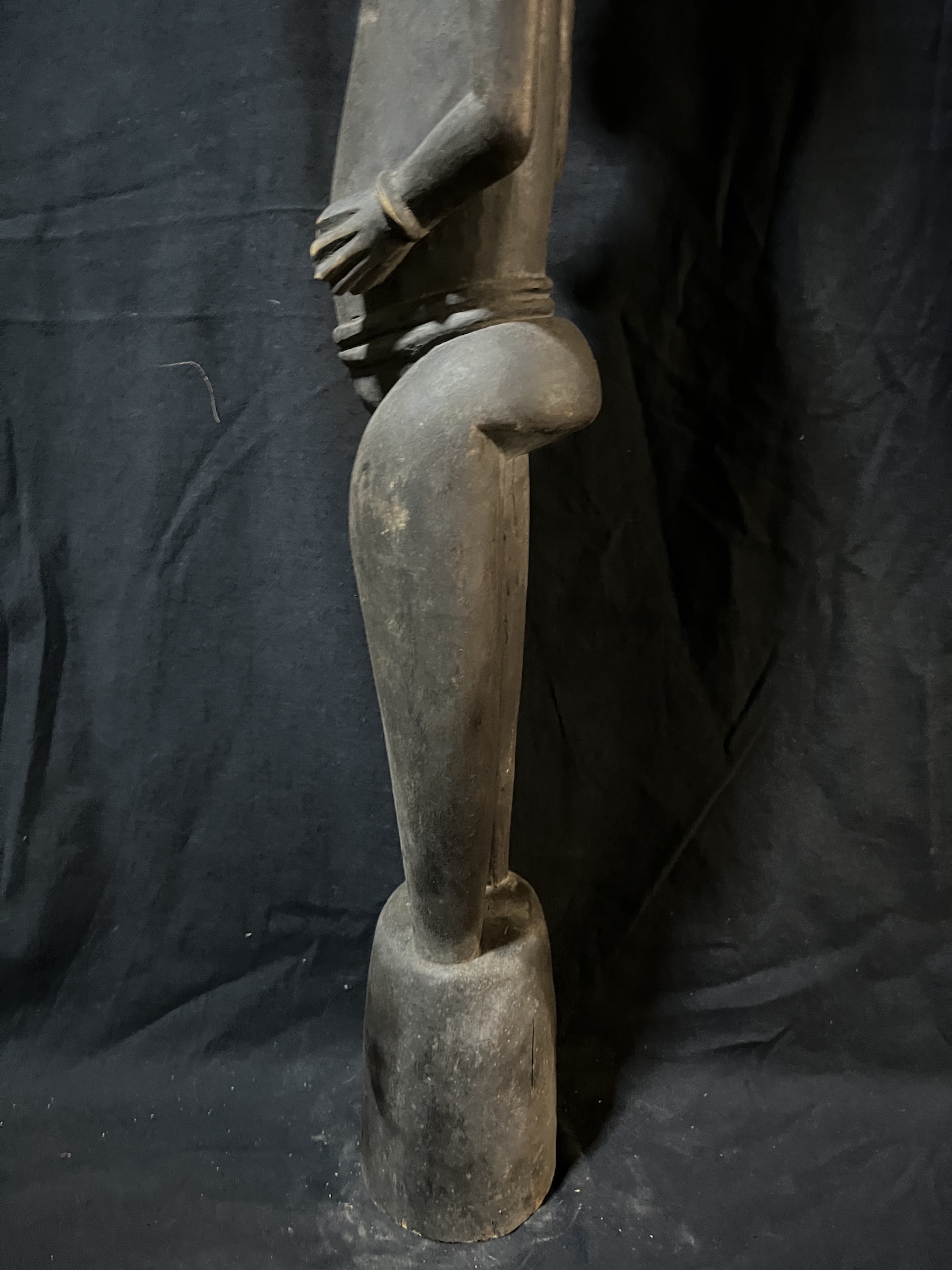
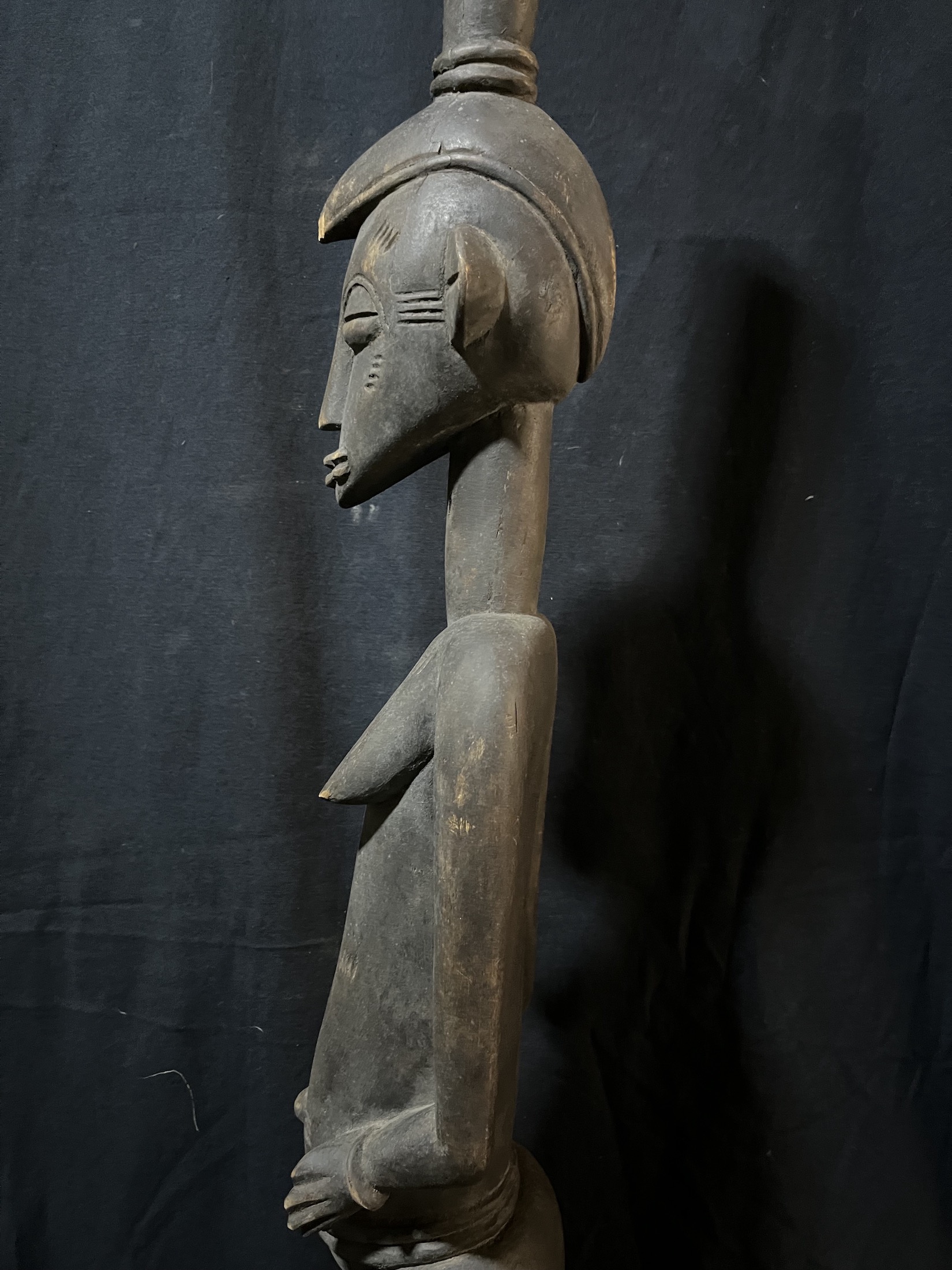
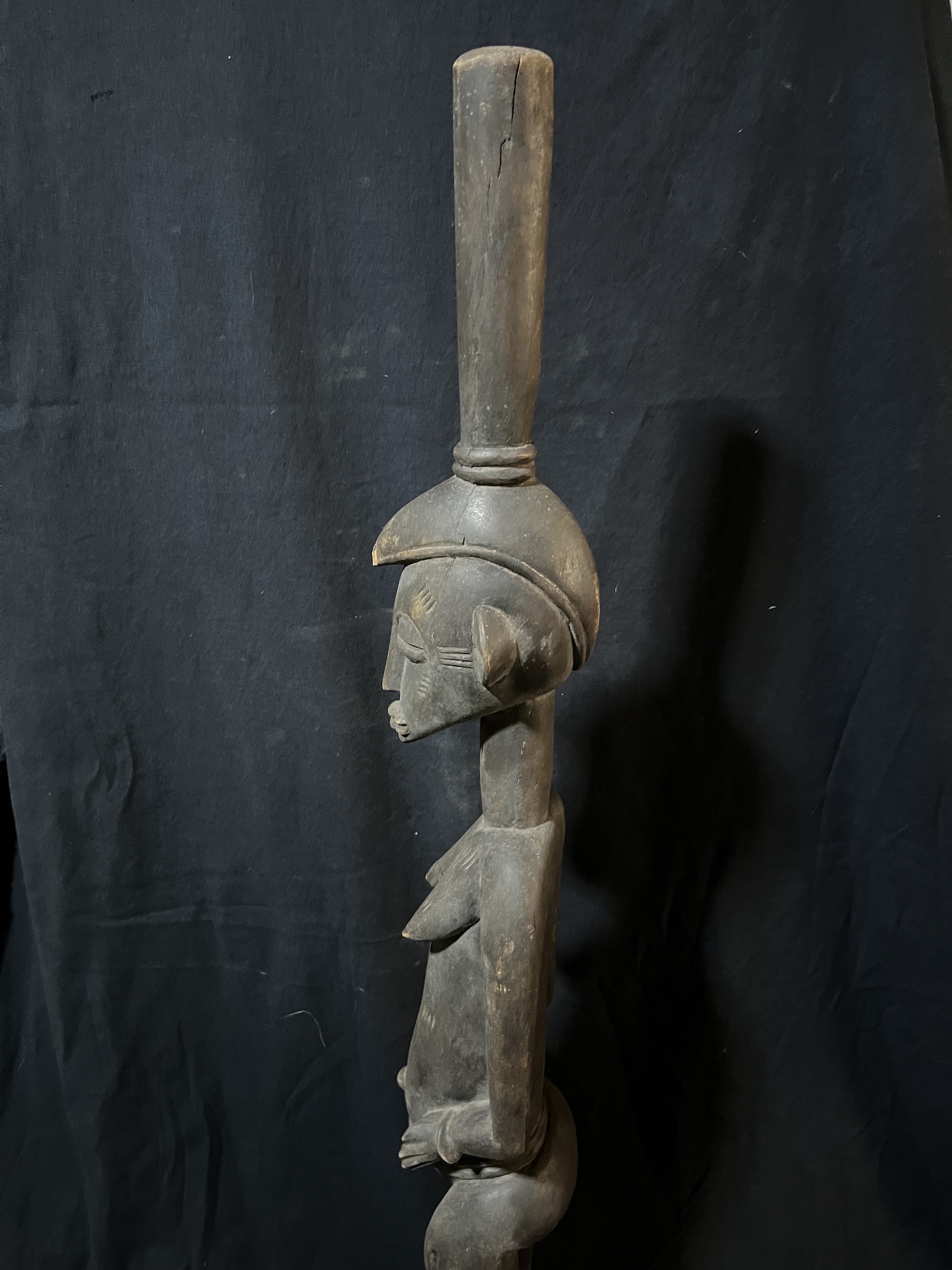
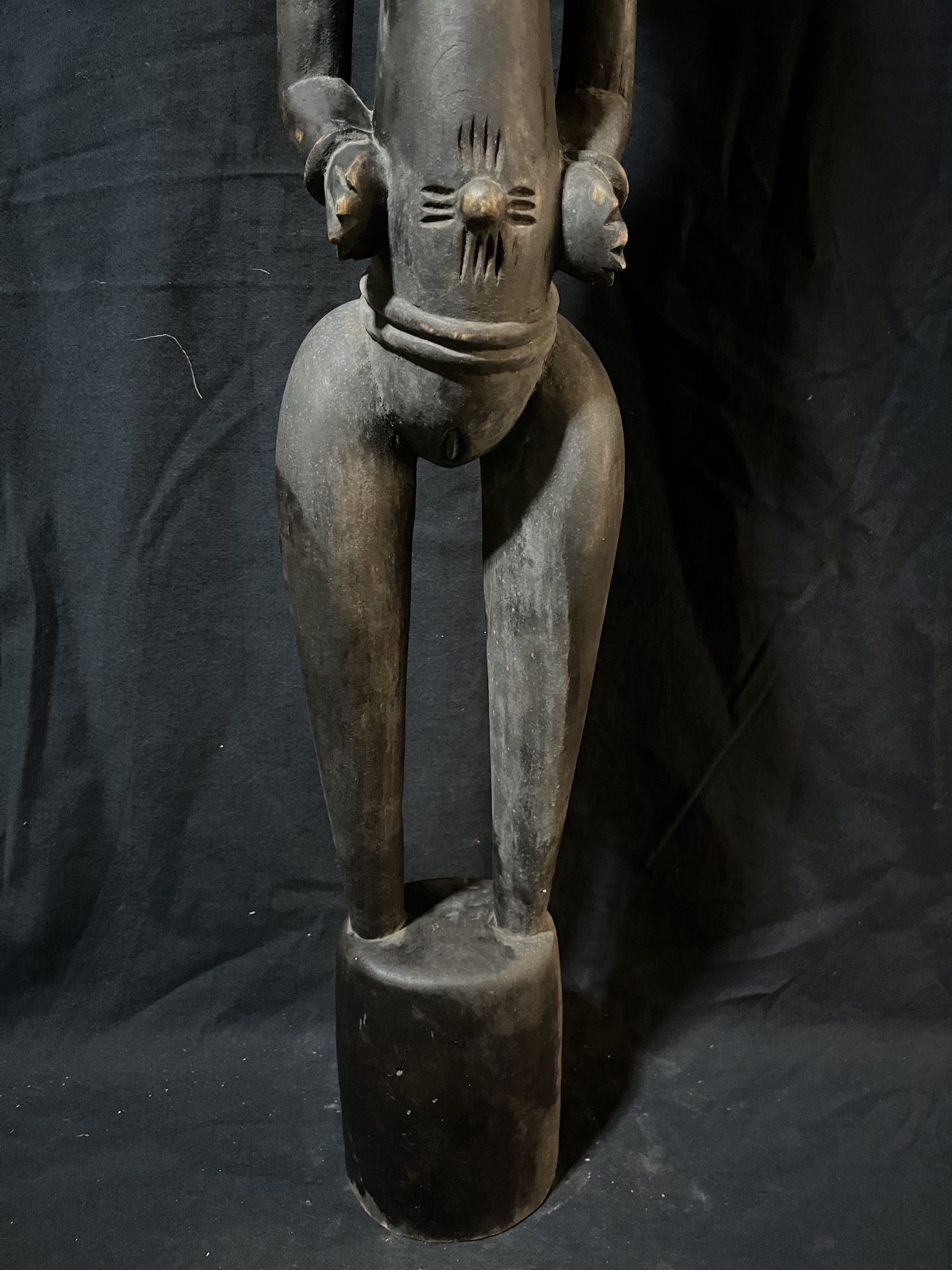
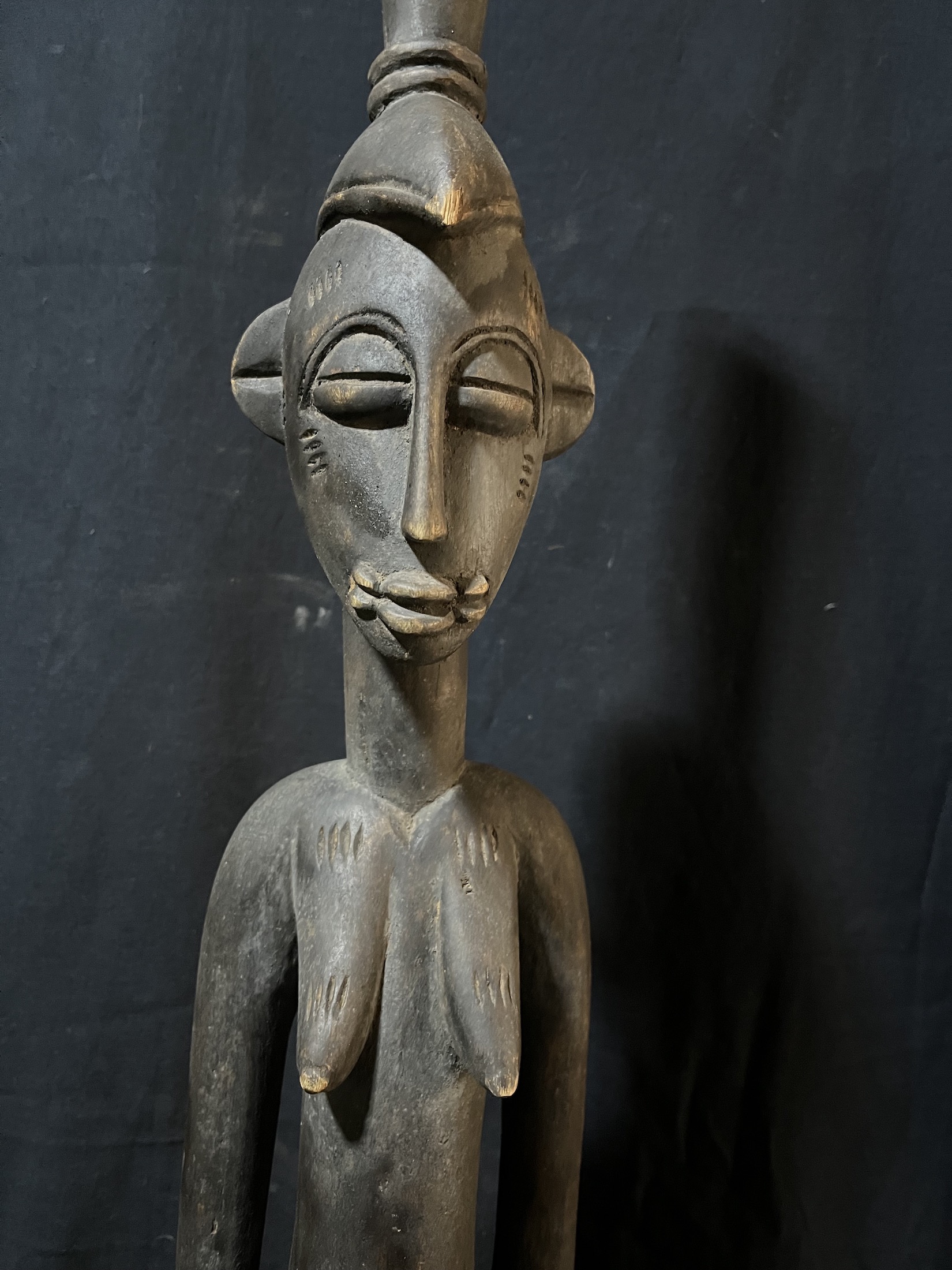
The sculpture has an elongated silhouette, with stylised proportions typical of Senufo art. The face shows fine, refined features, with half-closed eyes and a characteristic facial scarification. The headdress is extended by a vertical element, symbolising a connection with the spiritual world. The elongated arms are slightly bent, and the hands rest on the abdomen, underlining the symbolic function of maternity and fertility.
The cylindrical base recalls the original use of the piece, which could be struck on the ground during ritual dances. The dark, smooth patina, as well as the natural wear of the wood, indicate possible traditional use.
Technical details
- Type of piece
- Statue
- Category
- Statues
- Ethnic group
- Sénoufo
- Country
- Côte d’Ivoire
- Materials
- wood
- Dimensions
- H 117 × W 11 × D 12 cm
- Weight
- 3,7 kg
- Estimated dating
- second half 20th c.
- Laboratory test
- Not tested
- Reference
- 194