Mémoire d’Afrique — Ref. 215
Toguna vestibule pillar — Dogon, Mali — African tribal art — Ref. 215
Description
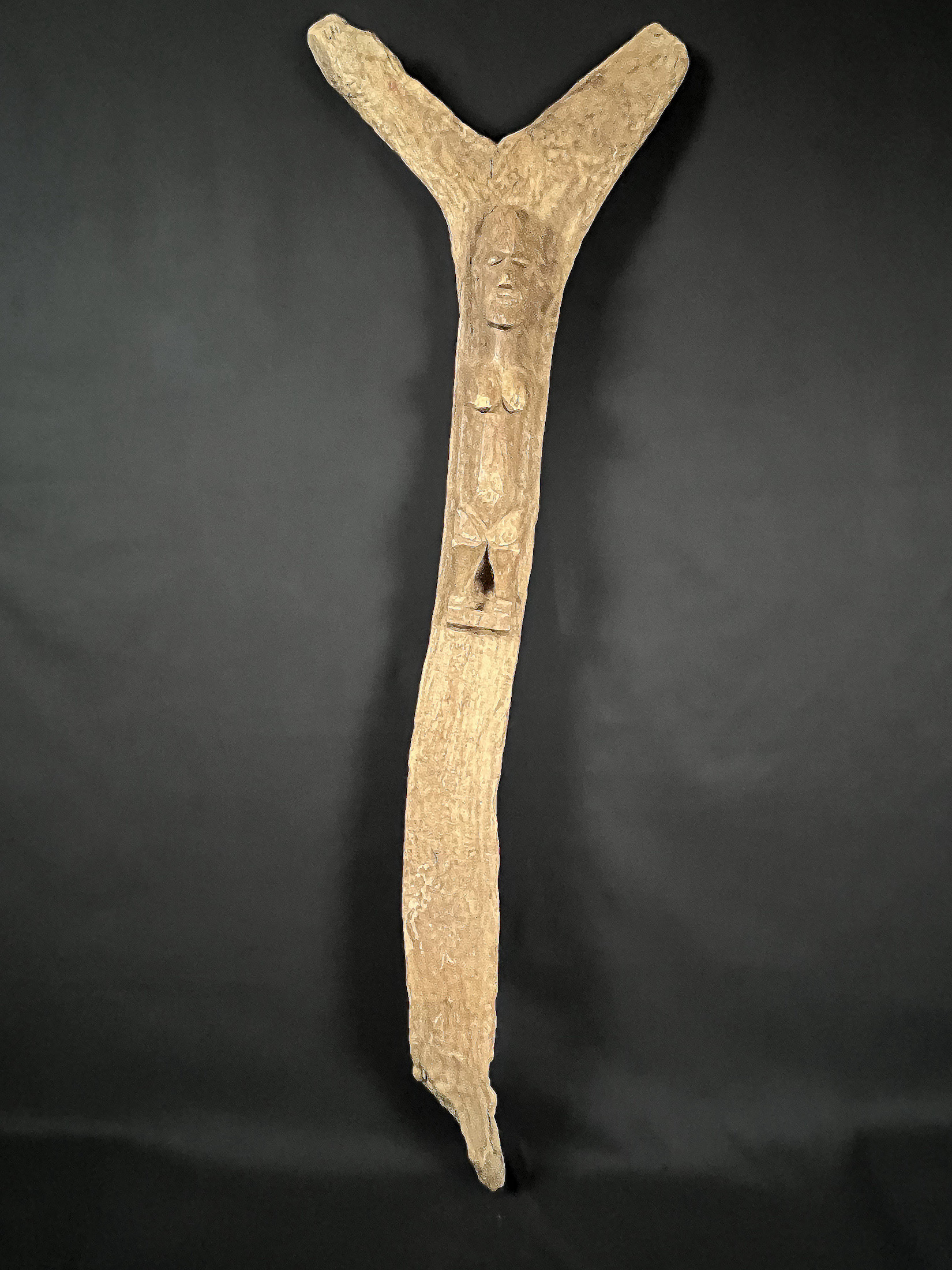
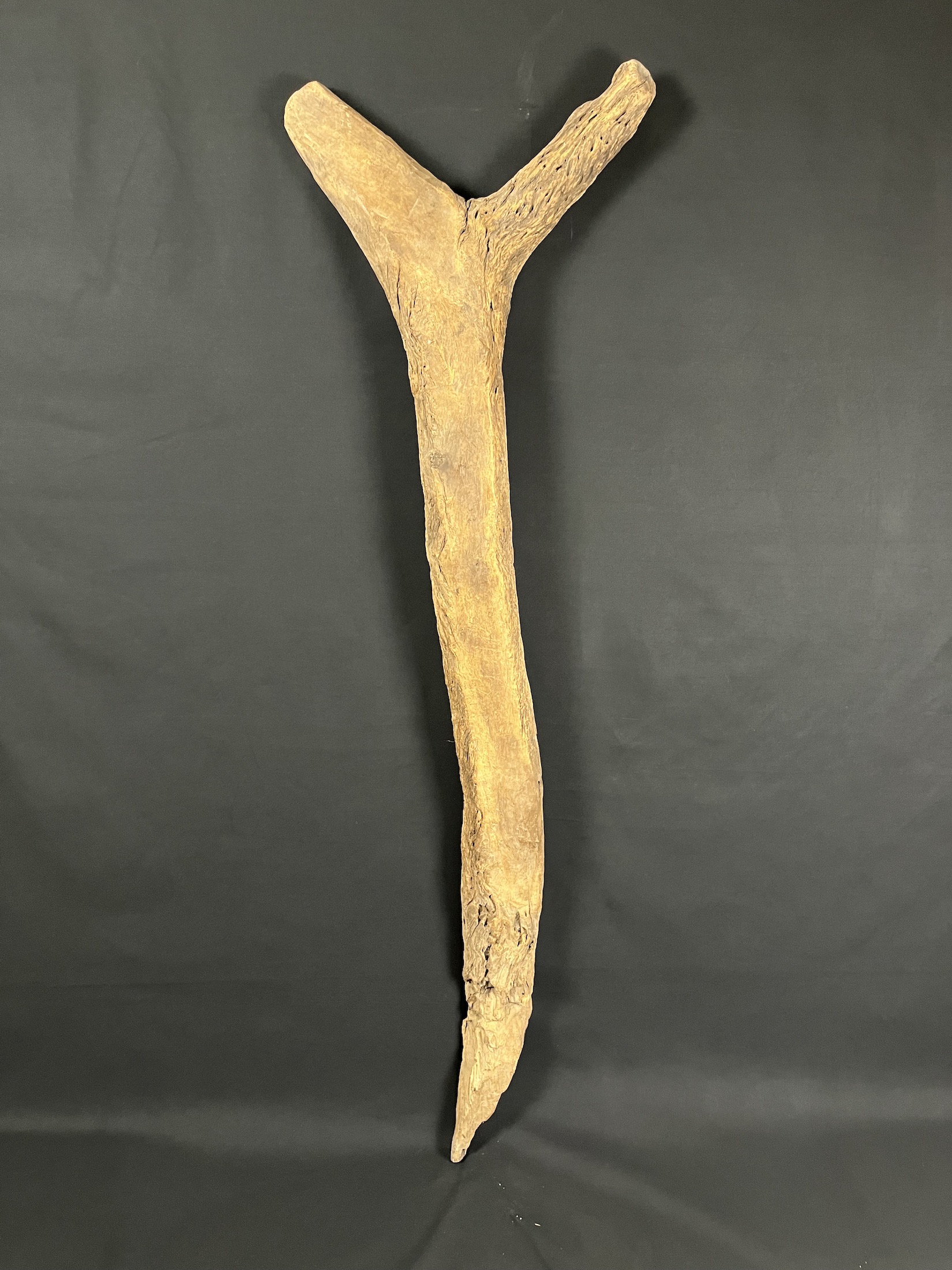
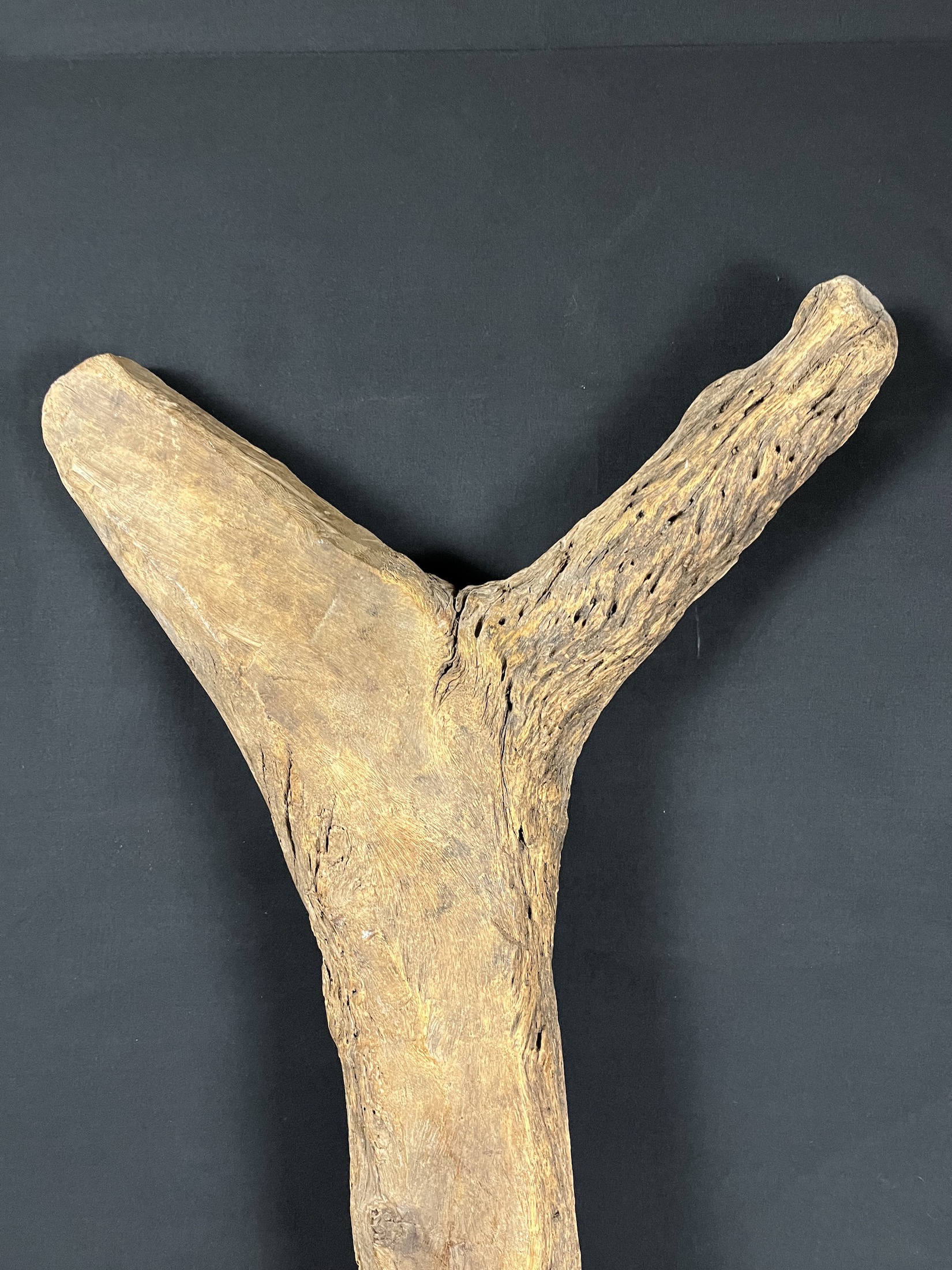
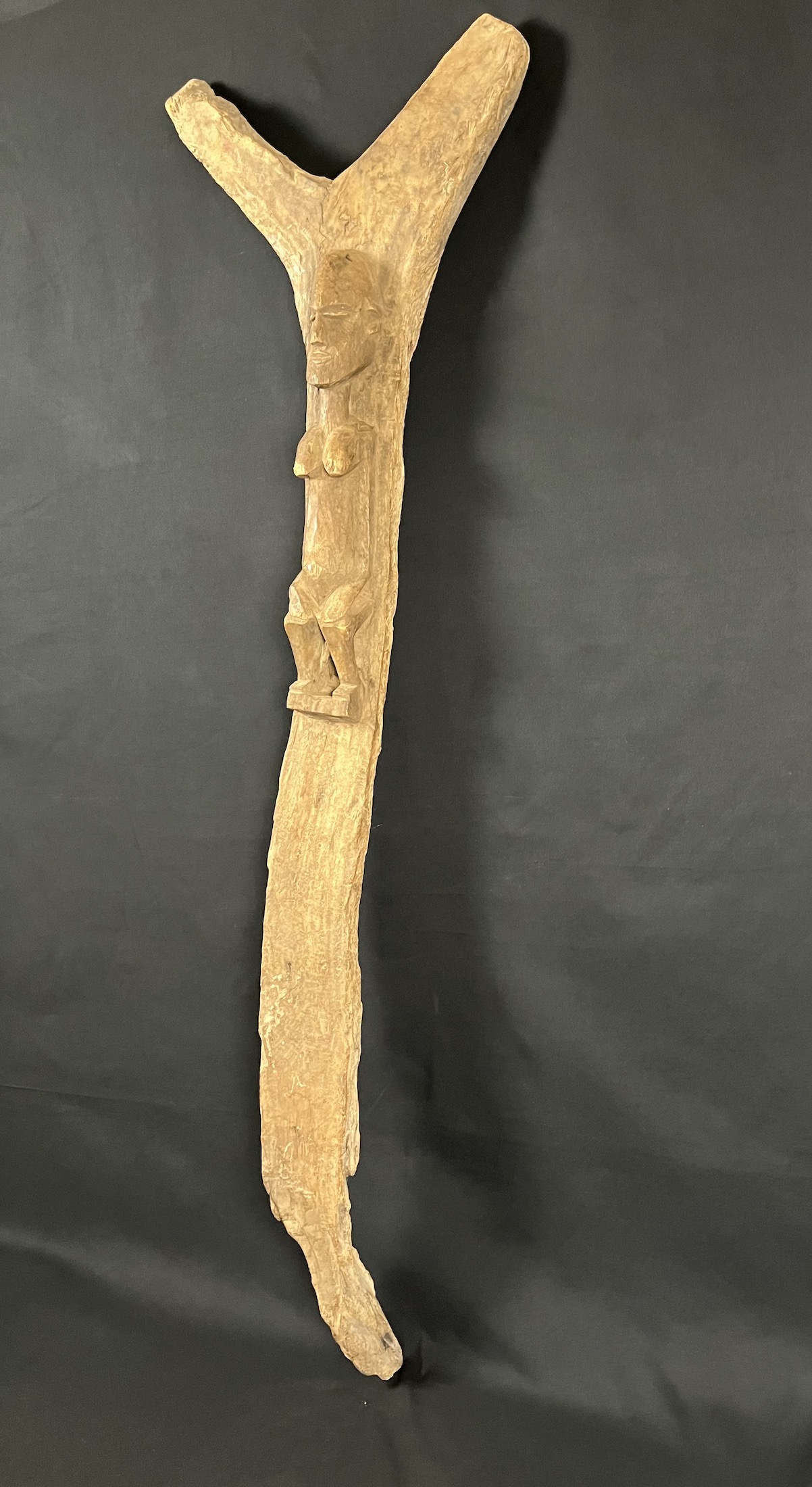
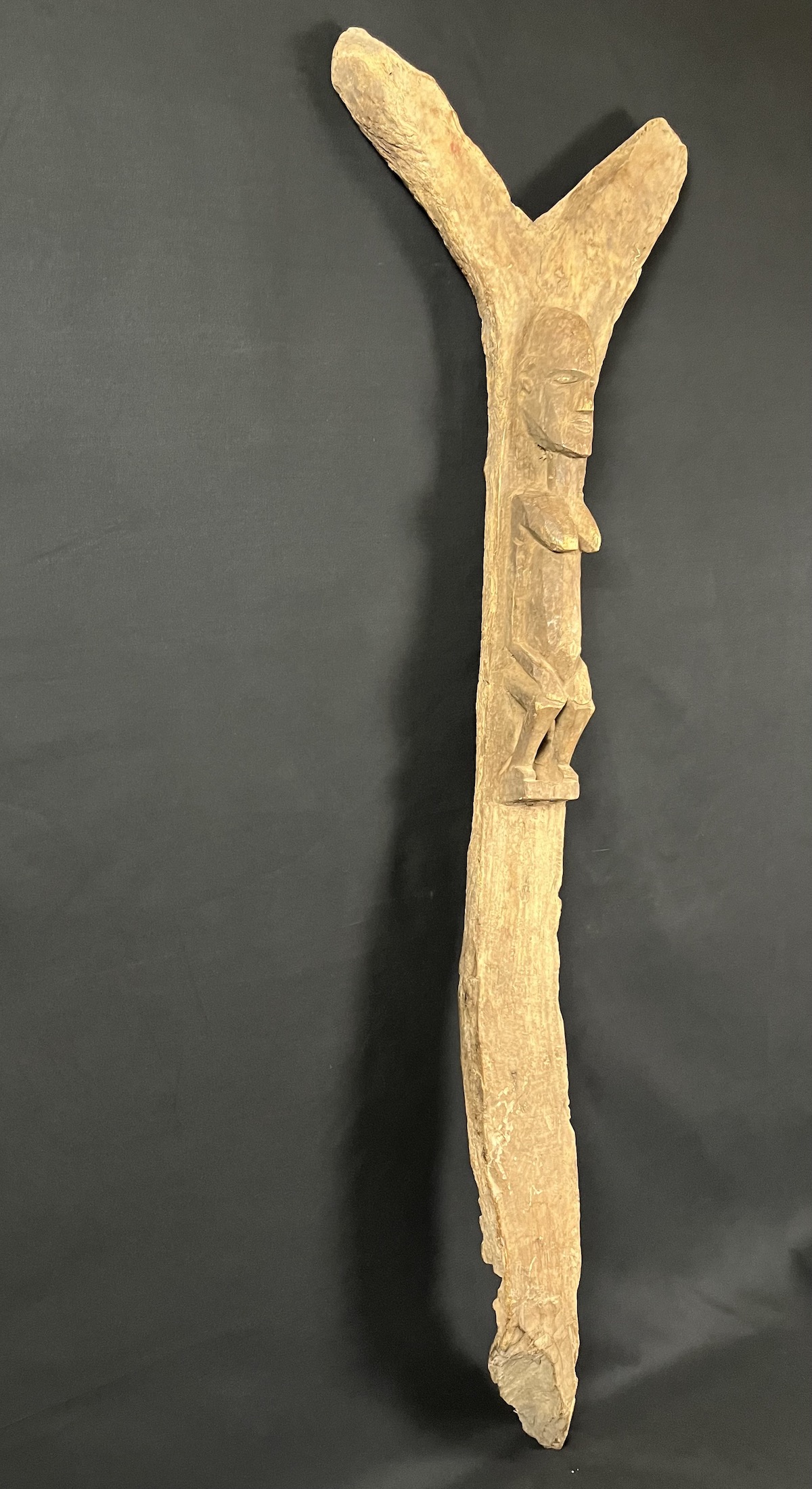
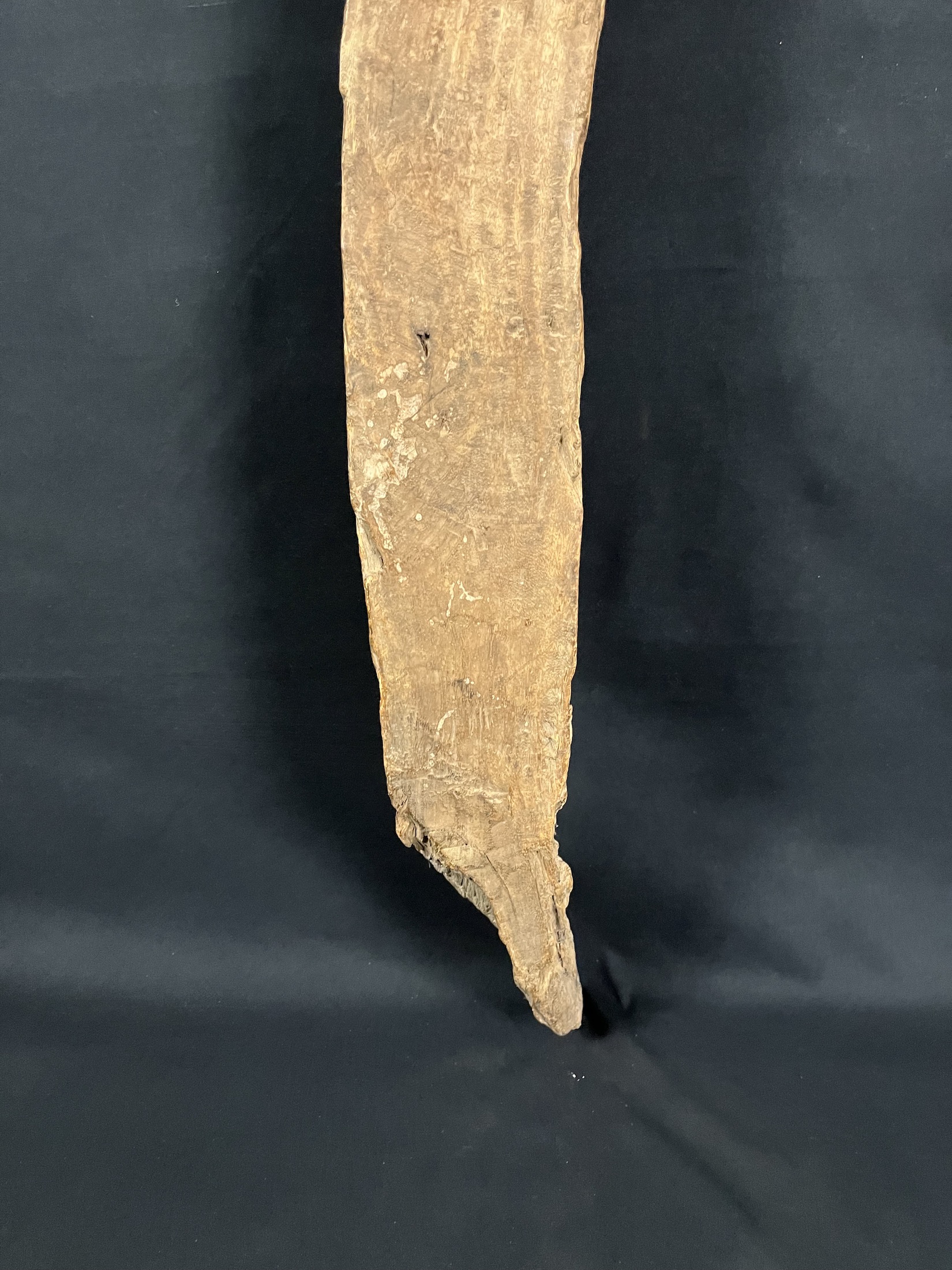
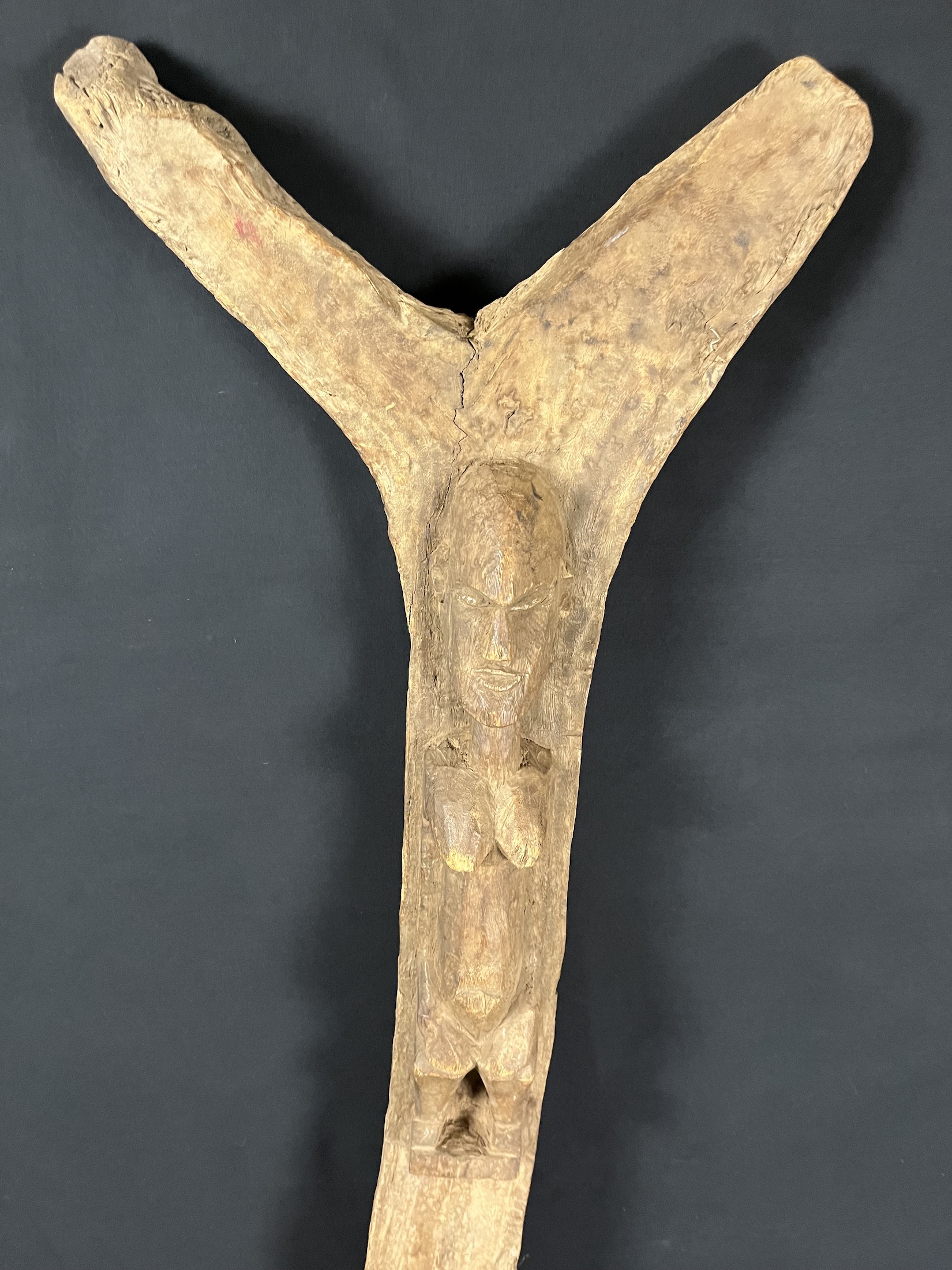
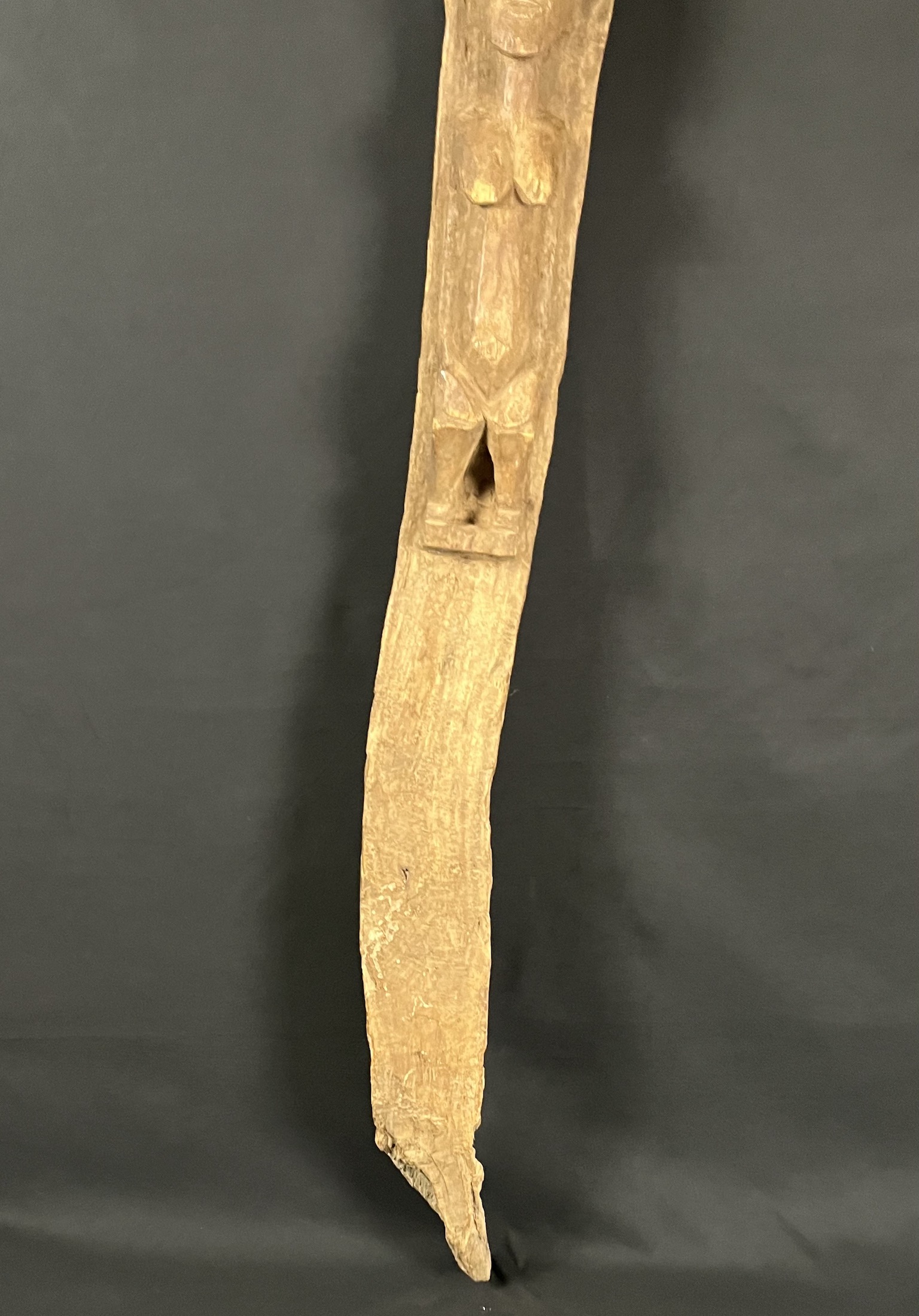
This pillar is a Toguna pillar from the Dogon culture of Mali. Toguna are important community structures that serve as gathering places for the men of the village to discuss important matters and make collective decisions. The pillar in question is carved from a tree trunk and has a “Y” shape, typical of the pillars that support the roof of the Toguna. This structure is essential for creating a cool, shaded space in the heat of the Sahel, encouraging calm discussion.
The carved motif on this pillar represents a stylised human figure, often an ancestor or symbolic figure. Dogon sculpture focuses on elegant and spiritual representation rather than precise anatomical detail. The anthropomorphic figure is elongated, with simplified facial features that emphasise the connection between humans and the spiritual world. These sculptures are perceived as manifestations of ancestral wisdom, ensuring the continuity of traditions and harmony within the community.
Toguna have a particular feature: their roof is very low, forcing men to remain seated during discussions. This is intended to prevent physical confrontation and encourage calm, reflective dialogue. Carved pillars play a symbolic role by embodying the presence of the ancestors during meetings and by recalling the importance of social cohesion.
Technical details
- Type of piece
- Mobilier
- Category
- Traditional furniture
- Ethnic group
- Dogon
- Country
- Mali
- Materials
- wood
- Dimensions
- H 12 × W 45 × D 45 cm
- Weight
- 7,9 kg
- Estimated dating
- second half 20th c.
- Laboratory test
- Not tested
- Reference
- 215