Mémoire d’Afrique — Ref. 233
Debele pestle statue — Senufo, Côte d’Ivoire — African tribal art — Ref. 233
Description
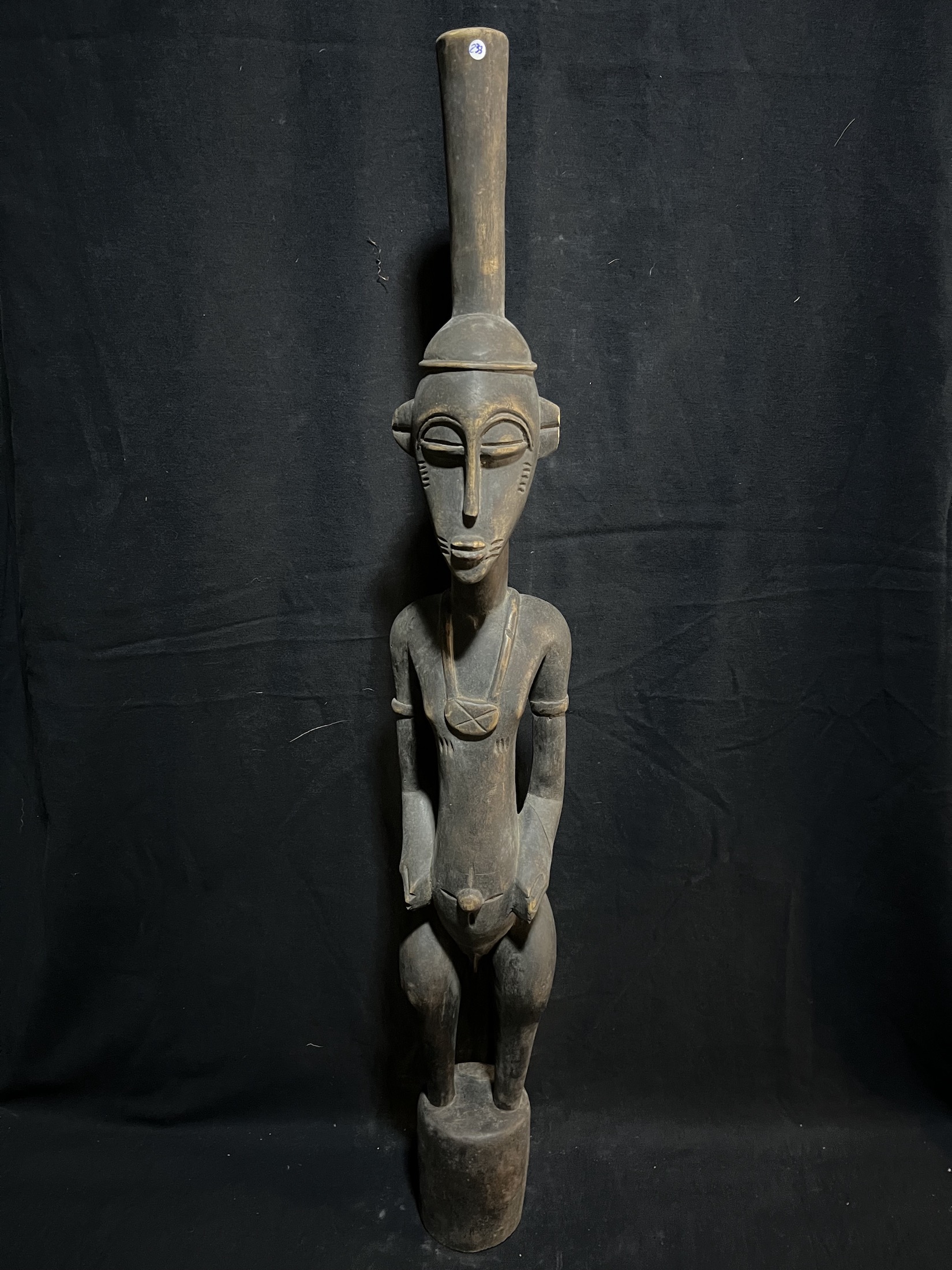
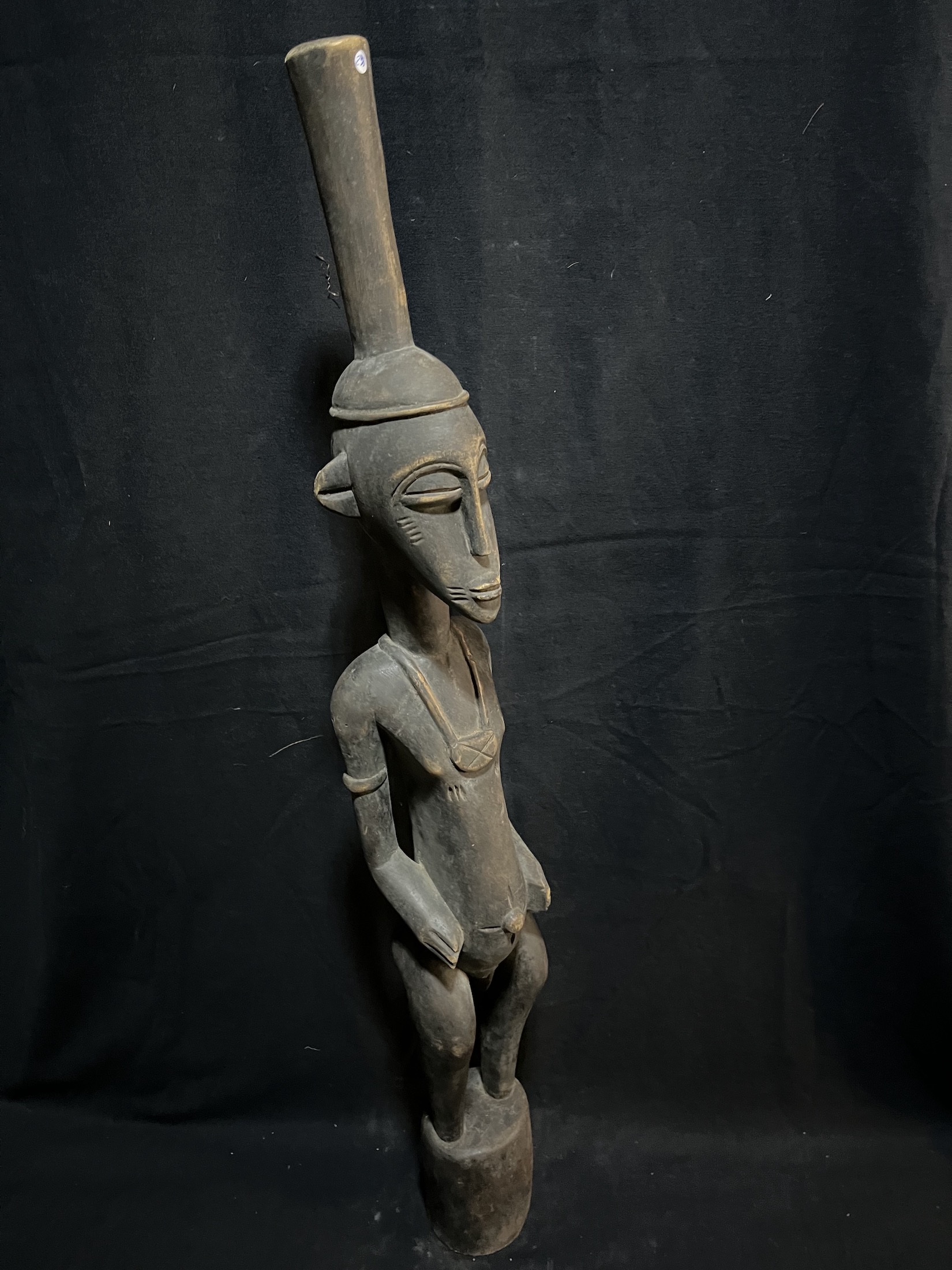
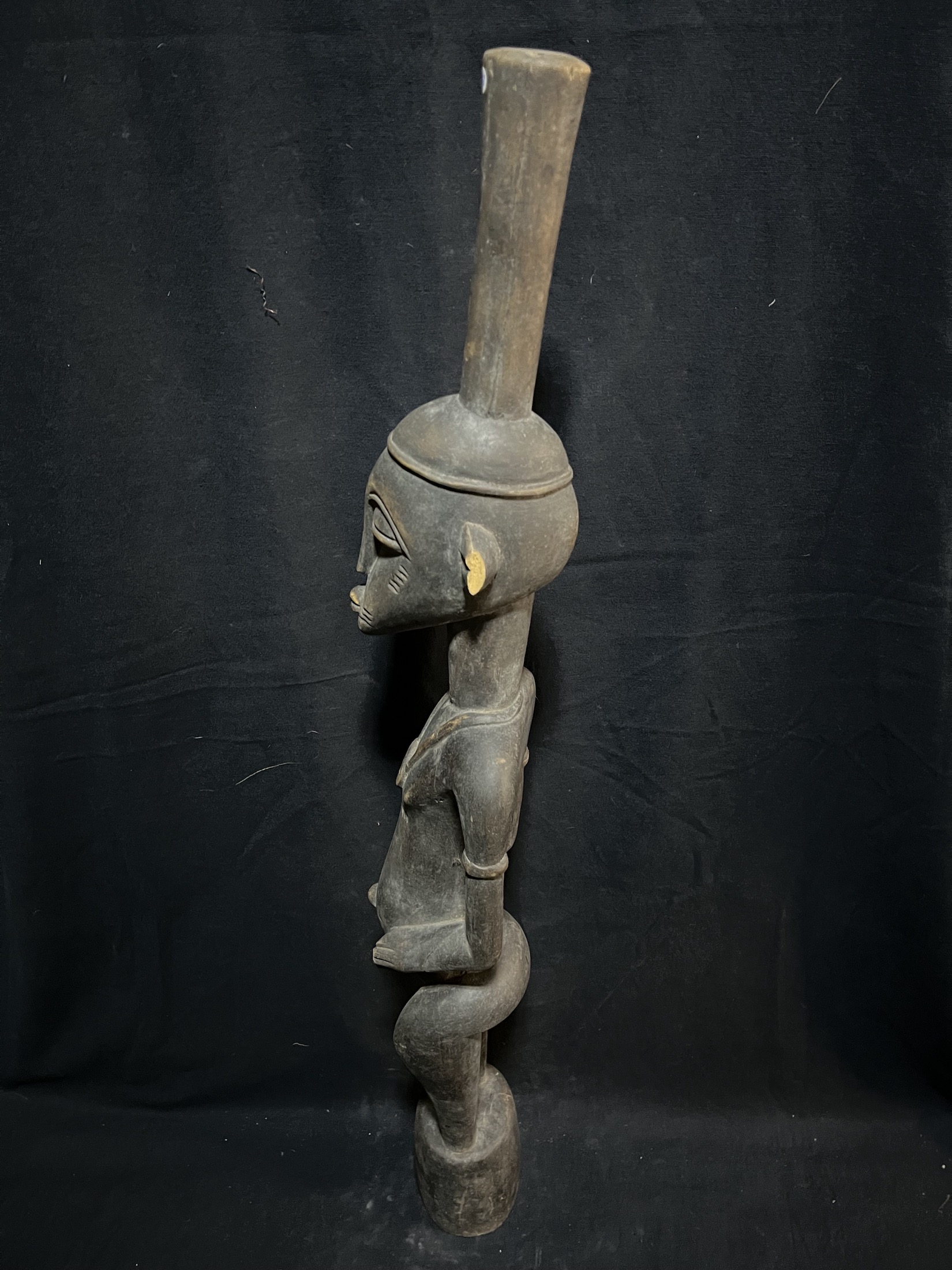
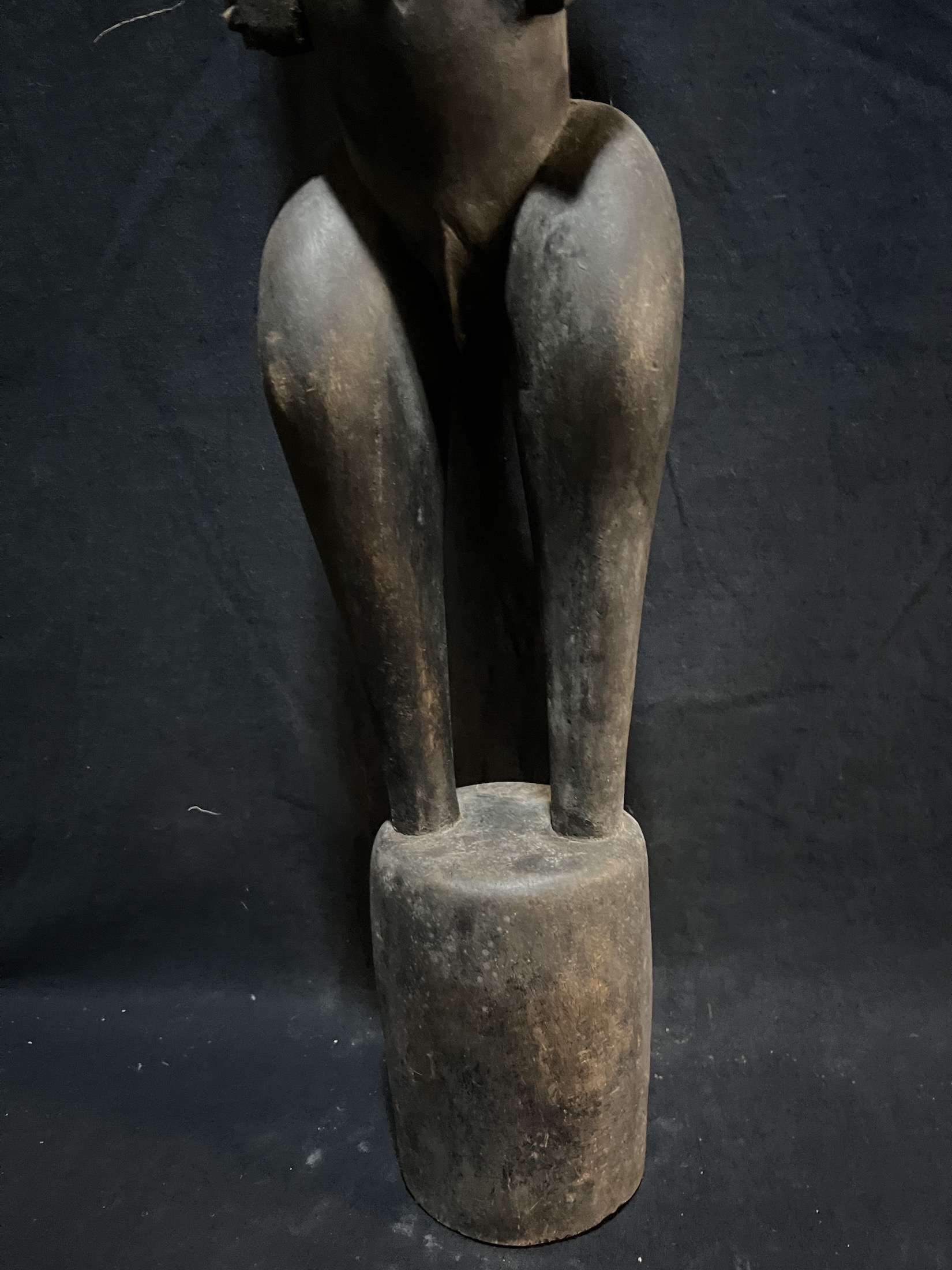
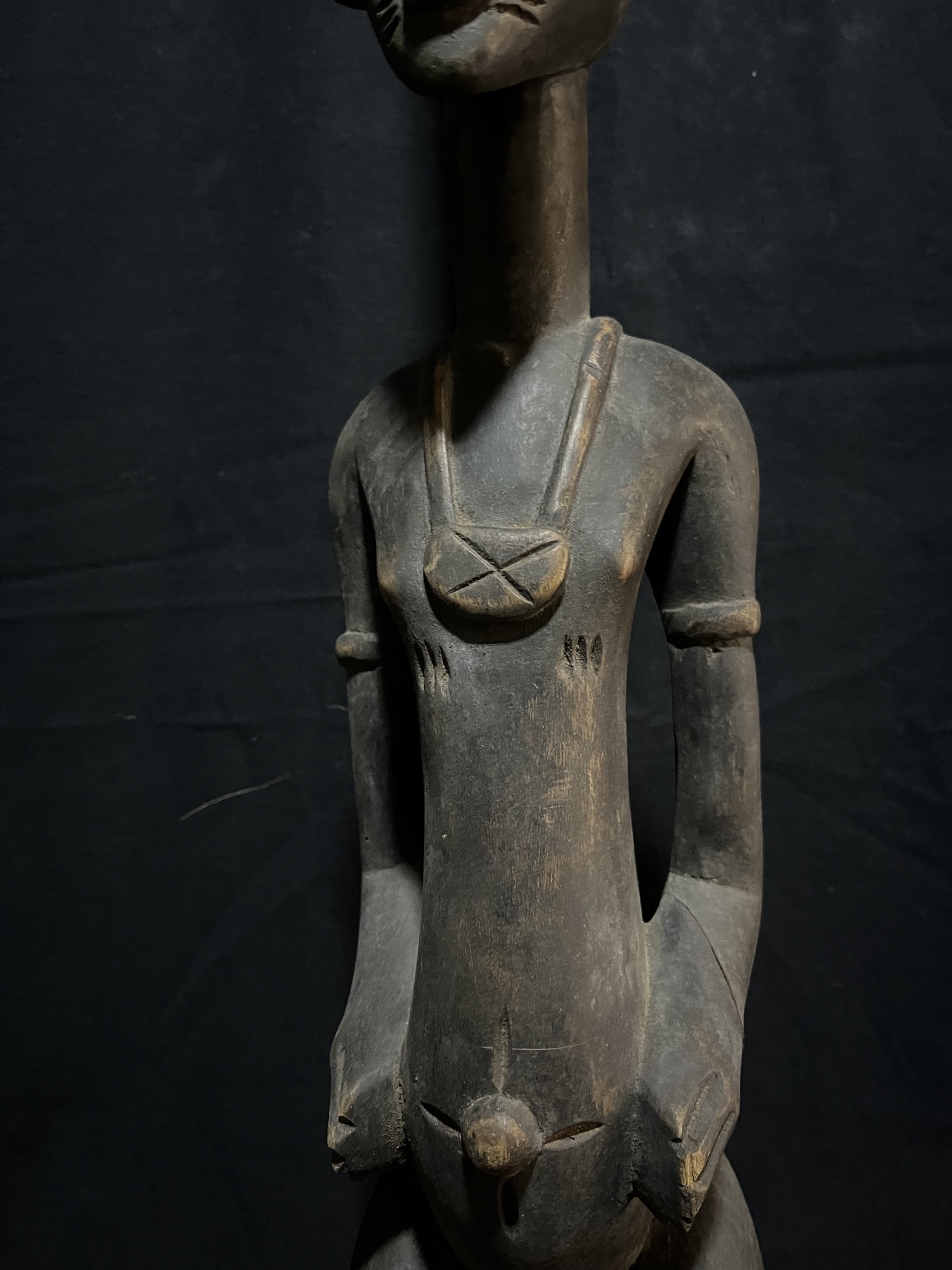
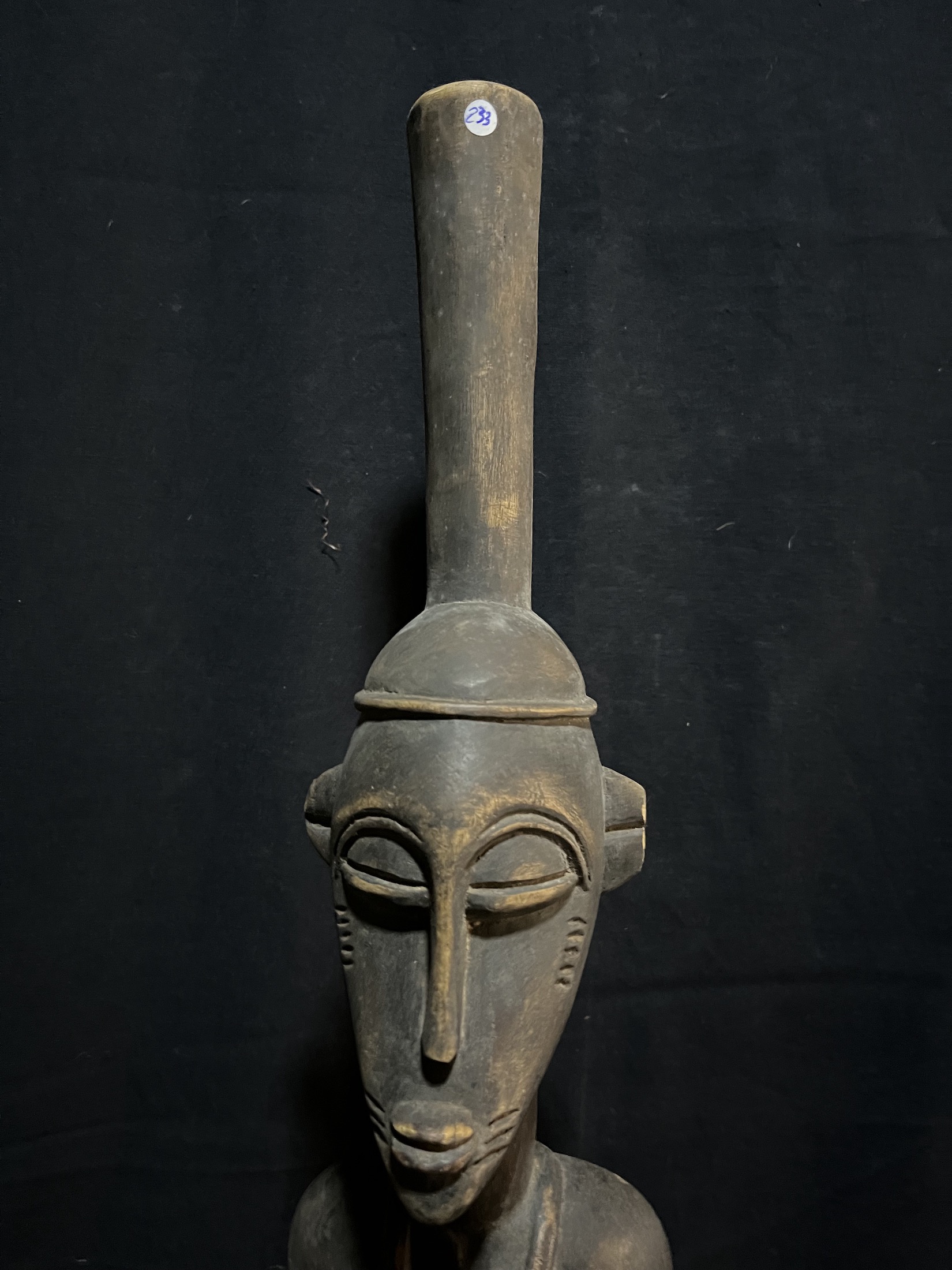
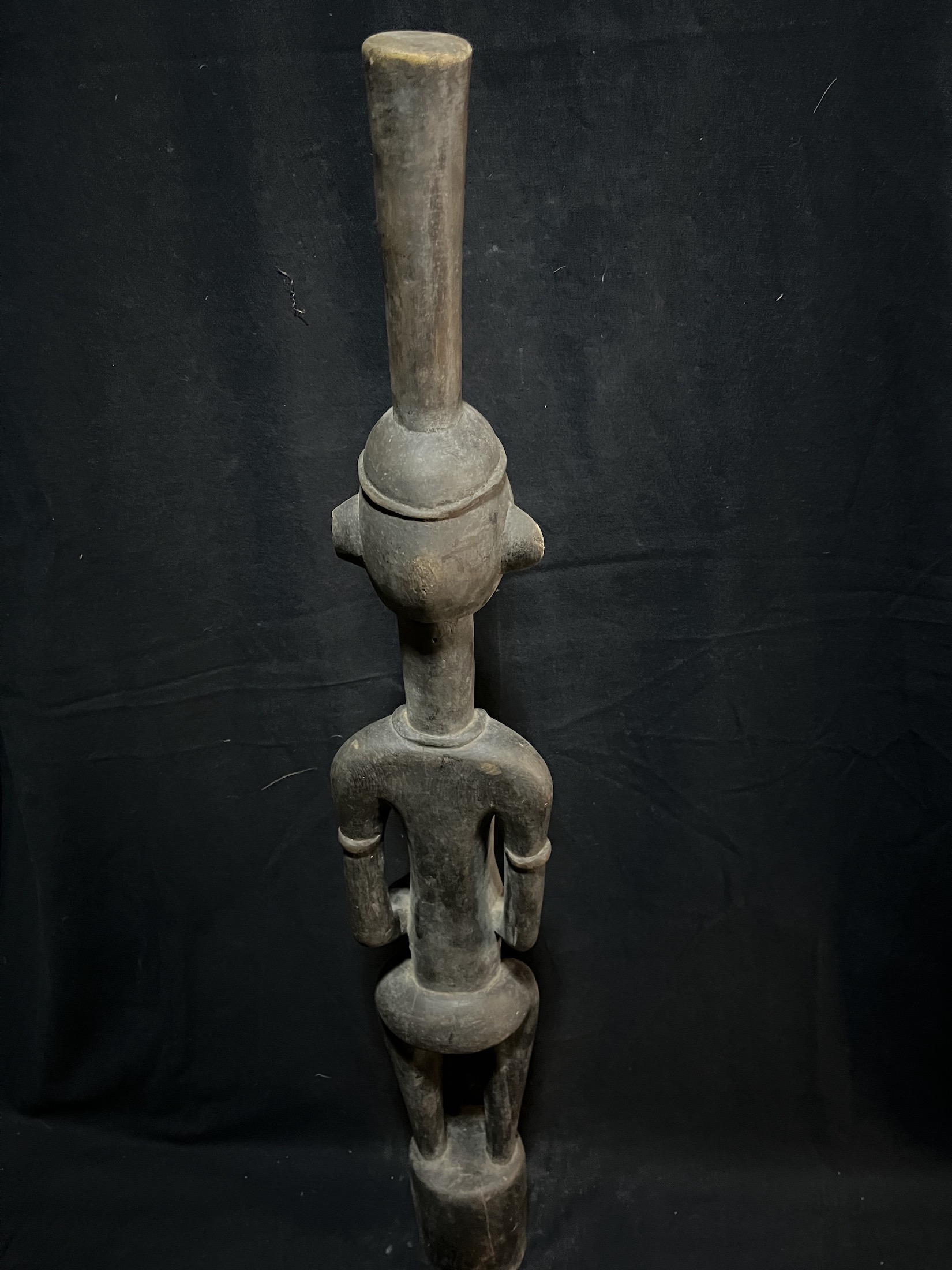
This Senufo Debele pestle statue, originating from Côte d’Ivoire, is an elongated and hieratic representation, characteristic of male figures linked to Poro initiatory rites. Its oblong, stylised face, its slender legs descending into a cylindrical pestle-shaped base, and the presence of a talisman necklace called “korte” are distinctive markers of this typology. The pestle, called “sedine” or “dol” according to local dialects, served not only as a sculptural element but also as a ritual support during ceremonies.
This statue was used by young initiates of the Poro secret society who, from the age of seven, carried them in pairs and struck the ground in rhythm with the drums during ceremonies marking the end of initiation rites or funeral processions. It symbolises the connection with bush spirits, playing a protective and formative role for initiates. Kept in sacred enclosures, these statues were believed to protect young initiates and were often carved from hard, rot-resistant wood by Senufo artisans whose training lasted several years.
Old patina, visible wear from use with abrasions and desiccation cracks attesting to proven ritual use.
Technical details
- Type of piece
- Statue
- Category
- Statues
- Ethnic group
- Sénoufo
- Country
- Côte d’Ivoire
- Materials
- wood
- Dimensions
- H 98 × W 10 × D 14 cm
- Weight
- 2,7 kg
- Estimated dating
- second half 20th c.
- Restoration / losses
- One ear broken
- Laboratory test
- Not tested
- Reference
- 233