Mémoire d’Afrique — Ref. 240
Dogon Kanaga mask — Dogon, Mali — African tribal art — Ref. 240
Unavailable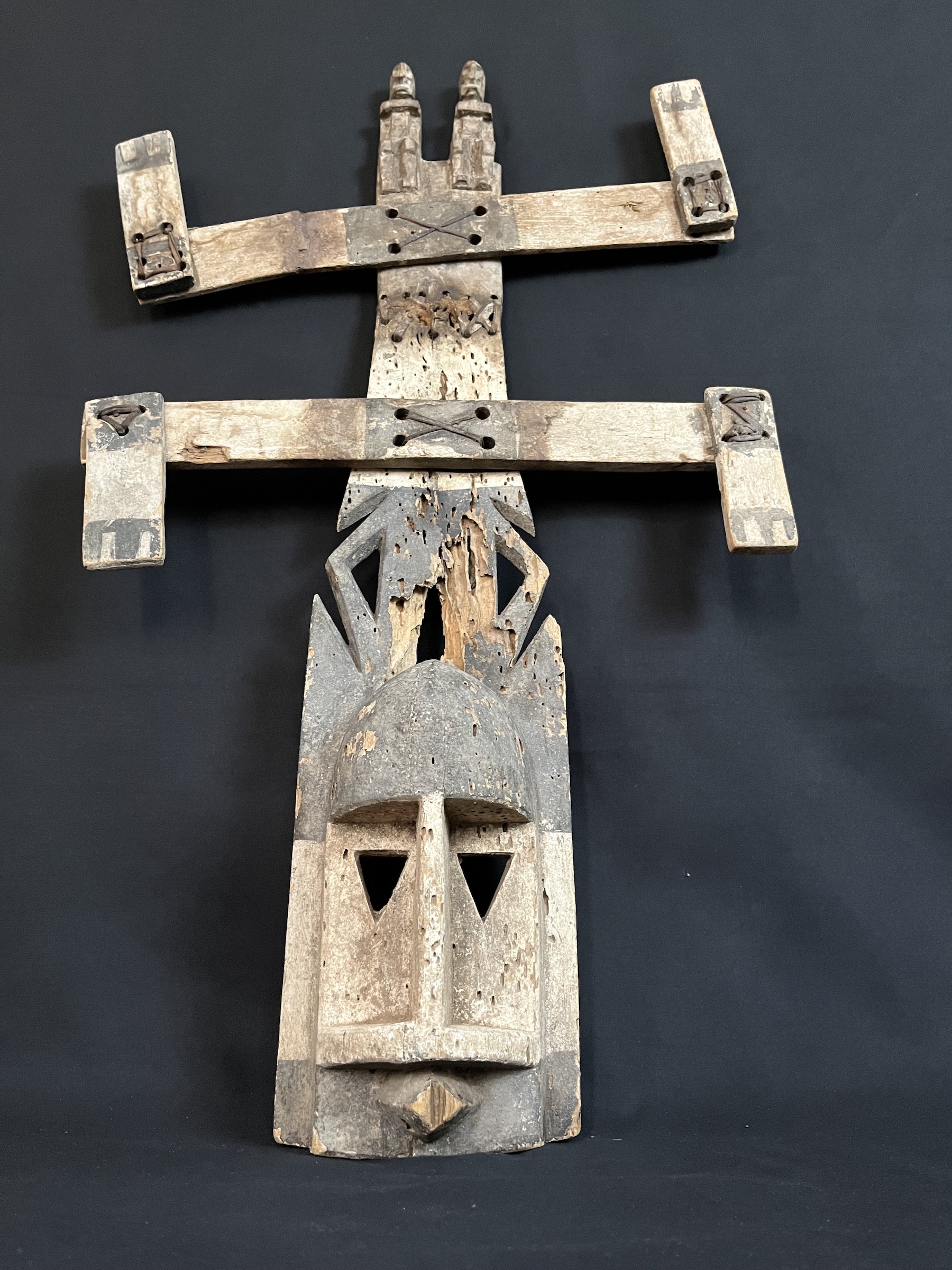
Description
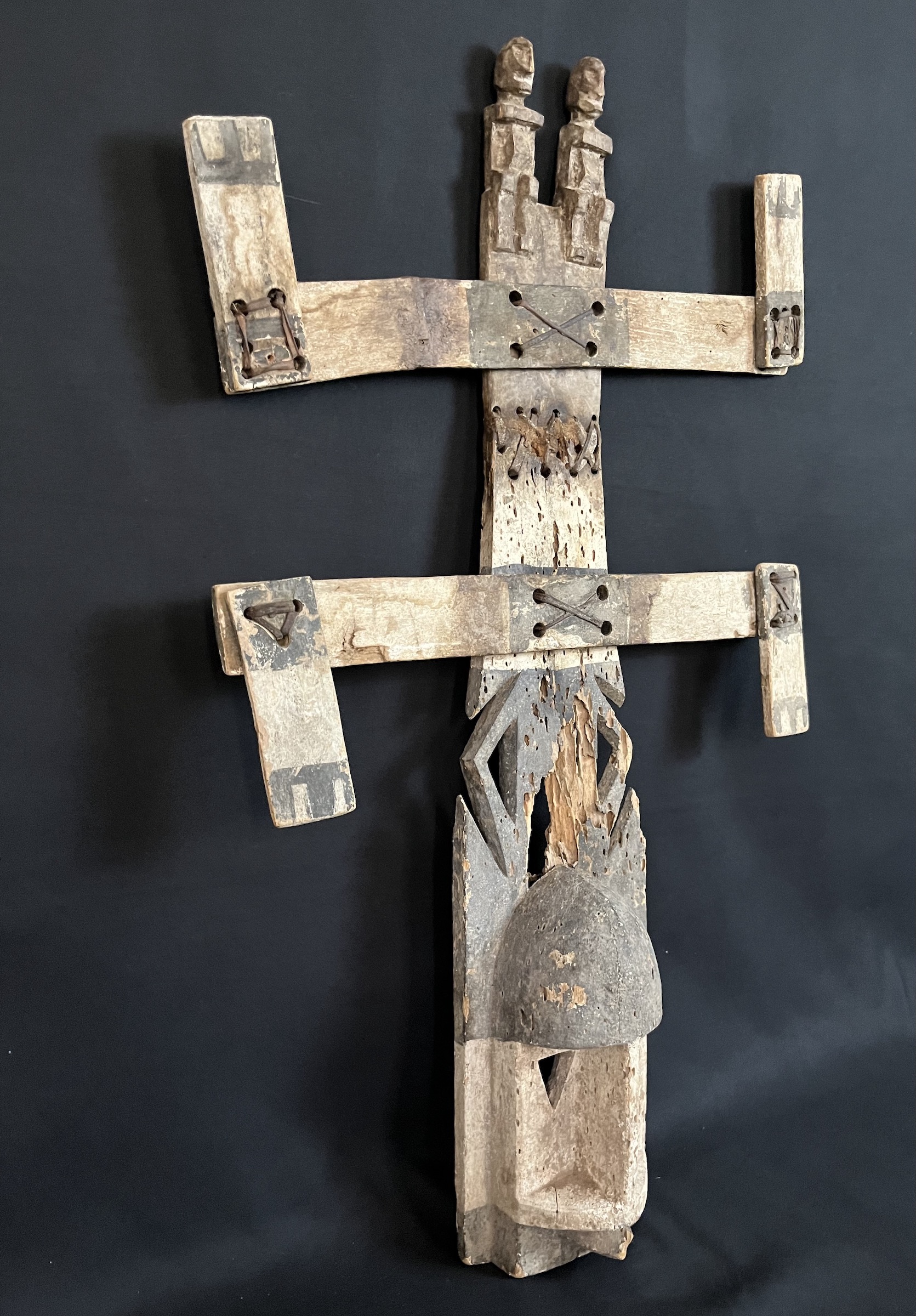
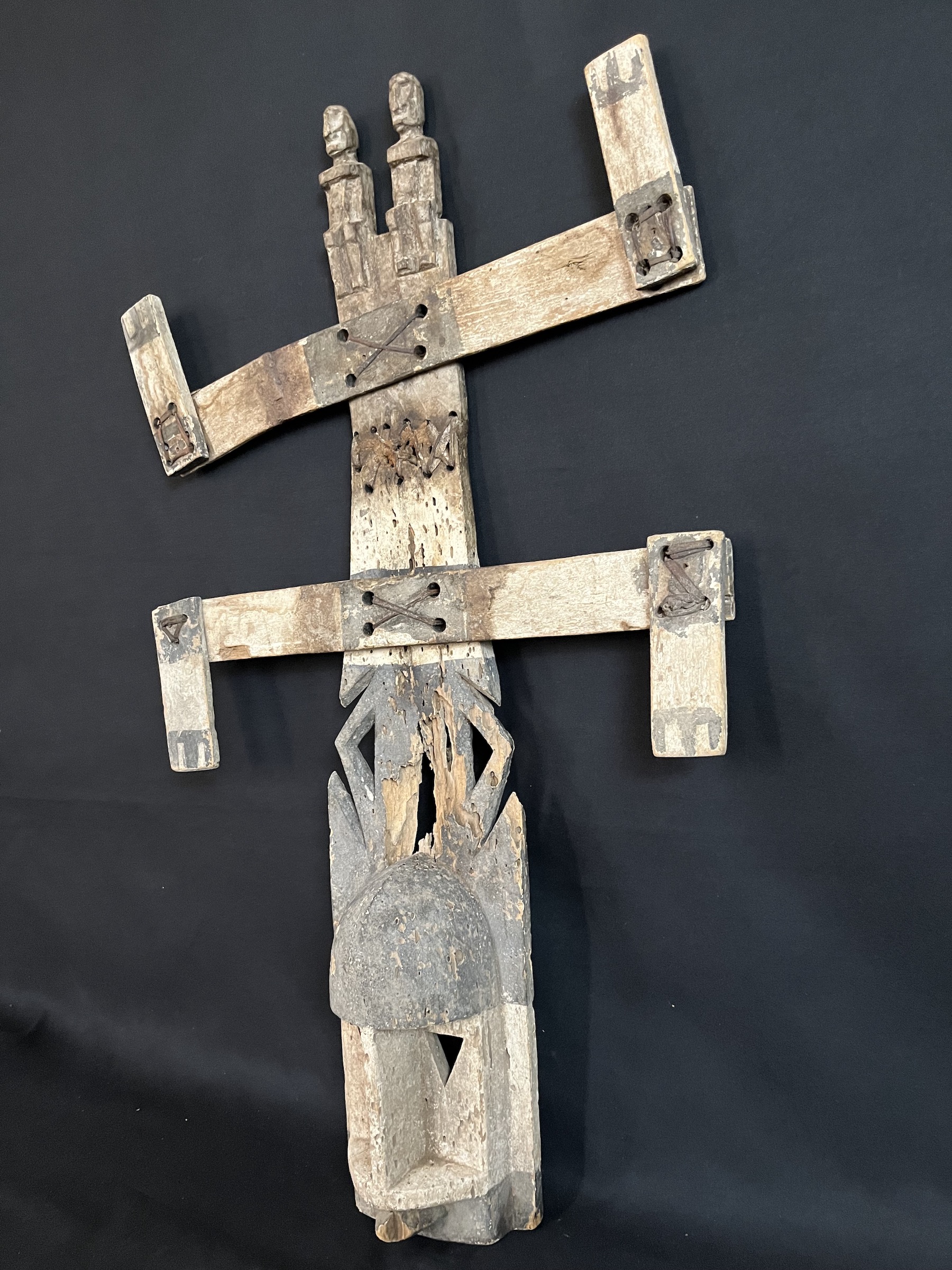
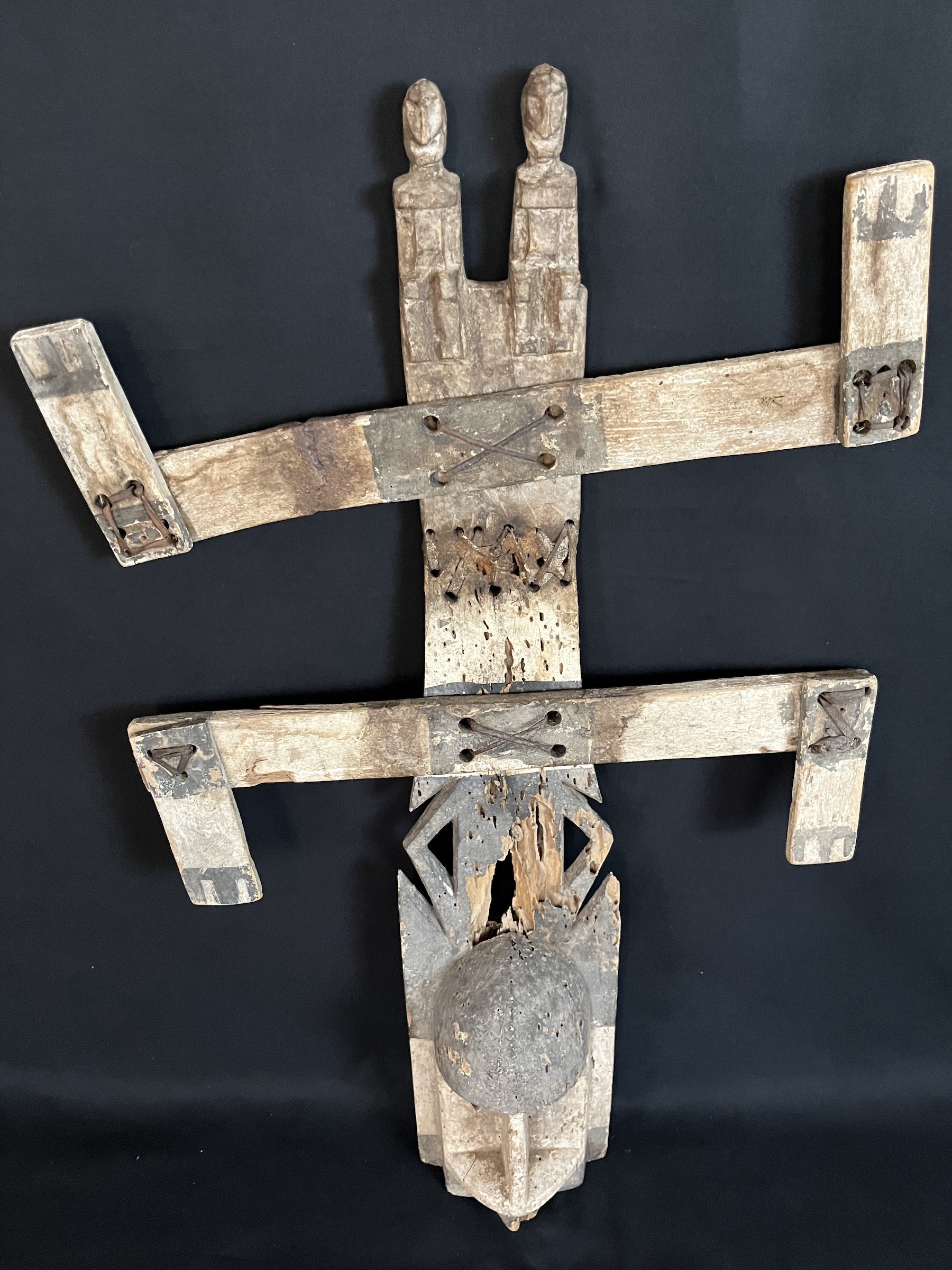
This carved wooden mask comes from the Dogon people of Mali, in West Africa. It is a Kanaga mask used in funerary and ritual ceremonies to guide the spirits of the deceased toward the afterlife and restore harmony within the community.
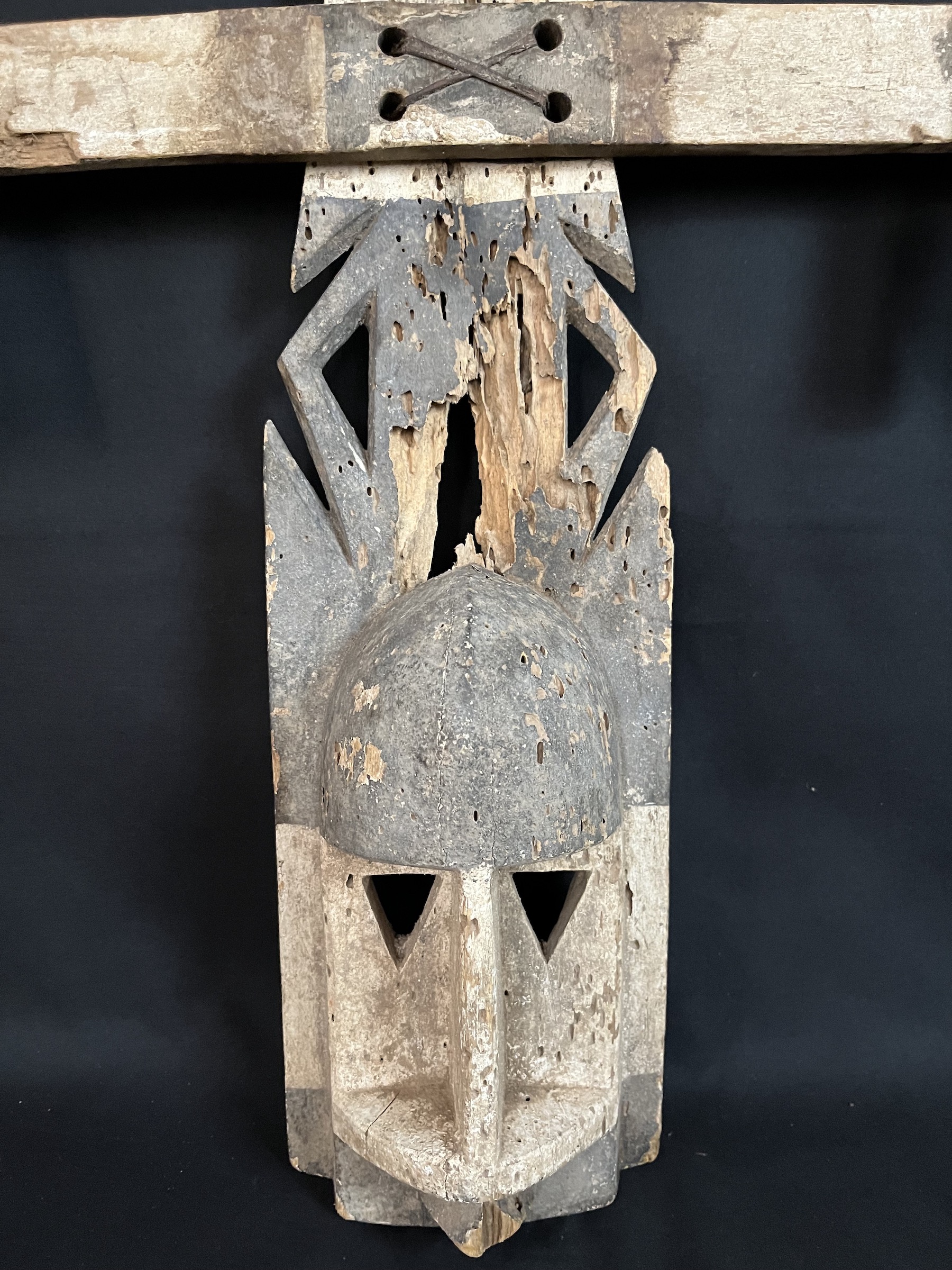
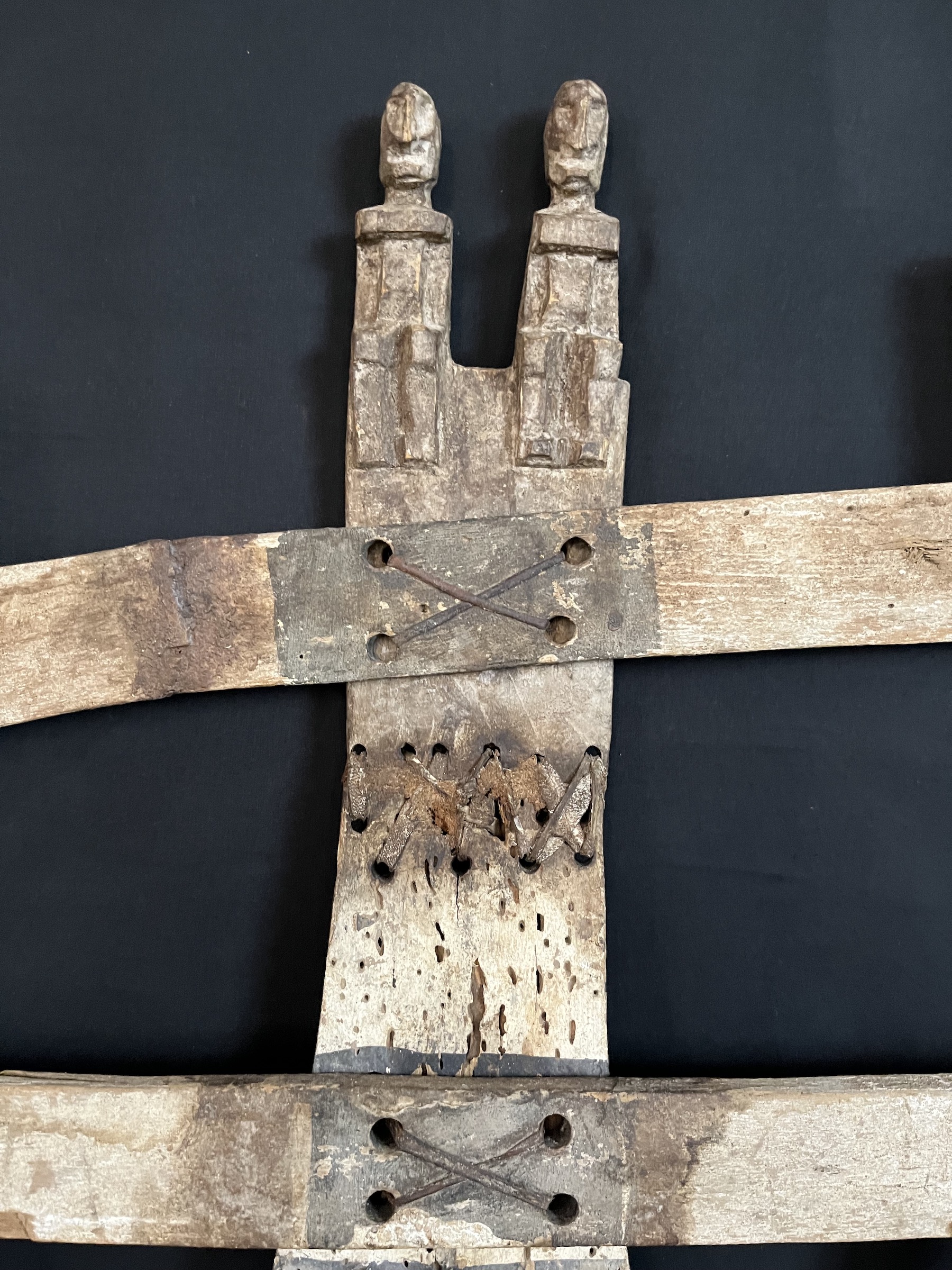
The mask is made from local wood, probably fig wood, known for its strength and ability to withstand the elements. The natural patina is marked by time, with traces of wear and cracks attesting to prolonged use. The texture of the wood is rough, with colour variations caused by repeated exposure to natural elements, giving the piece an authentic and historical dimension. Signs of repair are visible, indicating that the mask was restored at some point, probably to preserve its structural integrity after years of ritual use. These repairs also add an additional layer of history to the piece, underlining its importance to its former owners.
The lower part of the mask represents a stylised face with deeply carved triangular eyes, giving it both a mystical and penetrating appearance. These triangular eyes allow a symbolic connection with the spiritual world. The mouth is absent, which is frequent in Dogon ritual art, symbolising the importance of silence and restraint in spiritual practices. The surface of the face shows traces of erosion that emphasise its age and active role in rituals.
Above the face are two stylised human figures, carved in an upright and symmetrical posture. These figures symbolise the ancestors, protective spirits who play an essential role in Dogon beliefs. They evoke continuity between the world of the living and that of the ancestors, reinforcing the idea that ancestral protection and guidance remain present. The simplified lines of the figures give them a timeless and solemn aura.
The cross-shaped structure above the head is typical of Kanaga masks. This cross, composed of two horizontal arms and two vertical arms, represents the union of the earthly and celestial worlds. This symbolism reflects the Dogon cosmological vision, in which balance between sky and earth is essential. The ends of the arms show geometric details recalling elements of nature, such as mountains or rivers, symbolising the interconnection of all things in the universe.
The geometric motifs visible on the mask, notably zigzag cut-outs and angular forms, are important symbols. They may represent natural elements such as lightning, often perceived as a manifestation of divine forces, or the paths taken by spirits. These motifs add an additional aesthetic and spiritual dimension to the piece, underlining the complexity of Dogon beliefs.
The quality of the patina and the details of wear suggest that it was used in rituals for many years, giving it invaluable spiritual and historical significance. Kanaga masks are living objects, designed to be used and worn, not merely for decoration.
A unique piece, rich in history and symbolism, ideal for collectors and lovers of tribal art seeking to enrich their collection with an authentic and spiritually charged work.
Technical details
- Availability
- Unavailable
- Type of piece
- Masque
- Category
- Masks
- Ethnic group
- Dogon
- Country
- Mali
- Materials
- wood, lanières de leather
- Dimensions
- H 78 × W 45 × D 10 cm
- Weight
- 0,948 kg
- Estimated dating
- second half 20th c.
- Laboratory test
- Not tested
- Reference
- 240