Mémoire d’Afrique — Ref. 292
Toma mask — Toma, Guinea — African tribal art — Ref. 292
Description
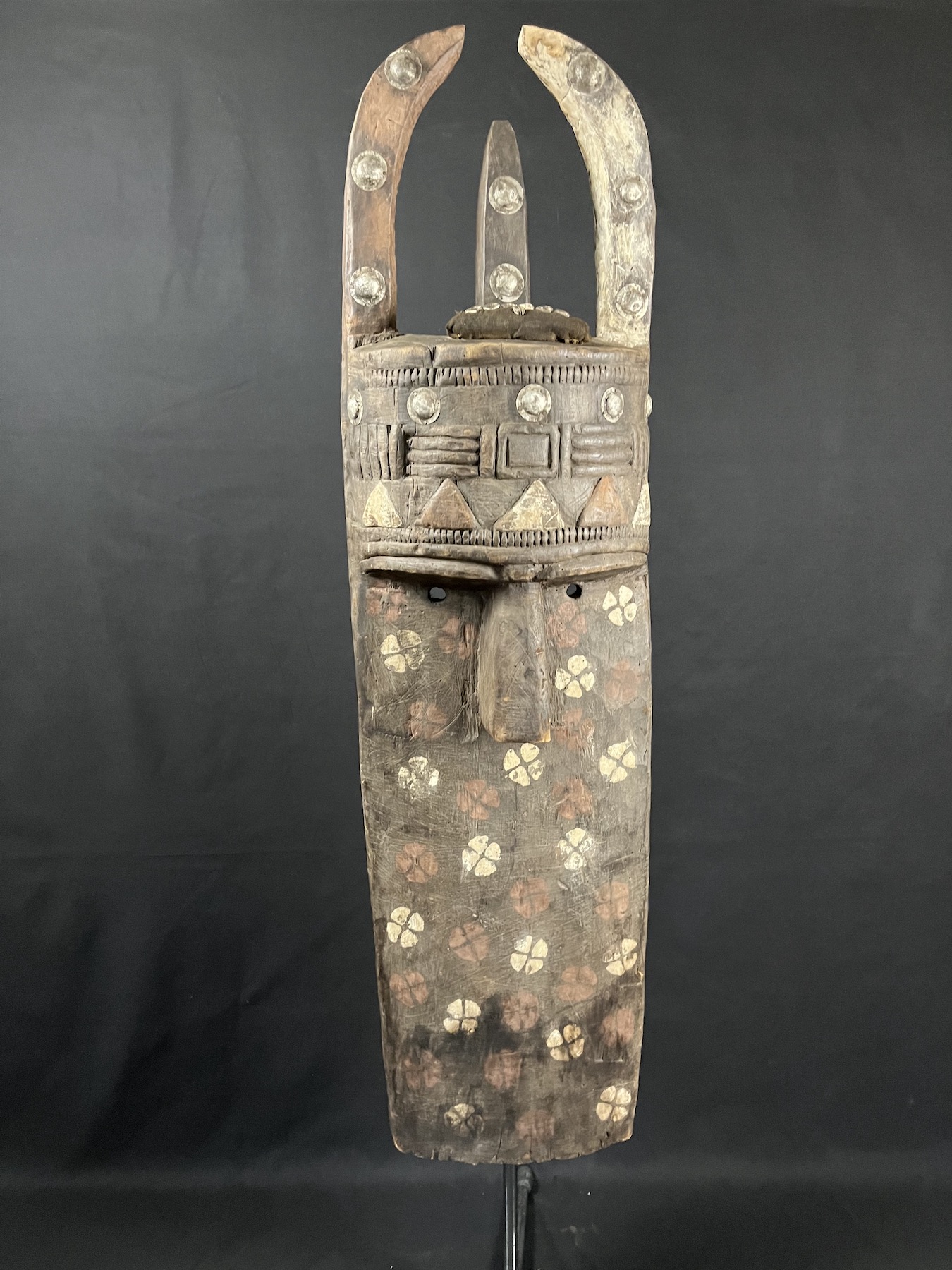
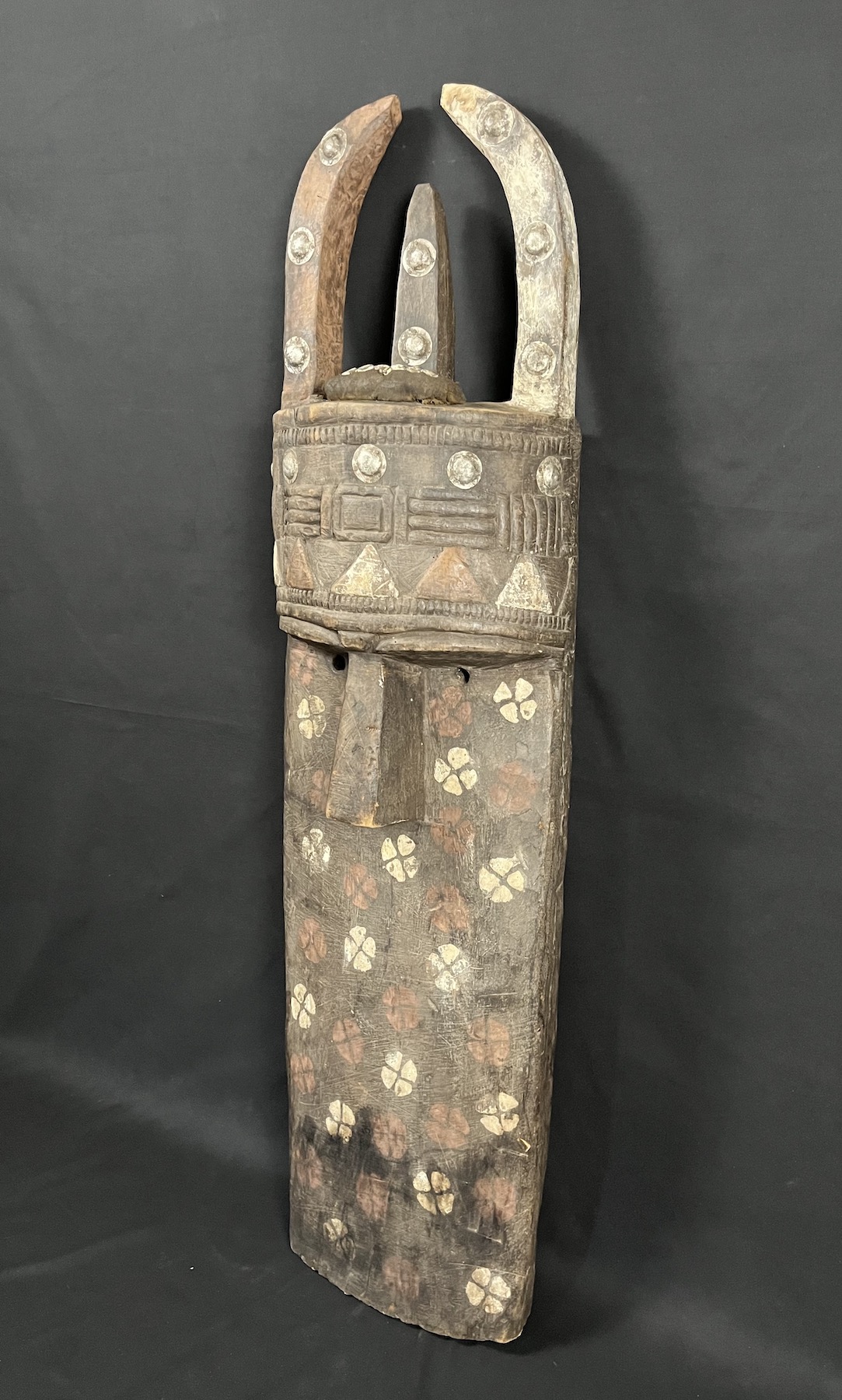
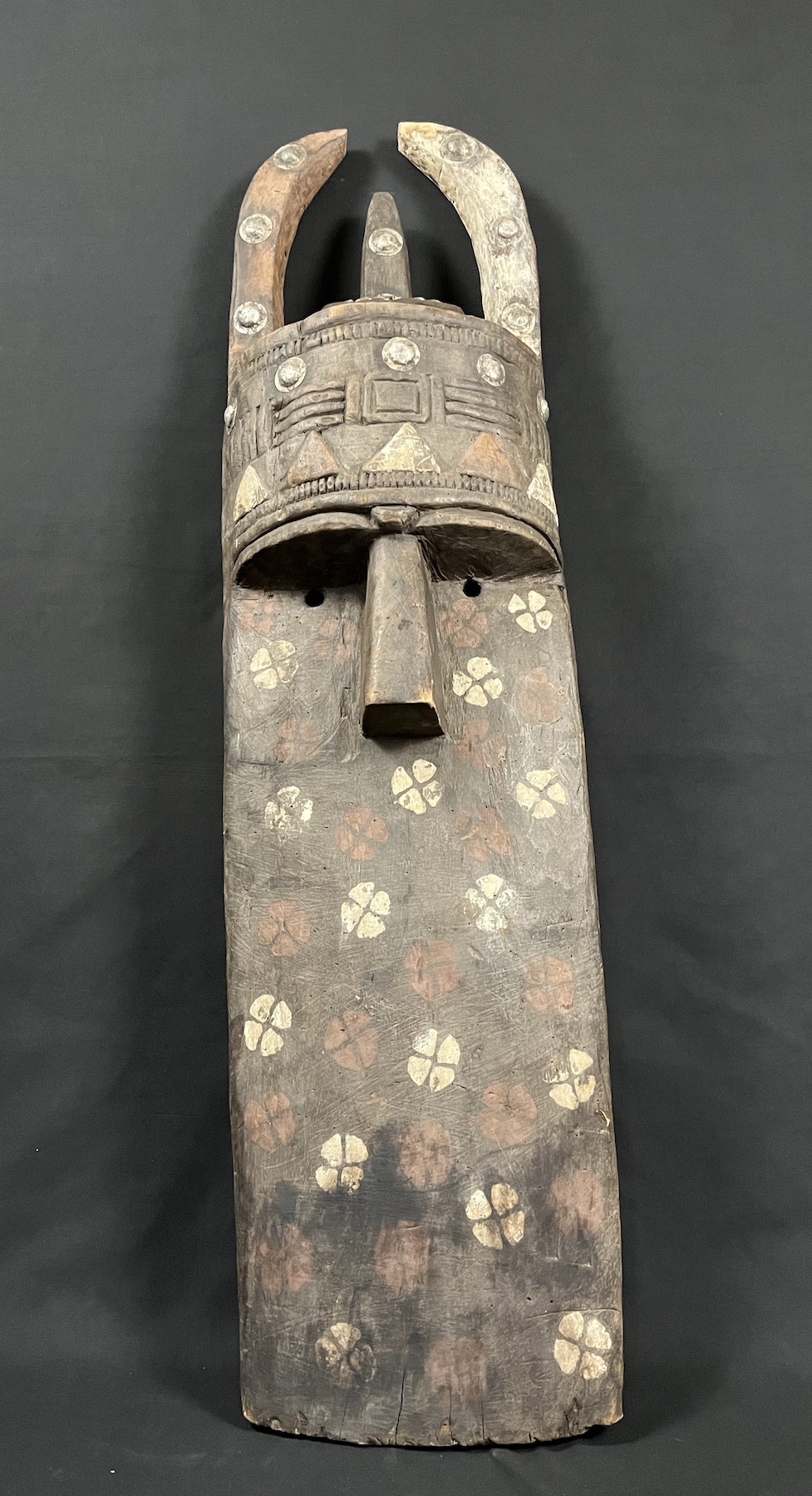
This ceremonial mask of the Toma, or Loma, people of West Africa, especially Guinea and Liberia, is a piece of great symbolic and cultural richness. Toma masks, known for their elongated and imposing forms, play a central role in the rituals of the Poro secret society, an initiatory group intended to train young men and introduce them to the mysteries of society and adult responsibilities.
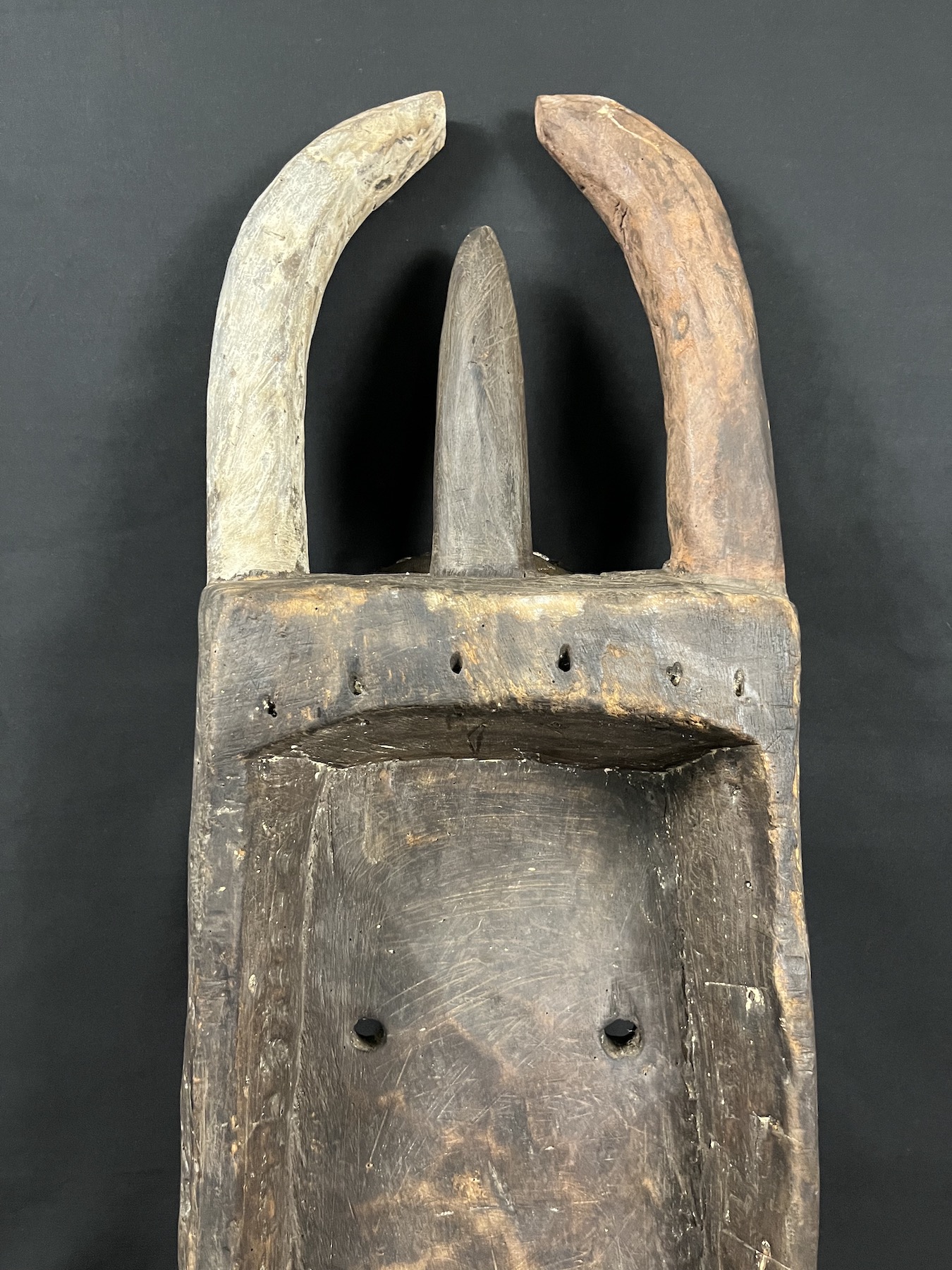
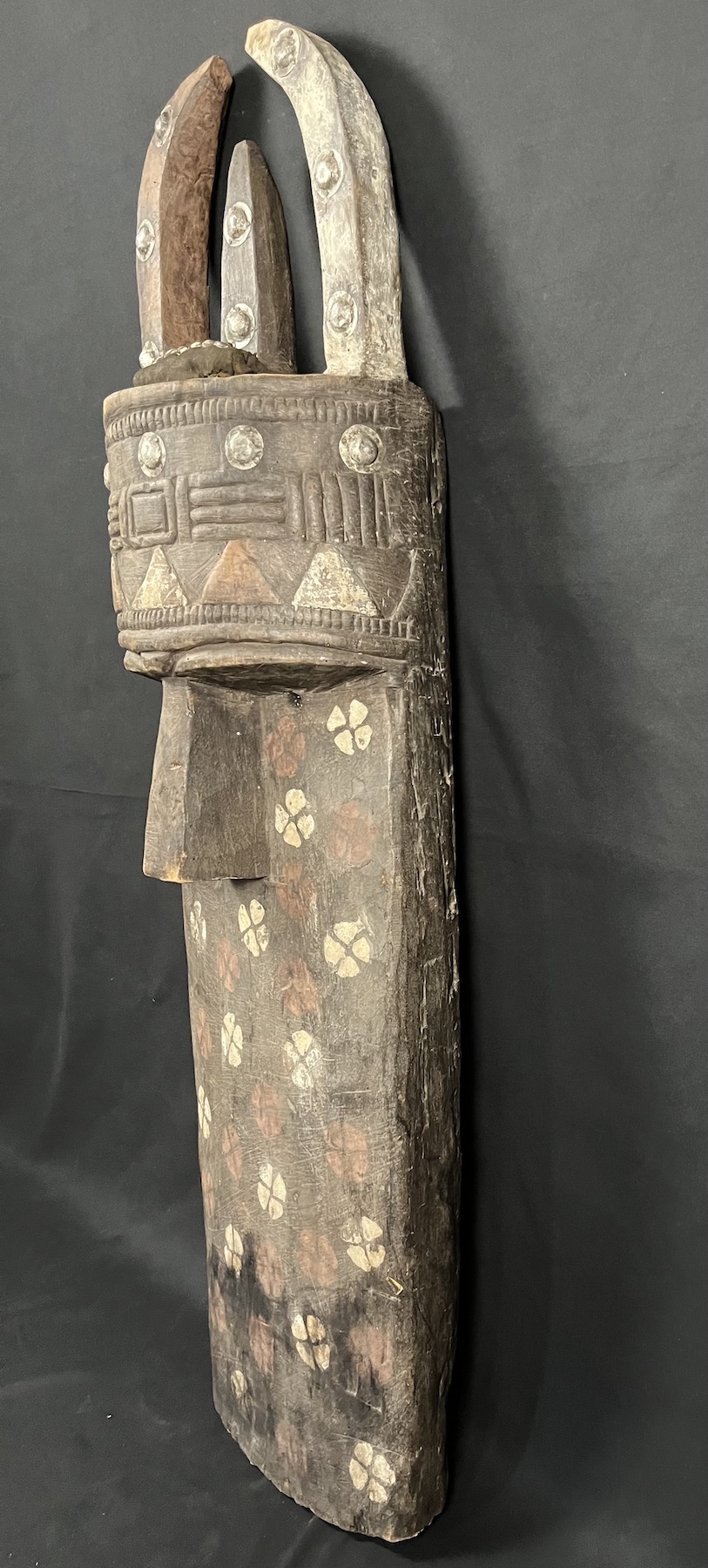
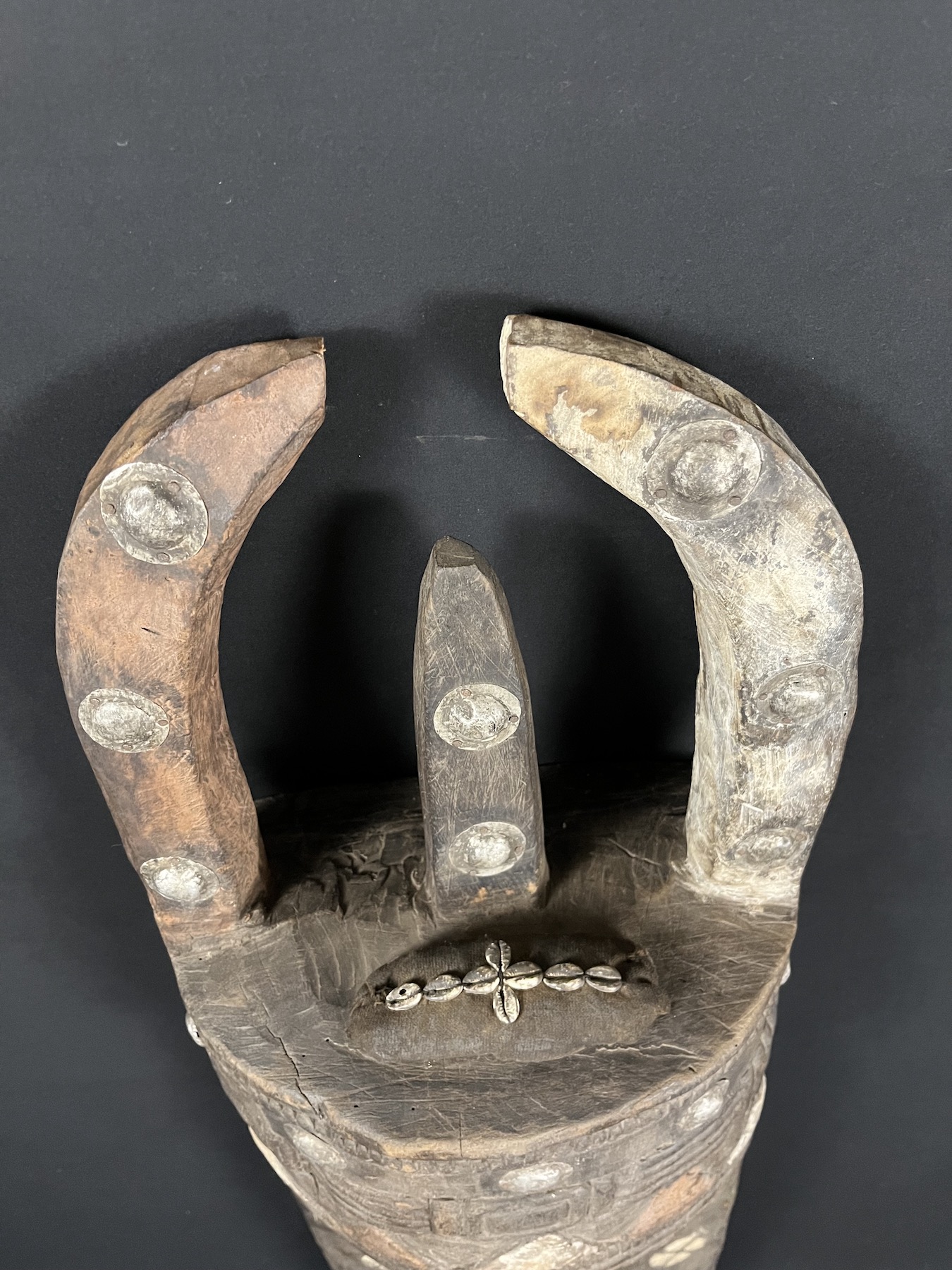
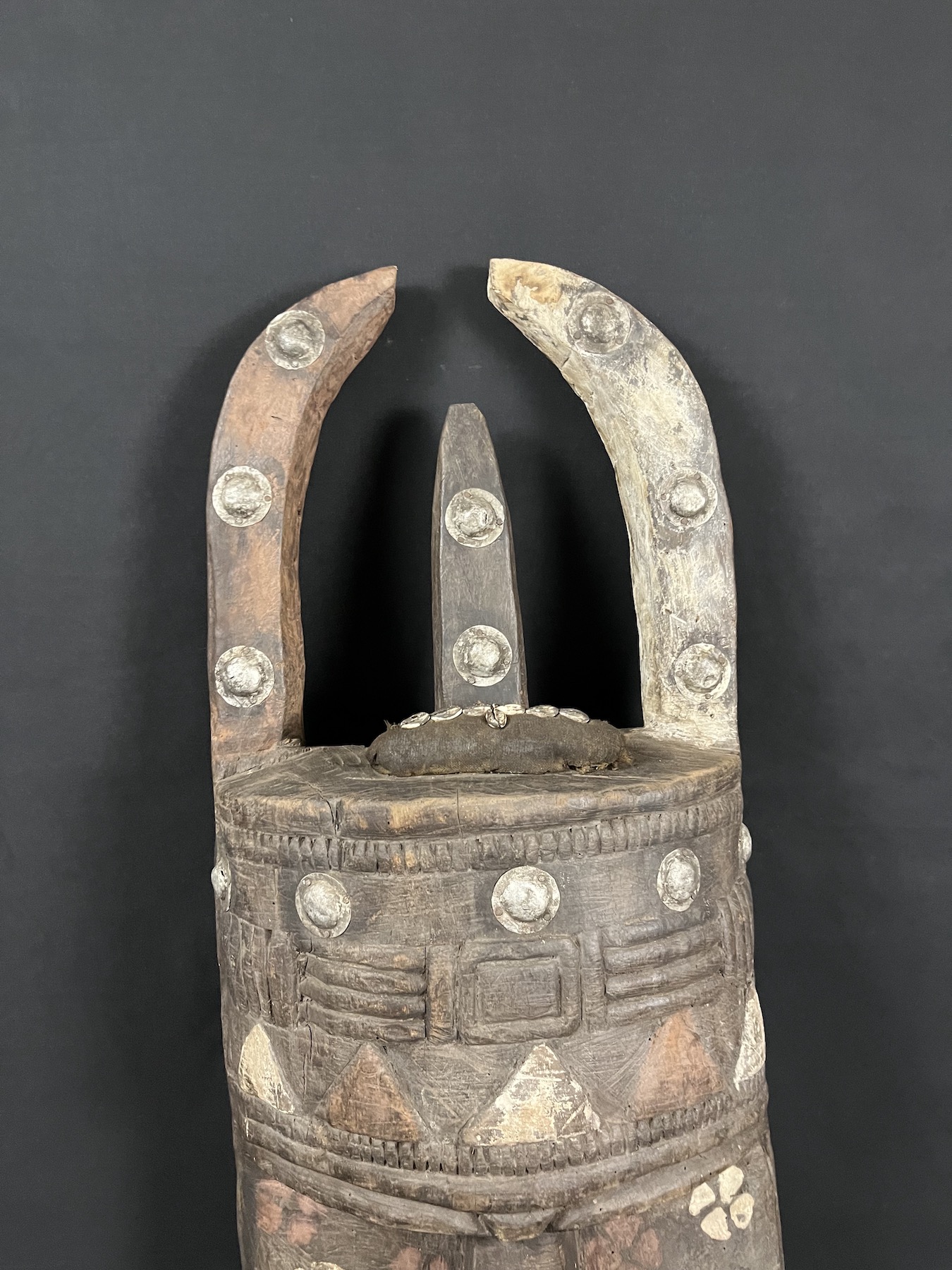
This mask is distinguished by its large curved horns at the top, each decorated with raised circular motifs, recalling elements of protection and spiritual power. The presence of a prominent central element between the horns, decorated with small metal discs or shells, may be interpreted as a talisman, reinforcing the sacred and protective dimension of the mask. The motifs carved on the upper section are mainly geometric, with triangles and linear patterns, often symbolising strength and stability. On the surface of the lower section, repeated floral motifs in the form of red and white rosettes add colour and probably symbolise fertility, abundance or affiliation to a particular clan.
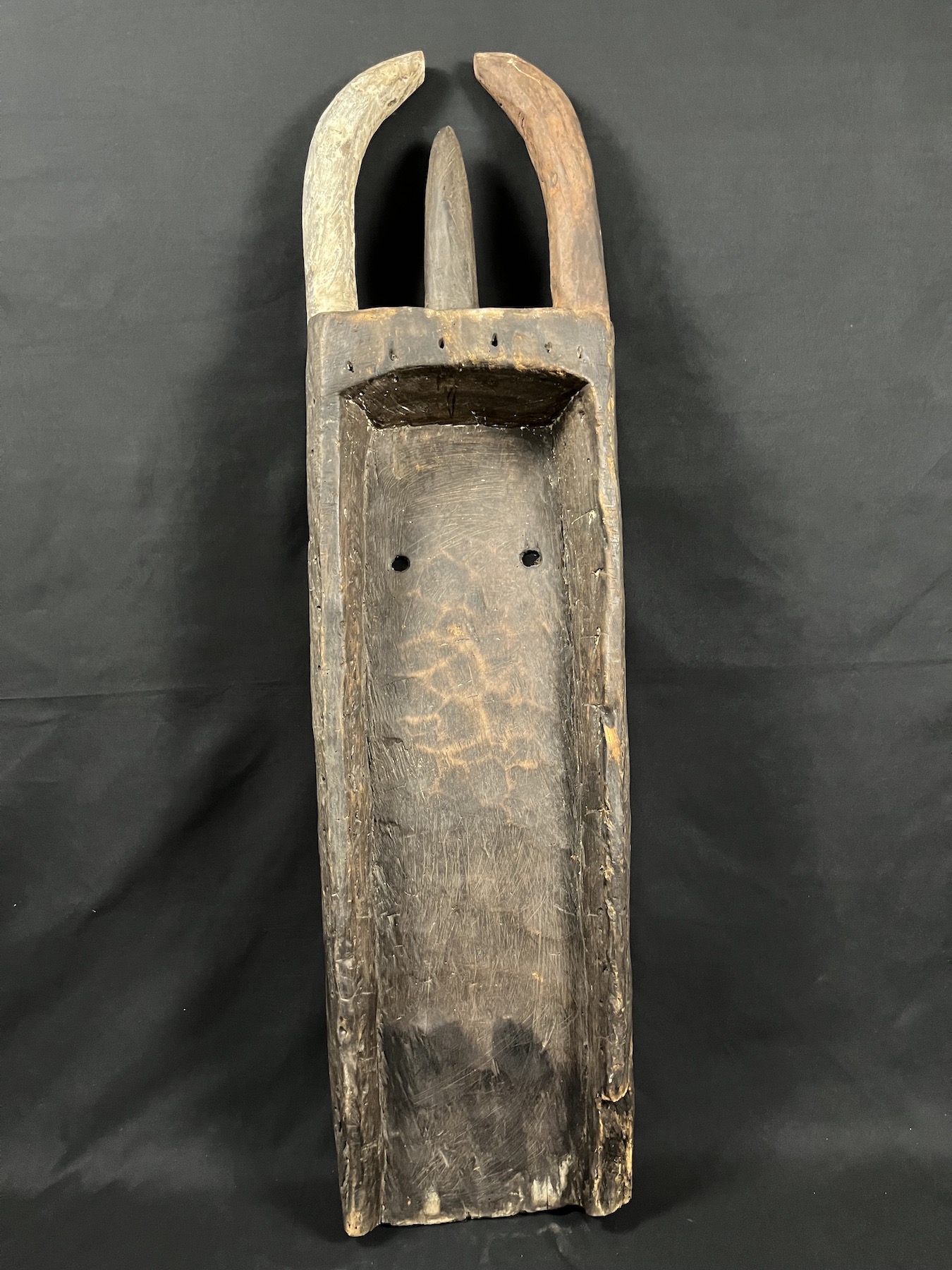
This mask is worn during ritual ceremonies in which the wearer embodies a spiritual entity or the spirit of the ancestors, acting as a mediator between the physical and spiritual worlds. When dancing with this mask, the wearer is perceived as an incarnation of the deity or spirit represented, bringing guidance and protection to the community. The mask is also an educational tool used to transmit values, history and sacred knowledge to initiates, thereby strengthening community bonds and perpetuating traditions.
This mask embodies values of protection, spiritual transmission and guidance. The horns and metal ornaments accentuate its protective power, while the geometric and floral motifs express harmony, order and the continuity of Toma cultural values.
Technical details
- Type of piece
- Masque
- Category
- Masks
- Ethnic group
- Toma
- Country
- Guinée
- Materials
- wood, fabric,, cowries, metal, natural pigment
- Dimensions
- H 140 × W 34 × D 23 cm
- Weight
- 9,6 kg
- Estimated dating
- second half 20th c.
- Laboratory test
- Not tested
- Reference
- 292